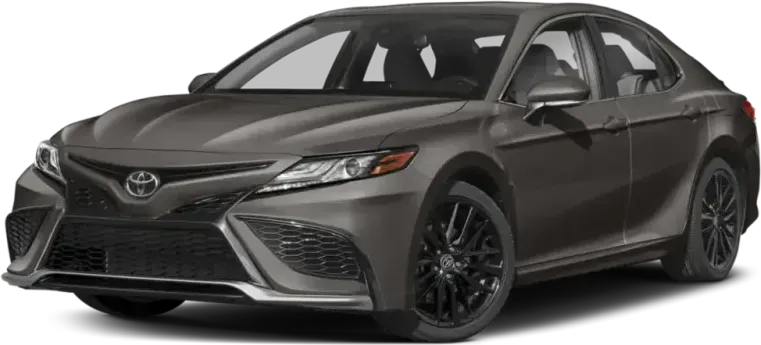
2019 Toyota Camry: What to check before buying
Owners have filed 364 complaints with NHTSA about this car, most about the transmission, fuel system, and engine. The 9 checks below target those problems, in the order you would do them at the car.
 2019
- Owner complaints
- 364
- Recalls
- 7
- Crashes reported
- 24
- 22 injuries
Your inspection sheet
Tick items off on your phone at the car, or print it. Ticks stay on this device.
0/9 checked
2019 Toyota Camry: inspection sheet
Paperwork and questions
Before you go, or before you touch the car0/4
Cold start, engine bay, and underside
Ask the seller not to warm the car up first0/2
Test drive
At least 20 minutes, with some highway0/3
These checks are specific to this model year. For tires, body panels, fluids, and the other basics every used car needs, use the general inspection guide.
Which Camry is it?
EPA figures for each version of the 2019 Toyota Camry. Use them to confirm you are looking at the version that was advertised, and as a yardstick on the test drive.
| Version | Drive | EPA rating |
|---|---|---|
| 2.5L 4-cylGas | FWD | 34 mpg |
| 3.5L 6-cylGas | FWD | 26 mpg |
| 2.5L 4-cylHybrid | FWD | 52 mpg |
- The 2019 Toyota Camry was sold in three versions. Confirm which one this is from the window sticker, the engine cover, or the VIN report before you compare prices.
- On the hybrid, watch for the car moving off on electric power at low speed and for any hybrid system warning on the dash.
- Reset the trip computer at the start of the drive. A Camry that averages well under the EPA 26 mpg combined on a mixed route may have an engine or tire problem.
Check the odometer against these mileages
Owners report these failures starting around the mileages below. A car inside one of these ranges deserves a closer look at that part, or records showing it was already fixed.
Throttle lag after slowing
24,000–32,000 miles
Ignition coil misfire
27,000–39,005 miles
Water pump and coolant valve failure
29,090–89,500 miles
Low braking power warning
46,000–91,000 miles
Transmission whine and failure
60,900–92,000 miles
Why these checks: what owners reported
NHTSA complaints for the 2019 Toyota Camry, grouped by the part owners named. Open a row to read what goes wrong.
Transmission89No crashes
Transmission failure dominates this category. The 8-speed automatic starts with a whine that grows louder under acceleration, rough or jerky shifts between 2nd and 3rd gear, or bucking and hesitation. It then loses drive entirely, sometimes leaving the car stranded on the road. Many owners say no warning light came on first. Most failures land between about 58,983 and 100,000 miles, often just past the drivetrain warranty, and dealers usually call for a full replacement. One quote reached $8,000. A few reports cite a failed coolant bypass valve instead.
Fuel system58No crashes
Stalling is the main pattern. Cars stall at highway speed, at stoplights, and when pulling into traffic, and many reports tie this to the low-pressure fuel pump recall (20V-682). Owners describe back-ordered parts and long waits for the fix. Some say the stalling, sluggish takeoff, and jerking came back after the pump was replaced, and one reports strong gasoline vapors in the cabin after the recall work. Other complaints cover fuel gauges that read far from the true level, plus a rough idle that needed new injectors and a purge valve at 47,000 miles.
Most of these complaints concern the fuel pump recall (20V682000) rather than a new failure. Owners received the notice, but dealers had no parts, and one car sat at a dealer for two months unrepaired. Cars waiting on the fix had hesitation, intermittent stalling at speed, and hard starts. A few owners say the hesitation or a fuel odor came back after the recall repair. Separate reports describe jerking and vibration at 50 mph and gasoline leaking under the car while refueling at about 58,000 miles.
Engine261 crash
Cooling system failures stand out. The electric water pump, the thermostat, or the coolant bypass valve fails, the temperature gauge spikes, and some engines go on to blow a head gasket or need replacing. Reports range from about 29,090 to 116,598 miles. Owners cite codes P28AE and P26CB71, and several say dealers charged for repairs they believe Toyota's customer support program 24TE04 should cover. Other complaints describe a cracked engine block leaking oil at 30,000 miles, cylinder misfires with shaking and power loss, a fuel line that came loose, and one crash blamed on sudden acceleration.
Airbags2514 crashes
Nearly every report describes airbags that did not deploy in a crash. These include frontal hits, side impacts, rear-end collisions at highway speed, and guardrail strikes, with reported speeds from about 5 mph to 65 to 70 mph. Of these complaints, 14 involve crashes, and owners report 15 injuries, including a broken sternum, head trauma, and arm fractures. Some also say the seat belt did not lock. In one rollover, only the side curtain airbags deployed. A separate complaint lists a fault code for the rear right seat belt pretensioner circuit.
Brakes232 crashes
A "Low Braking Power" warning is the most common complaint. It comes with a mushy pedal, a pedal that sinks to the floor, longer stops, or a hissing sound when pumping the brakes. Dealers often trace it to the brake booster or vacuum pump. Several owners say their VIN was left out of the related recall (21V890000), so they were quoted for the repair. Reported mileages run from about 29,000 to 111,168. Two crash reports say automatic emergency braking engaged but the car did not slow. Other complaints describe brakes that vibrate.
Electrical211 crash
Sudden power loss with a burst of warnings is the pattern here. Messages for pre-collision, LDA, parking brake, charging system, and low steering power appear together, sometimes while the car stalls or gets limited to low speed. Failed ignition coils cause shaking and misfires at about 27,000 to 39,005 miles, and one owner was told replacement coils were unavailable. Other reports describe the pre-collision system braking hard for no reason, often at dusk or in rain, plus hazard lights flashing on their own, an infotainment unit stuck rebooting, and rodents chewing through wiring.
Acceleration and cruise control142 crashes
Throttle lag is the core complaint. After a stop or after slowing below about 6 mph, the car gives no response to the gas pedal for one to five seconds, as if the engine had died. This is dangerous when merging, passing, or crossing traffic. Dealers often could not reproduce it, and one reprogramming did not help. Reports cluster around 24,000 to 32,000 miles. Two crash reports describe unintended acceleration with brakes that would not stop the car. Others mention lurching and adaptive cruise control braking sharply when a car cuts in.
Suspension42 crashes
With only four complaints, this category shows no clear defect. The one clear mechanical failure is loose inner tie rods found during routine maintenance at 46,302 miles, which required a new steering rack. The other reports describe collision damage in which airbags did not deploy, a broken seat belt and an insurance dispute, and an engine that idles unevenly with slow acceleration response. Both crash-related complaints describe impacts from other vehicles, not suspension parts failing on their own.
In owners' own words
Excerpts from complaints Camry owners filed with NHTSA, as written. Listen for the same symptoms on your test drive.
Firstly I have experienced some weird behavior when accelerating from a stop and the vehicle quickly ramped up the rpm over 5k without shifting at all until correcting itself at the speed I was desiring. I wasn't stepping hard on the pedal at all and was just trying to get to 30 mph. Additionally I experienced some hard shifting when accelerating abruptly as well. Making the acceleration not very smooth when passing someone in high speed traffic.
Filed with NHTSA, February 2022
My transmission is going out. I bought this car brand new back in 2019. I am at 80k miles. It is available for inspection upon request. No light has came on, but there has been a loud whining noise whenever I press on the accelerator. I took it into a shop and they said my transmission is going to go out any time now.. My safety could have been put at risk because no light has came on with a warning. It's only been seen by the shop I took it to.
Filed with NHTSA, December 2025
On multiple occasions, and recently more frequently, when pulling out into traffic the vehicle stalls completely. There have also been numerous occasions when I try to accelerate that my vehicle stalls in traffic at stop signs or lights. There have been several close calls with accidents because of this.
Filed with NHTSA, July 2021
I was driving the car and heard a noise coming from the front and the car started stalling. Then the car stopped completely and would not turn on anymore. I got out and there was oil on the ground. A mechanic looked at the car and noted that pieces of the engine shattered and the was a crack on the engine, and there was a lot of oil that had leaked. The car has only 30,000 miles on it.
Filed with NHTSA, January 2022
Check engine light went on and the car’s temperature gage started going up rapidly. Pulled to the side of the road and turned the car off. The problem was the electric water pump and Thermostat which I bought at Toyota parts, the car only has 29,090 miles on it.
Filed with NHTSA, April 2025
There's a malfunction on Pre-Collison System and SRS Airbag System. Third-party licence softwares access to IoT sensors and vehicle data collection without the owner's informed consent.
Filed with NHTSA, January 2023
How the 2019 compares with other Camry years
Complaints for this year next to the average for the other model years, area by area.
The 2019 ranks second for owner complaints among 8 Camry years, about 2.1 times the average of the others. Newer years have had less time to collect complaints, so compare like with like.
- Transmission8929
- Fuel system5811
- Engine2612
- Airbags2523
- Brakes2322
- Electrical2118
Where the 2019 fits in the Camry's history
Redesigns and mid-cycle updates change what can go wrong.
The 2019 is the second model year of the Camry's eighth generation (2018–2023).
Recalls to confirm (7)
Recall repairs are free at any Toyota dealer, but the seller may never have had them done. Check each campaign number against the VIN.
21V890000BrakesNov 2021
Toyota Motor Engineering & Manufacturing (Toyota) is recalling certain 2018-2019 Camry vehicles. The vane cap inside the vacuum pump may break, causing the pump to fail, which could result in a sudden loss of braking assist.
Risk: A sudden loss of braking assist can increase the risk of a crash.
Fix: Dealers will repair or replace the vacuum pump, as necessary, free of charge. Owner notification letters were mailed May 16, 2022. Owners may contact Toyota customer service at 1-800-331-4331.
20V682000Fuel systemNov 2020
Toyota Motor Engineering & Manufacturing (Toyota) is recalling certain 2018-2019 4Runner, 2019-2020 Avalon, 2019 Corolla Hatchback, 2017-2019 Highlander, 2018-2020 Camry, 2020 Corolla, 2018-2019 Land Cruiser, 2017-2020 Tacoma, 2019-2020 RAV4, 2019-2020 Sequoia, 2017-2020 Sienna, 2019-2020 Tundra, 2018-2020 Lexus ES350, 2017 Lexus GS200t, 2017-2019 Lexus GS350, 2019 Lexus GS300, 2018-2020 Lexus LC500h, 2019-2020 Lexus LS500, 2018-2019 Lexus GX460, 2017 Lexus IS200t, 2019 Lexus IS300, 2019 Lexus IS350, 2018-2020 Lexus LC500, 2018 Lexus LS500, 2019 Lexus LS500h, 2018-2019 Lexus LX570, 2017 Lexus RC200t, 2019 Lexus RC300, RC350, 2017 and 2019-2020 Lexus RX350, 2018-2020 RX350L, 2019 Lexus UX200, 2018-2019 Lexus NX300 vehicles. The low-pressure fuel pump inside the fuel tank may fail.
Risk: If the fuel pump fails, the engine can stall while driving, increasing the risk of a crash.
Fix: Toyota will notify owners, and dealers will replace the fuel pump assembly with an improved one, free of charge. Owners of specific models were notified that remedy parts were available starting January 21, 2021. Owners of other models will be notified as remedy parts become available. Remedy parts should be available for all affected vehicles by late March 2021. Owners may contact Toyota customer service at 1-888-270-9371 or Lexus customer service at 1-800-255-3987. Note: This recall is an expansion of recall 20V-012. Toyota's number for this recall is 20TA02. Lexus' number for this recall is 20LA01.
20V012000Fuel systemJan 2020
Toyota Motor Engineering & Manufacturing (Toyota) recalled certain 2018-2019 4Runner, Highlander, Camry, Land Cruiser, Sequoia, Sienna, Tacoma and Tundra, and Lexus RC 300, RC 350, GS 350, GX 460, IS 300, LC 500, LS 500, LX 570, RX 350L, and 2019 Toyota Avalon and Corolla, and certain Lexus NX 300, and ES 350 vehicles on January 13, 2020. On March 4, 2020, Toyota expanded the recall to include certain 2014-2015 Toyota 4Runner and Land Cruiser, 2018 Avalon, Corolla, 2014 FJ Cruiser, 2017 Sienna and Lexus 2018 ES 350, 2018-2019 GS 300, 2013-2014 GS350, 2014-2015 GX 460, IS 350 and LX 570, 2014 IS F, 2018-2019 IS 350, LC 500H and LS 500H, 2013-2015 LS 460, 2015 NX 200T and RC350, 2017 RC 200T and RX 350. Toyota also removed the 2018-2019 Toyota 4Runner and Land Cruiser and 2018-2019 Lexus GX 460 and LX 570 and 2019 NX300 from inclusion in this recall. On March 19, 2020, Toyota expanded the recall to include 2015 Lexus GS350 vehicles. The low-pressure fuel pump inside the fuel tank may fail.
Risk: If the fuel pump fails, the engine can stall while driving, increasing the risk of a crash.
Fix: Toyota will notify owners, and dealers will replace the fuel pump, free of charge. The recall began May 4, 2020. Owners may contact Toyota customer service at 1-888-270-9371 or Lexus customer service at 1-800-255-3987. Toyota's numbers for this recall are 20TB02 and 20TA02 for Toyota vehicles and 20LB01 and 20LA01 for Lexus vehicles.
19V567000AirbagsAug 2019
Toyota Motor Engineering & Manufacturing (Toyota) is recalling certain 2019 Camry vehicles. The Occupant Classification System (OCS) may have been improperly calibrated, which may prevent the proper deployment of the front passenger air bag and knee air bag, in the event of a crash. As such, these vehicles fail to comply with the requirements of Federal Motor Vehicle Safety Standard (FMVSS) number 208, "Occupant Crash Protection.".
Risk: In the event of a crash, if the air bags do not deploy as designed, the front seat passenger has an increased risk of an injury.
Fix: Toyota will notify owners, and dealers will recalibrate the OCS, free of charge. The recall began August 27, 2019. Owners may contact Toyota customer service at 1-888-270-9371. Toyota's number for this recall is K0M.
19V503000EquipmentJun 2019
Southeast Toyota Distributors, LLC (SET) is recalling certain 2017-2019 Toyota Camry, Corolla, Rav4, Sienna, and Yaris iA vehicles equipped with factory-installed floor mats. The load carrying capacity modification label may be incorrect. As such, these vehicles fail to comply with the requirements of Federal Motor Vehicle Safety Standard (FMVSS) number 110, "Tire Selection and Rims.".
Risk: An incorrect label may lead to unintentionally overloading the vehicle, increasing the risk of a crash.
Fix: SET will notify owners and provide a corrected label for placement over the inaccurate label, free of charge. The recall began August 23, 2019. Owners may contact Toyota customer service at 1-888-270-9371. SET's number for this recall is SET19A.
19V244000EquipmentMar 2019
Gulf States Toyota (GST) is recalling certain 2019 C-HR, 4Runner, Avalon, Avalon Hybrid, Camry, Camry Hybrid, Highlander, Land Cruiser, Prius, RAV4, Sequoia, Tacoma, Sienna, Tundra and Yaris vehicles. The text on the load capacity label may become illegible. As such, these vehicles fail to comply with the requirements of Federal Motor Vehicle Safety Standard (FMVSS) number 110, "Tire Selection and Rims.".
Risk: If the driver cannot read the label, they may unknowingly overload the vehicle, increasing the risk of a crash.
Fix: GST will notify owners, and dealers will provide corrected load carrying capacity modification labels, free of charge. The recall began May 24, 2019. Owners may contact GST customer service at 1-800-444-1074. GST's number for this recall is 19R1.
19V097000Fuel systemFeb 2019
Toyota Motor Engineering & Manufacturing (Toyota) is recalling certain 2019 Camry Hybrid and Avalon Hybrid vehicles. The fuel filler pipe may not have been properly reconnected to the fuel tank during an inspection after vehicle assembly. As such, these vehicles fail to comply with the requirements of Federal Motor Vehicle Safety Standard (FMVSS) number 301, "Fuel System Integrity.".
Risk: The improperly connected filler pipe may leak fuel, which, in the presence of an ignition source can increase the risk of a fire.
Fix: Toyota will notify owners, and dealers will inspect the fuel filler pipe, replacing it if necessary, free of charge. The recall began March 19, 2019. Owners may contact Toyota customer service at 1-888-270-9371. Toyota's number for this recall is K0I.
Also looking at these instead of a Camry?
Cars shoppers compare with the Toyota Camry, with their own 2019 checklists.
2019 owner complaints, side by side
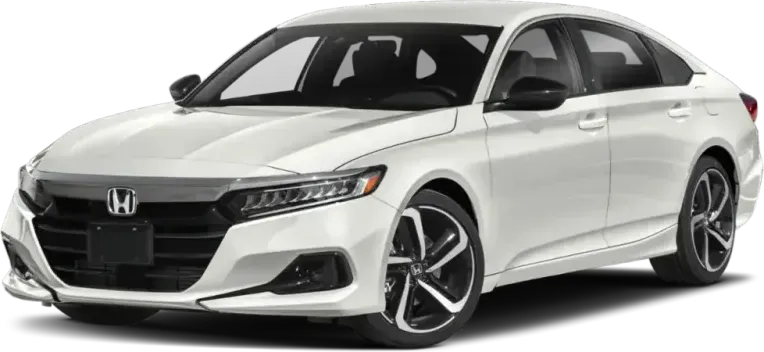
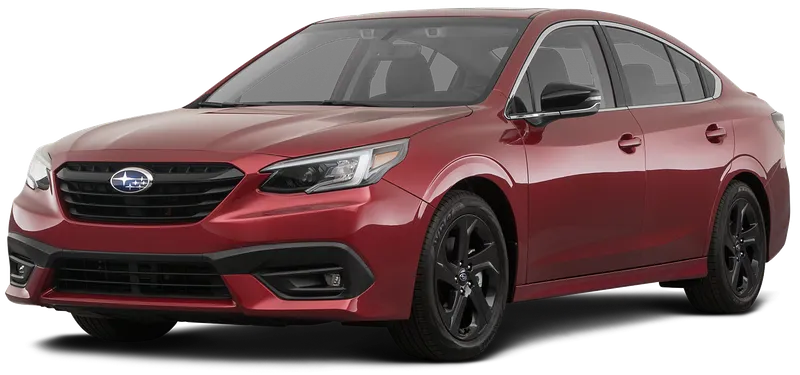
- Subaru Legacy123
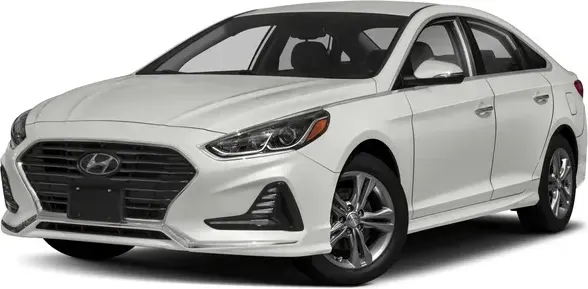
- Hyundai Sonata144
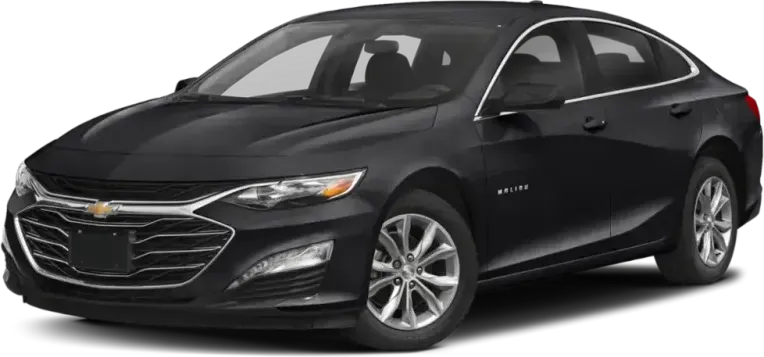
- Chevrolet Malibu181
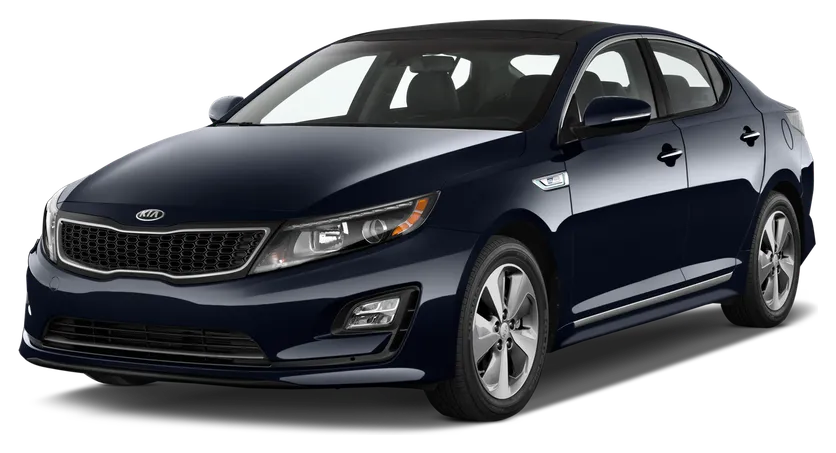
- Kia Optima205
- 2019 Toyota Camry364
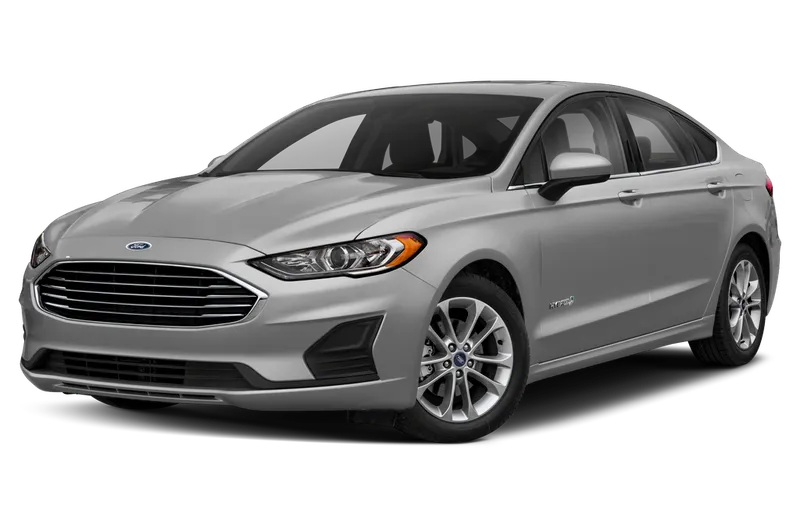
- Ford Fusion370
- Honda Accord574