2023 Tesla Model 3: What to check before buying
Owners have filed 386 complaints with NHTSA about this car, most about the steering, automatic emergency braking, and acceleration and cruise control. The 9 checks below target those problems, in the order you would do them at the car.
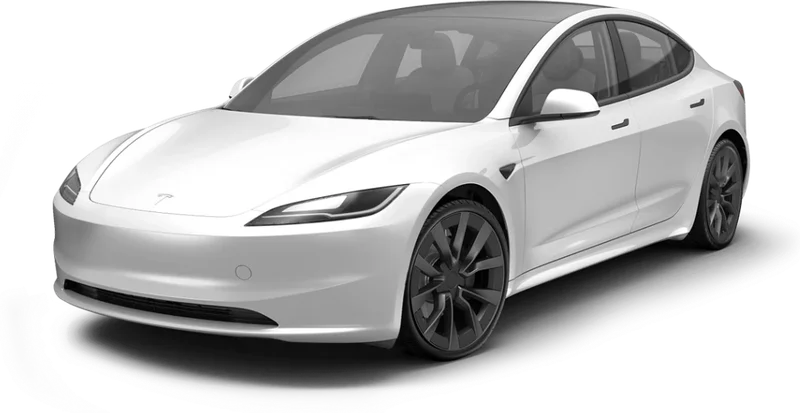 2023
- Owner complaints
- 386
- Recalls
- 10
- Crashes reported
- 63
- 41 injuries
Your inspection sheet
Tick items off on your phone at the car, or print it. Ticks stay on this device.
0/9 checked
2023 Tesla Model 3: inspection sheet
Paperwork and questions
Before you go, or before you touch the car0/2
Walk-around and cabin
Engine off, key in hand0/4
Test drive
At least 20 minutes, with some highway0/3
These checks are specific to this model year. For tires, body panels, fluids, and the other basics every used car needs, use the general inspection guide.
Which Model 3 is it?
EPA figures for each version of the 2023 Tesla Model 3. Use them to confirm you are looking at the version that was advertised, and as a yardstick on the test drive.
| Version | Drive | EPA rating |
|---|---|---|
| Electric | AWD, RWD | 272–358 mi range |
- With a full charge, the range estimate on the dash should land near the EPA figure of 272–358 miles. A much lower number on a mild day can mean a worn battery; ask for a battery health report.
Check the odometer against these mileages
Owners report these failures starting around the mileages below. A car inside one of these ranges deserves a closer look at that part, or records showing it was already fixed.
Highway power loss or shutdown
40–450 miles
Phantom braking on cruise control
900–2,000 miles
Why these checks: what owners reported
NHTSA complaints for the 2023 Tesla Model 3, grouped by the part owners named. Open a row to read what goes wrong.
Steering8314 crashes
The wheel jerks to one side or locks up without warning in most of these reports, and the risk is high: 14 of 83 complaints involve a crash and 5 involve injuries. Drivers describe the car veering left on its own, often on the highway or in rain, or a wheel that will not turn in parking garages. Many say the brakes failed to respond at the same moment. Several crashes happened with Full Self-Driving or Autopilot engaged. A few reports cover instability after collision repair and metal wheel buttons hot enough to cause mild burns.
Automatic emergency braking793 crashes
Hard braking with nothing ahead, known as phantom braking, fills most of these reports. It happens at highway speed with adaptive cruise control or Autopilot on, sometimes as often as every 10 to 50 miles, and some cars do it within their first 900 miles. Reported triggers include road striping, highway humps and motorcycles splitting lanes. The main danger is a rear-end hit from following traffic. Of 79 complaints, 3 involve a crash, including emergency braking that did not activate or let the car creep forward after stopping. Full Self-Driving running red lights also comes up.
Acceleration and cruise control4510 crashes
Sudden unintended acceleration at low speed, usually while parking, drives the crash count here. Of 45 complaints, 10 involve a crash and 9 involve injuries. Drivers say the car surged forward while they pressed the brake and hit walls, buildings or parked cars, with no warning lights beforehand. Dealers often could not find a cause. Other reports describe phantom braking on cruise control, with speed dropping more than 20 mph in under 2 seconds. Brand-new cars also went into limp mode on the highway with automatic emergency braking disabled.
Electrical368 crashes
Cars lose drive power at freeway speed, sometimes within their first 450 miles, and either stop in traffic or show a power-down warning. Other reports cover unintended acceleration while parking or slowing, a steering wheel that seized, a front trunk that pops open on shifting into Drive, turn signals that fail to engage, and safety systems going offline after a reset. Of 36 complaints, 8 involve a crash and 4 involve injuries. Several complaints point out that the rear doors have no mechanical release if power fails. Some report real range far below the displayed estimate.
Brakes225 crashes
Two opposite failures show up. In the crash reports, the brakes or automatic emergency braking fail to stop the car even when the driver presses hard, leading to rear-end and off-ramp crashes. One happened at about 11,000 miles. Much more often, the car brakes hard for no reason on cruise control or Autopilot, sometimes many times in one trip. Of 22 complaints, 5 involve a crash and 1 an injury. Smaller patterns include an intermittent Auto Hold fault, regenerative braking cutting out on steep descents, and warnings that disable ABS, traction control and emergency braking together.
Airbags139 crashes
Failure to deploy in serious crashes dominates these reports, including totaled cars and one case where the screen claimed a deployment that never happened. Of 13 complaints, 9 involve a crash and 8 involve injuries, the highest share of any category. Several of those crashes followed unintended acceleration or brakes that did not respond. The other reports cover front passenger occupant classification faults that service visits and software updates did not clear, plus one report of the passenger bag staying on with a toddler in the seat.
Suspension111 crash
Front suspension parts fail or come loose early. Reports include upper control arms replaced at 24,000 miles, damaged lower lateral links, a fractured compliance arm bolt, and a front arm that fell out after collision repair, which raises loss-of-control risk. The ride is described as harsh and jarring on wavy roads, with vibration from 40 to 80 mph, rattles, and alignment that will not stay set. Service often finds nothing or disputes warranty coverage. Of 11 complaints, 1 involves a crash. One report notes the car has no spare tire or jack.
Body and structure91 crash
Bumper covers fall off after driving through heavy rain or puddles, and Tesla has declined warranty coverage by blaming water. That is the clearest pattern. Other reports include an underbody shield coming loose in rain and knocking out collision warnings, trunk struts failing so the trunk slams shut or will not latch, a rear side window shattering at highway speed, and a door swinging back onto a driver's head. A sharp lower door edge cut one passenger's leg. Of 9 complaints, 1 involves a crash and 3 involve injuries.
In owners' own words
Excerpts from complaints Model 3 owners filed with NHTSA, as written. Listen for the same symptoms on your test drive.
I was driving and the power steering stopped functioning. The car had just over 1000 miles and both the lane departure avoidance and steering assistance cut out. Restarting the start would bring it back on temporarily but it would cut out again after a minute or two.
Filed with NHTSA, August 2023
Steering wheel stuck in straight position, unable to turn. Also, A/C line supermanifold defect present, needed to be replaced. Steering rack and harness both needed to be replaced. Tesla model 3, only had 40 miles before needing to be towed.
Filed with NHTSA, August 2023
Repeated "phantom braking". With cruise control engaged and zero traffic in front of the vehicle, false readings on the collision detection system will cause strong, sudden, and unpredictable braking. Highly unsafe particularly in conditions where there is traffic behind the vehicle. In my first 900 miles of driving the vehicle there have been 20-25 of such incidents. When triggered, breaking force is strong and deceleration is sudden.
Filed with NHTSA, January 2024
I was driving on the HOV lane (going between 65-70 miles mph) with the adaptive cruise control and lane keep assist on when the car suddenly slammed on it’s brakes to stop. There was a slight hump in the highway, but no car or object in front of me in the lane. Thank goodness there were no cars behind me or they could have easily rear ended me. It was extremely scary and now I’m too scared to use these driver assist features moving forward.
Filed with NHTSA, March 2023
While I was driving along a freeway using autopilot cruise control, the car suddenly slammed its brakes even if there was no cars in front of us. I thought it was just a fluke but it happened at least twice if not thrice during that trip. There was at least an approximate of 3 miles gap between us and the car in front, so practically no cars in front. Had there any vehicles behind us, it would for sure rear ended us.
Filed with NHTSA, July 2023
Back in February my Tesla Model 3 started acting up Emergency Brake was disabled, automatic vehicle hold was disabled, and traction control was disabled all issues I reported to the company app with photo. This problem stated when a software update happened after the Tesla app requested it.
Filed with NHTSA, February 2024
If a Tesla software update fails it causes an APB version mismatch causing all safety features to become disabled until you schedule service for repairs. It is not covered outside of warranty even though it’s an issue caused by their update. If you google APB Version Mismatch, a lot of people have experienced it. Out of warranty repair is $2-3k for a computer replacement even though it was working fine before the update.
Filed with NHTSA, November 2024
My daughter was driving on a freeway at 70MPH and her 2023 Model 3 Tesla that was a week old with 450 miles just stopped on the highway. She was lucky that highway patrol passed by shortly and stopped behind her to push her vehicle fully into the emergency lane. Vehicle also difficult to push because of brake locking system. I can't emphasis enough that the vehicle just stopped on the freeway!!!!
Filed with NHTSA, August 2023
How the 2023 compares with other Model 3 years
Complaints for this year next to the average for the other model years, area by area.
The 2023 ranks sixth for owner complaints among 9 Model 3 years, close to the average of the others. Newer years have had less time to collect complaints, so compare like with like.
- Steering8334
- Automatic emergency braking7995
- Acceleration and cruise control4558
- Electrical3647
- Brakes2234
- Airbags1327
Where the 2023 fits in the Model 3's history
Redesigns and mid-cycle updates change what can go wrong.
The 2023 is the seventh model year of the Model 3's first generation (2017–2023).
It includes the 2021 update.
What changed for 2021
- Black finish on door handles and trim
- Addition of heat pump
- Redesigned center console
- Quieter double-pane glass
Recalls to confirm (10)
Recall repairs are free at any Tesla dealer, but the seller may never have had them done. Check each campaign number against the VIN.
25V092000SteeringFeb 2025
Tesla, Inc. (Tesla) is recalling certain 2023 Model 3 and Model Y vehicles operating software prior to 2023.38.4. The printed circuit board for the electronic power steering assist may experience an overstress condition, causing a loss of power steering assist when the vehicle reaches a stop and then accelerates again.
Risk: A loss of power steering assist can require greater steering effort, especially at low speeds, increasing the risk of a crash.
Fix: Tesla has released an over-the-air (OTA) software update, free of charge. Owner notification letters were mailed March 25, 2025. Owners may contact Tesla customer service at 1-877-798-3752. Tesla's number for this recall is SB-25-00-004.
24V935000Wheels and tiresDec 2024
Tesla, Inc. (Tesla) is recalling certain 2024 Cybertruck, 2017-2025 Model 3, and 2020-2025 Model Y vehicles. The tire pressure monitoring system (TPMS) warning light may not remain illuminated between drive cycles, failing to warn the driver of low tire pressure. As such, these vehicles fail to comply with the requirements of Federal Motor Vehicle Safety Standard number 138, "Tire Pressure Monitoring Systems.".
Risk: Driving with improperly inflated tires increases the risk of a crash.
Fix: Tesla released an over-the-air (OTA) software update, free of charge. Owner notification letters were mailed February 15, 2025. Owners may contact Tesla customer service at 1-877-798-3752. Tesla's number for this recall is SB-24-00-018.
24V554000Door latches and locksJul 2024
Tesla, Inc. (Tesla) is recalling certain 2021-2024 Model 3, Model S, Model X, and 2020-2024 Model Y vehicles. The hood latch assembly may fail to detect an unlatched hood condition after the hood has been opened.
Risk: An unlatched hood can fully open, obstructing the driver's view and increasing the risk of a crash.
Fix: Tesla has released an over-the-air (OTA) software update, free of charge. Owner notification letters were mailed September 24, 2024. Owners may contact Tesla customer service at 1-877-798-3752. Tesla's number for this recall is SB-24-00-012.
24V376000Seat beltsMay 2024
Tesla, Inc. (Tesla) is recalling certain 2012-2024 Model S, 2015-2024 Model X, 2017-2023 Model 3, and 2020-2023 Model Y vehicles. In the event of an unbelted driver, the seat belt warning light and audible chime may not activate as intended. As such, these vehicles fail to comply with the requirements of Federal Motor Vehicle Safety Standard number 208, "Occupant Crash Protection.".
Risk: A seat belt warning system that fails to alert occupants of an unbelted seat belt can increase the risk of injury during a crash.
Fix: Tesla will release an over-the-air (OTA) software update. Owner notification letters were mailed July 26, 2024. Owners may contact Tesla customer service at 1-877-798-3752. Tesla's number for this recall is SB-24-00-008.
24V051000ElectricalJan 2024
Tesla, Inc. (Tesla) is recalling certain 2012-2023 Model S, 2016-2024 Model X, 2017-2023 Model 3, 2019-2024 Model Y, and 2024 Cybertruck vehicles. An incorrect font size is displayed on the instrument panel for the Brake, Park, and Antilock Brake System (ABS) warning lights. As such, these vehicles fail to comply with the requirements of Federal Motor Vehicle Safety Standard number 105, "Hydraulic and Electric Brake Systems" and 135, "Light Vehicle Brake Systems.".
Risk: Warning lights with a smaller font size can make critical safety information on the instrument panel difficult to read, increasing the risk of a crash.
Fix: Tesla began releasing an over-the-air (OTA) software update, free of charge. Owners may contact Tesla customer service at 1-877-798-3752. Tesla's number for this recall is SB-24-00-003.
23V838000ElectricalDec 2023
Tesla, Inc. (Tesla) is recalling 2012-2023 Model S, 2016-2023 Model X, 2017-2023 Model 3, and 2020-2023 Model Y vehicles equipped with all versions of Autosteer leading up to the version(s) that contains the recall remedy. In certain circumstances when Autosteer is engaged, the prominence and scope of the feature's controls may not be sufficient to prevent driver misuse of the SAE Level 2 advanced driver-assistance feature.
Risk: In certain circumstances when Autosteer is engaged, and the driver does not maintain responsibility for vehicle operation and is unprepared to intervene as necessary or fails to recognize when Autosteer is canceled or not engaged, there may be an increased risk of a crash.
Fix: Tesla will release an over-the-air (OTA) software update, free of charge. Owner notification letters were mailed February 10, 2024. Owners may contact Tesla customer service at 1-877-798-3752. Tesla's number for this recall is SB-23-00-008.
23V434000ElectricalJun 2023
Tesla, Inc. (Tesla) is recalling certain 2023 Model 3 and Model Y vehicles. The pyrotechnic battery disconnect may be defective.
Risk: A defective battery disconnect may not isolate the vehicle's high voltage battery after a crash or fault detection, increasing the risk of electrical shock and injury.
Fix: Tesla Service will replace the pyrotechnic battery disconnect, free of charge. Owner notification letters were mailed August 18, 2023. Owners may contact Tesla customer service at 1-877-798-3752. Tesla's number for this recall is SB-23-16-005.
23V085000SteeringFeb 2023
Tesla, Inc. (Tesla) is recalling certain 2016-2023 Model S, Model X, 2017-2023 Model 3, and 2020-2023 Model Y vehicles equipped with Full Self-Driving Beta (FSD Beta) software or pending installation. The FSD Beta system may allow the vehicle to act unsafe around intersections, such as traveling straight through an intersection while in a turn-only lane, entering a stop sign-controlled intersection without coming to a complete stop, or proceeding into an intersection during a steady yellow traffic signal without due caution. In addition, the system may respond insufficiently to changes in posted speed limits or not adequately account for the driver's adjustment of the vehicle's speed to exceed posted speed limits.
Risk: FSD Beta software that allows a vehicle to exceed speed limits or travel through intersections in an unlawful or unpredictable manner increases the risk of a crash.
Fix: Tesla will release an over-the-air (OTA) software update, free of charge. Owner notification letters were mailed April 15, 2023. Owners may contact Tesla customer service at 1-877-798-3752. Tesla's number for this recall is SB-23-00-001.
22V844000Exterior lightsNov 2022
Tesla, Inc. (Tesla) is recalling certain 2023 Model 3 and 2020-2023 Model Y vehicles. One or both taillights may intermittently fail to illuminate.
Risk: A taillight that fails to illuminate may reduce the visibility of the vehicle, increasing the risk of a crash.
Fix: Tesla has released an over-the-air (OTA) software update, free of charge. Owner notification letters were mailed January 14, 2023. Owners may contact Tesla customer service at 1-877-798-3752. Tesla's number for this recall is SB-22-00-016.
21V834000AirbagsOct 2021
Tesla, Inc. (Tesla) is recalling certain 2020-2021, 2023 Model 3 vehicles. The left and/or right side curtain air bag may have been improperly secured to the roof rail, which could result in a twisted air bag. As such, these vehicles fail to comply with the requirements of Federal Motor Vehicle Safety Standard numbers 214, "Side Impact Protection" and 226, "Ejection Mitigation.".
Risk: A twisted side curtain air bag may improperly deploy, increasing the risk of injury or occupant ejection during a crash.
Fix: Tesla Service will inspect and realign the left and right side curtain air bag as necessary, free of charge. Owner notification letters were mailed December 23, 2021. Owners may contact Tesla customer service at 1-877-798-3752. Tesla's number for this recall is SB-21-20-006.
Also looking at these instead of a Model 3?
Cars shoppers compare with the Tesla Model 3, with their own 2023 checklists.
2023 owner complaints, side by side
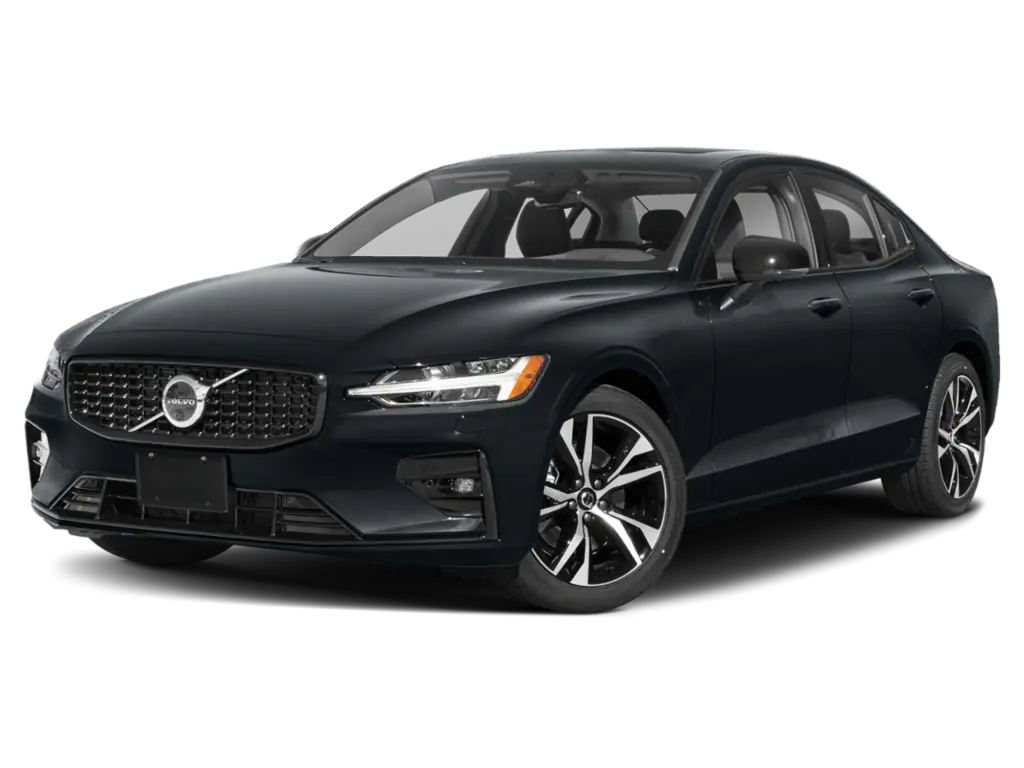
- Volvo S603
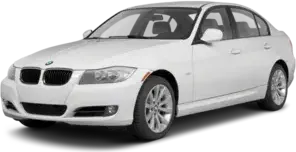
- BMW 3 Series9
- Genesis G7017
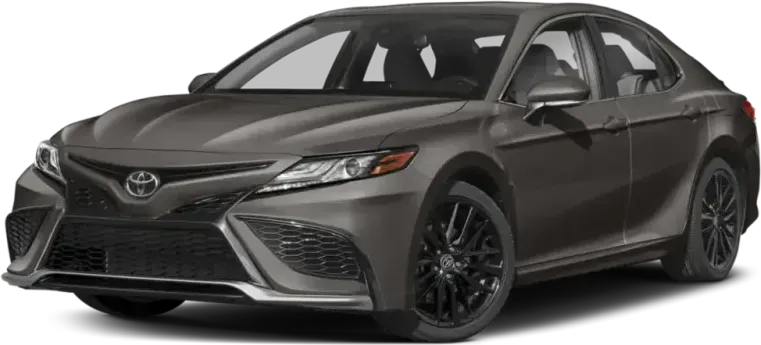
- Toyota Camry47
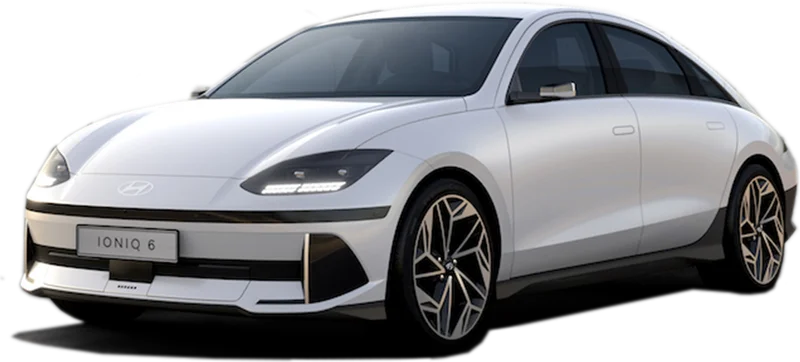
- Hyundai Ioniq 654
- Kia EV698
- 2023 Tesla Model 3386