2023 Hyundai Ioniq 6: What to check before buying
Owners have filed 54 complaints with NHTSA about this car, most about the electrical, transmission, and automatic emergency braking. The 9 checks below target those problems, in the order you would do them at the car.
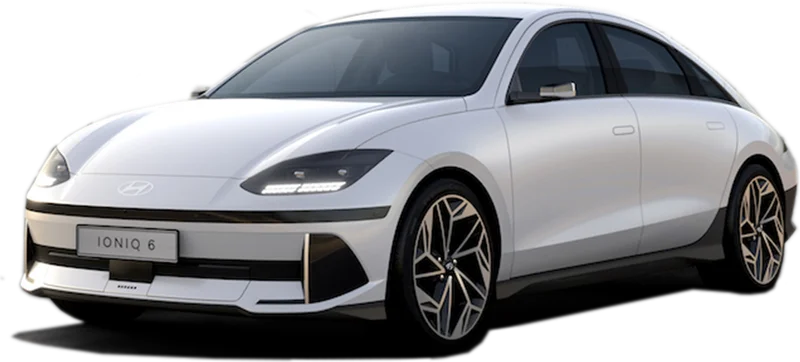 2023
- Owner complaints
- 54
- Recalls
- 5
- Crashes reported
- 0
- 1 injury
Your inspection sheet
Tick items off on your phone at the car, or print it. Ticks stay on this device.
0/9 checked
2023 Hyundai Ioniq 6: inspection sheet
Paperwork and questions
Before you go, or before you touch the car0/1
Walk-around and cabin
Engine off, key in hand0/3
Cold start, engine bay, and underside
Ask the seller not to warm the car up first0/2
Test drive
At least 20 minutes, with some highway0/3
These checks are specific to this model year. For tires, body panels, fluids, and the other basics every used car needs, use the general inspection guide.
Which Ioniq 6 is it?
EPA figures for each version of the 2023 Hyundai Ioniq 6. Use them to confirm you are looking at the version that was advertised, and as a yardstick on the test drive.
| Version | Drive | EPA rating |
|---|---|---|
| Electric | AWD, RWD | 316–361 mi range |
- With a full charge, the range estimate on the dash should land near the EPA figure of 316–361 miles. A much lower number on a mild day can mean a worn battery; ask for a battery health report.
Check the odometer against these mileages
Owners report these failures starting around the mileages below. A car inside one of these ranges deserves a closer look at that part, or records showing it was already fixed.
Horn stops working
3,000–16,000 miles
ICCU failure and power loss
19,616–23,000 miles
Why these checks: what owners reported
NHTSA complaints for the 2023 Hyundai Ioniq 6, grouped by the part owners named. Open a row to read what goes wrong.
Electrical29No crashes
Integrated charging control unit (ICCU) failure dominates these reports. A "check vehicle power supply" or electrical warning appears, the car drops into a limp mode capped near 22 mph, and some cars then shut down in traffic or on the highway. The 12-volt battery often dies with it, so cars need a tow and a jump. Several failures follow a dealer software update, and failures can recur after an ICCU replacement. Parts can take weeks. Smaller groups report horn failures, sometimes within 3,000 miles, and parking brake faults that leave the car stuck in neutral.
Transmission7No crashes
Sudden loss of drive power is the main pattern. Many cases trace to ICCU failure: a warning appears, sometimes after a loud pop, and speed drops to about 25 mph before the car quits. Others happen with no warning lights at all. These include a full loss of power and steering on the highway around 18,000 miles that the dealer could not duplicate, and an accelerator that stops responding until the car restarts. A separate complaint describes the car lurching forward while parking. Losing power in traffic or at intersections carries a real crash risk.
Automatic emergency braking3No crashes
False automatic emergency braking is the complaint. The system warns of a collision that is not there and brakes hard, in one case from highway speed down to around 25 mph, with an injury reported. It also triggers in slow bridge traffic and in an empty covered parking lot, where the car refused to move until restarted. False proximity warnings show up on the same drive in one report. The main danger is a rear-end collision from a following car.
Fuel system2No crashes
The charge door freezes shut after rain followed by below-freezing temperatures, then opens once the day warms up. No warning appears, and a driver far from home could be left unable to charge. The other complaint here is another ICCU failure: an electrical warning tells the driver to stop, the app shows code P1A9096, and the dealer replaces the ICCU. Only 2 complaints fall in this category, so the pattern is thin.
In owners' own words
Excerpts from complaints Ioniq 6 owners filed with NHTSA, as written. Listen for the same symptoms on your test drive.
4 days after having recall 272 performed by the dealer the ICCU on the vehicle failed. Warning lights indicated failure and to stop the vehicle. Luckily, only 1 mile from home and drove it home under reduced power . Called the dealer (70 miles away) and was told to tow the car to them. Car was diagnosed with ICC failure. Replacement had to be ordered but might take at least 4 weeks.
Filed with NHTSA, January 2025
The dashboard error code (check vehicle power supply) also in the bluelink app the error code(DTC P1A9096). I was driving the car. It was 196 miles of range. The car suddenly went into turtle mode and then the car just died in the middle of the road. Luckily I was outside my residence. After waiting 4 hour for towing. I had it towed to the dealership.
Filed with NHTSA, December 2024
While driving on the highway, there was a complete loss of power and steering. I was able to navigate to the side of the road. The vehicle would not start on multiple occasions, and no warning lights illuminated. The vehicle was taken to the dealer, where it was stated that the issue could not be duplicated. The vehicle was not repaired. The manufacturer was not notified of the issue. The approximate failure mileage was 18,000.
Filed with NHTSA, May 2026
I was driving, there was a loud pop, then warnings popped up on the dash and I lost power. I was able to limp the car back to my house, because I had just left. I assume it is the ICCU. I’m reporting this because it is a known issue that Hyundai has not seemingly been able to repair. With the pedal to the floor, I got up to 25 mph. Luckily, I was near home and not on a highway.
Filed with NHTSA, January 2026
I was crossing the Mackinac Bridge, northbound, this afternoon, at the time traveling over the bridge deck's grates in the left lane. Traffic was backed up and I was traveling in the single-digit MPH. There was more that a car's length between myself and the next car ahead, and as I accelerated a little bit to close the distance my emergency braking activated. Fortunately, the car behind me was trailing by a little bit and was also traveling slowly.
Filed with NHTSA, August 2025
When driving the instrument panel displayed a warning message of electrical problem and stop the vehicle. BlueLink displayed failure code P1A9096 indicating ICCVU failure. Drove vehicle to local dealer where the ICCU/fuse was replaced.
Filed with NHTSA, June 2025
How the 2023 compares with other Ioniq 6 years
Complaints for this year next to the average for the other model years, area by area.
The 2023 has the most owner complaints of the 3 Ioniq 6 years we cover, about 1.7 times the average of the others. Newer years have had less time to collect complaints, so compare like with like.
- Electrical2915
- Transmission75
- Automatic emergency braking30
- Fuel system22
Where the 2023 fits in the Ioniq 6's history
Redesigns and mid-cycle updates change what can go wrong.
The 2023 is the first model year of the Ioniq 6's first generation (2023 on). First years of a redesign often carry teething problems that Hyundai fixes in later years, so the checks above matter more than usual.
Hyundai updated the Ioniq 6 for 2025, so a 2023 does not have those changes.
What changed for 2025 (not on a 2023)
- Redesigned front and rear fascia
- New headlights and taillights
- Redesigned steering wheel
- Enlarged climate control display
Should you avoid the first year of a redesign? See the 45-car study.
Recalls to confirm (5)
Recall repairs are free at any Hyundai dealer, but the seller may never have had them done. Check each campaign number against the VIN.
26V218000Seat beltsApr 2026
Hyundai Motor America (Hyundai) is recalling certain 2023-2025 Hyundai Ioniq 6, 2023-2026 Genesis G90, 2024-2026 Hyundai Santa Fe, and Hyundai Santa Fe Hybrid vehicles. The driver and passenger seat belt anchors may detach.
Risk: A detached seat belt anchor will not adequately restrain the seat occupant, increasing the risk of injury in a crash.
Fix: Dealers will inspect and reinforce or replace the seat belt anchors, as necessary, free of charge. Owner notification letters are expected to be mailed June 5, 2026. Owners may contact Hyundai customer service at 1-855-371-9460 and Genesis customer service at 844-340-9741. Hyundai's numbers for this recall are 298 and 032G. Vehicle Identification Numbers (VINs) involved in this recall became searchable on NHTSA.gov April 8, 2026.
25V606000ElectricalSep 2025
Hyundai Motor America (Hyundai) is recalling certain 2023-2025 IONIQ 6 electric vehicles. The charging port door panel may detach.
Risk: A detached charging port door panel can create a road hazard for other vehicles, increasing the risk of a crash.
Fix: Dealers will apply an adhesive on the charging port door assembly, free of charge. Owner notification letters were mailed beginning October 10, 2025. Owners may contact Hyundai customer service at 1-855-371-9460. Hyundai's number for this recall is 282. Vehicle Identification Numbers (VINs) involved in this recall became searchable on NHTSA.gov on September 13, 2025.
24V868000ElectricalNov 2024
Hyundai Motor America (Hyundai) is recalling certain 2022-2024 IONIQ 5, 2023-2025 IONIQ 6, Genesis GV60, Genesis GV70 "Electrified," and Genesis G80 "Electrified" vehicles. The Integrated Charging Control Unit (ICCU) may become damaged and stop charging the 12-volt battery, which can result in a loss of drive power.
Risk: A loss of drive power increases the risk of a crash.
Fix: Dealers will inspect and replace the ICCU and its fuse, as necessary. In addition, dealers will update the ICCU software. All repairs will be performed free of charge. Owner notification letters were mailed December 20, 2024. Owners may contact Hyundai customer service at 1-855-371-9460 or Genesis customer service at 1-844-340-9741. Hyundai's numbers for this recall are 272 (Hyundai) and 025G (Genesis). This recall expands and replaces previous recall number 24V-204. Vehicles previously repaired under recall 24V-204 will need to have the new remedy completed.
24V204000ElectricalMar 2024
Hyundai Motor America (Hyundai) is recalling certain 2022-2024 IONIQ 5, 2023-2024 IONIQ 6, Genesis GV60, Genesis GV70 "Electrified," and Genesis G80 "Electrified" vehicles. The Integrated Charging Control Unit (ICCU) may become damaged and stop charging the 12-Volt battery, which can result in a loss of drive power.
Risk: A loss of drive power increases the risk of a crash.
Fix: This recall is replaced by NHTSA recall number 24V-868. Vehicles already repaired under this recall will need to have the new remedy completed. Dealers will inspect and replace the ICCU and its fuse, as necessary. In addition, dealers will update the ICCU software. All repairs will be performed free of charge. Owner notification letters were mailed April 22, 2024. Owners may contact Hyundai customer service at 1-855-371-9460. Hyundai's number for this recall is 257/021G.
24V065000TransmissionFeb 2024
Hyundai Motor America (Hyundai) is recalling certain 2023 IONIQ 5, IONIQ 6, and Genesis GV60 vehicles. The rear inner driveshaft may have been improperly heat-treated, allowing it to break under load and resulting in a loss of drive power.
Risk: A loss of drive power increases the risk of a crash.
Fix: Dealers will replace the rear inner driveshaft, free of charge. Owner notification letters were mailed March 29, 2024. Owners may contact Hyundai customer service at 1-855-371-9460. Hyundai's numbers for this recall are 253(H), 017G(G).
Also looking at these instead of a Ioniq 6?
Cars shoppers compare with the Hyundai Ioniq 6, with their own 2023 checklists.
2023 owner complaints, side by side
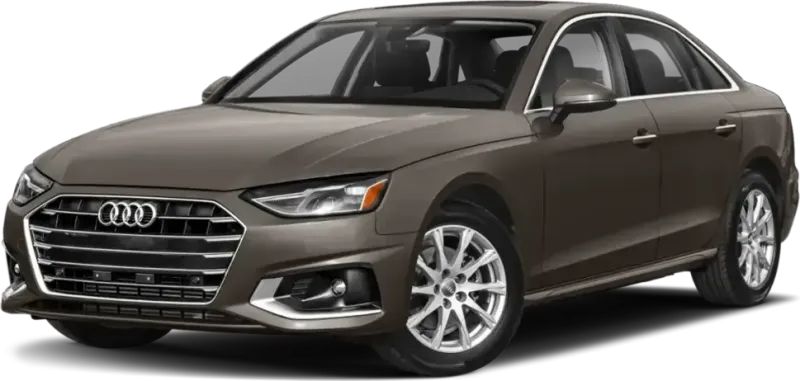
- Audi A48
- BMW 3 Series9
- Toyota Camry47
- 2023 Hyundai Ioniq 654
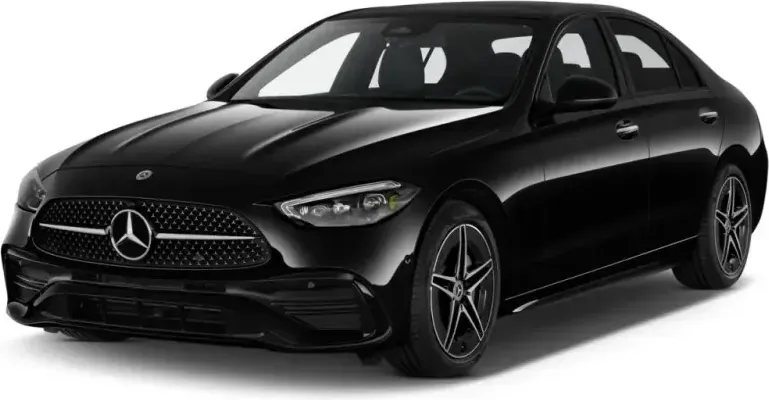
- Mercedes-Benz C-Class209
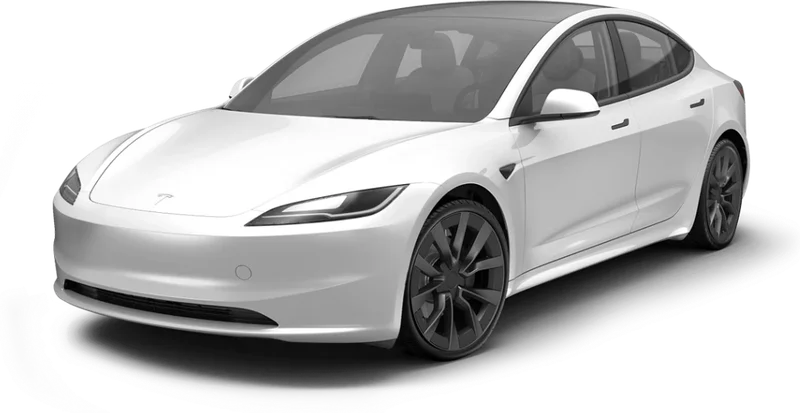
- Tesla Model 3386
- Tesla Model S1,307