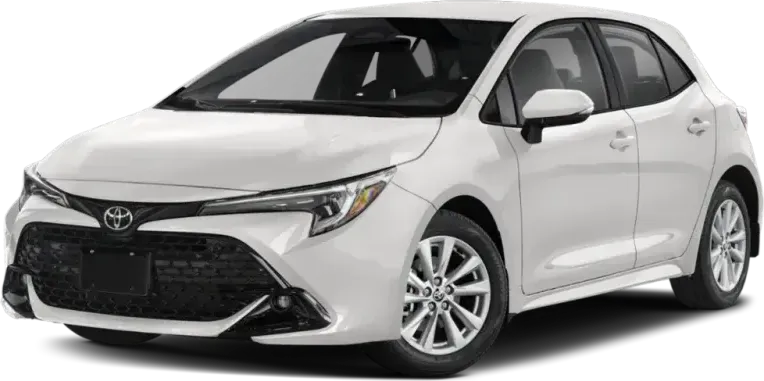
2020 Toyota Corolla: What to check before buying
Owners have filed 290 complaints with NHTSA about this car, most about the engine, transmission, and electrical. The 9 checks below target those problems, in the order you would do them at the car.
 2020
- Owner complaints
- 290
- Recalls
- 6
- Crashes reported
- 22
- 23 injuries
Your inspection sheet
Tick items off on your phone at the car, or print it. Ticks stay on this device.
0/9 checked
2020 Toyota Corolla: inspection sheet
Paperwork and questions
Before you go, or before you touch the car0/3
Walk-around and cabin
Engine off, key in hand0/1
Cold start, engine bay, and underside
Ask the seller not to warm the car up first0/1
Test drive
At least 20 minutes, with some highway0/4
These checks are specific to this model year. For tires, body panels, fluids, and the other basics every used car needs, use the general inspection guide.
Which Corolla is it?
EPA figures for each version of the 2020 Toyota Corolla. Use them to confirm you are looking at the version that was advertised, and as a yardstick on the test drive.
| Version | Drive | EPA rating |
|---|---|---|
| 1.8L 4-cylGas | FWD | 33 mpg |
| 2.0L 4-cylGas | FWD | 35 mpg |
| 1.8L 4-cylHybrid | FWD | 52 mpg |
- The 2020 Toyota Corolla was sold in three versions. Confirm which one this is from the window sticker, the engine cover, or the VIN report before you compare prices.
- On the hybrid, watch for the car moving off on electric power at low speed and for any hybrid system warning on the dash.
- Reset the trip computer at the start of the drive. A Corolla that averages well under the EPA 33 mpg combined on a mixed route may have an engine or tire problem.
Check the odometer against these mileages
Owners report these failures starting around the mileages below. A car inside one of these ranges deserves a closer look at that part, or records showing it was already fixed.
Low-mileage stalling or power loss
600–5,000 miles
Tire blowout or separation
6,000–8,000 miles
Coolant bypass valve failure
26,000–79,575 miles
Communication module failure
37,000–38,000 miles
Clutch slave cylinder leak
51,000–97,000 miles
Why these checks: what owners reported
NHTSA complaints for the 2020 Toyota Corolla, grouped by the part owners named. Open a row to read what goes wrong.
Engine821 crash
An "Engine Maintenance Required" message appears and will not clear. Dealers trace it to a cracked or leaking engine coolant bypass valve. The warning often returns seconds after it is dismissed, can block part of the speedometer, and frequently appears when the A/C is switched on. Reported failures fall mostly between about 26,000 and 80,000 miles. Toyota offers a voluntary Customer Support Program for the valve, yet owners outside warranty describe paying out of pocket, with quotes up to $1,200. One report is crash-related, and a rental car case describes carbon monoxide symptoms.
Transmission321 crash
On cars with the 6-speed manual, the clutch slave cylinder leaks or bursts. The clutch pedal sticks to the floor, and because the clutch shares the brake fluid reservoir, the brake pedal can grow hard as fluid drains. Reports place this between 51,000 and 97,000 miles, usually with no warning. Other complaints describe power loss or stalling when pulling away from a stop, including one crash with 3 injuries. Coolant bypass valve failures under program 24TE04 show up here too, along with several safety warning lights lighting up at once.
Electrical25No crashes
The Data Communication Module fails and triggers a "Communication Module Failure" voice alert, a flashing SOS button, and hands-free calls where the other person cannot hear. Two reports place this near 37,000 to 38,000 miles, and replacement can exceed $800 out of warranty. Other complaints describe many safety systems flagged as malfunctioning at once, no-start conditions, and an "Engine Stopped - Steering Power Low" message. A false seat belt warning paired with an SRS air bag malfunction message also appears. One fire report describes flames under the front driver's side shortly after a parked car was driven.
Airbags179 crashes
Collisions end with no deployment in most of the crash reports here, including head-on, side, and high-speed rear impacts. These complaints account for 9 crashes and 12 injuries, and some cars showed a safety malfunction warning afterward. The other main theme is the recall for the front passenger seat OCS sensor, campaign 23V865000. Owners report that dealers have no parts and quote long waits for the remedy, and some avoid letting anyone ride in the front passenger seat until the repair is done.
Brakes113 crashes
Brakes fail to stop the car, according to several reports, with the pedal pressed to the floor at low speed and no warning light. Three of these reports involve crashes. One hybrid owner describes the car lunging forward while braking in a parking lot. Other reports cover automatic emergency braking that activates during turns, an ABS control unit failing at 25,000 miles, a front caliper rusted and seized at 40,000 miles, a recurring "EPB Shift Interlock Function Activated" message, and a springy pedal vibration at walking speed.
Steering81 crash
The engine stalls while driving and steering turns heavy, with an "engine stopped, steering power low" message on the dash. In one case, a dealer linked steering failure codes to a weak battery. Other reports describe the wheel becoming hard to turn at highway speed, a steering shaft replacement at about 12,000 miles, and thumping or clicking noises from the column that come back after repair, with the car pulling to one side. Lane assist is also reported to steer suddenly toward parked cars, pedestrians, and cyclists.
Seat belts71 crash
The driver's front buckle fails to latch or lock, according to several reports, and dealers often find no fault. One crash reconstruction report from state highway patrol describes the webbing that anchors the buckle tearing in a head-on collision, after which the driver suffered fatal injuries. Another owner describes a belt that did not hold during a hard stop. Some owners linked their buckle problem to campaign 19V877000, but their VINs were not included. False seat belt chimes with the belt fastened are also reported.
Wheels and tires42 crashes
Tires fail at highway speed on nearly new cars, according to both crash reports here. One describes a rear tire exploding near 6,000 miles and the other a tire coming off the wheel at 8000 miles, with both drivers losing control. Other complaints describe replacing all four tires before 40,000 miles, along with a shaking, unbalanced feel that an alignment did not fix. A body panel around the wheel well that lacks a bottom connector and keeps separating from the bumper is also reported.
In owners' own words
Excerpts from complaints Corolla owners filed with NHTSA, as written. Listen for the same symptoms on your test drive.
engine maintenance required notification popping up. told i needed to replace engine coolant bypass valve. safety is at risk because the notification blocks my speedometer . dealer has confirmed that the engine bypass valve needs to be replaced and this happens with all toyotas around 40k miles. has been inspected by dealership. notification popped up on my car about two weeks ago.
Filed with NHTSA, July 2024
After bringing my vehicle in for its oil change and tire rotation, a warning message showed up from my car saying "Engine Maintenance Required". After checking with my dealer, they said that the coolant bypass valve needed to be replaced. My car only has 33,000 miles and has had no issues whatsoever.
Filed with NHTSA, March 2024
At 97,000 miles, the slave cylinder in my vehicle blew. My clutch pedal had stuck to the floor, and my brakes became harder and harder to press down because the clutch takes from the brake fluid reservoir. Brake fluid began to leak from the transmission, and it had to be towed in. If I hadn't come to a stop, I could have gotten in a horrible accident.
Filed with NHTSA, October 2025
Drive start control malfunction occurred when turning the car on. Second time this has happened. First time was a charcoal canister and engine coolant valve. It was replaced under warranty at 50k miles but now at 96k miles the dealer says it is not covered under the extended warranty. Not sure how this problem happened.
Filed with NHTSA, April 2025
Odometer Fraud. The contact purchased a 2020 Toyota Corolla Hybrid. The contact stated that while attempting to register the vehicle, it was discovered that there was a mileage discrepancy. The vehicle was a private sale. At the time of purchase, the vehicle mileage was 87,950 and at the time of registration, it was discovered that the mileage was 297,000.
Filed with NHTSA, May 2025
SOS is malfunctioning. Rebooting every thirty seconds. Interferes with handfree phone calls messages pop up asking to call for operator. Google this and it very common. The sos is for emergencies to get you help and it cuts off every thirty seconds.Your phone calls. Were the person you're talking to cannot hear you until it stops.
Filed with NHTSA, September 2025
Car hydroplaned and spun out. It collided with a cement barrier on the front, back, and drivers side. Car was deemed a total loss. No airbags deployed at any point. Drivers safety put at risk as she hit her head on the driver's side door. Car displayed the message "ABS system malfunctioned" once Car came to stand still. Also, daughters car seat detached from the seat belt lock, sending her car seat sideways. Locks did not keep her secure.
Filed with NHTSA, July 2022
While driving my car it turned off and it was hard for me to turn and all my lights was hard to steer and all the lights on the dash board turned on and they was not turning off and I got in. A wreck by me not being able to turn and hit a bush and my car got total
Filed with NHTSA, December 2021
How the 2020 compares with other Corolla years
Complaints for this year next to the average for the other model years, area by area.
The 2020 has the most owner complaints of the 8 Corolla years we cover, about 2.1 times the average of the others. Newer years have had less time to collect complaints, so compare like with like.
- Engine8213
- Transmission3216
- Electrical2517
- Airbags1718
- Brakes116
- Steering815
Where the 2020 fits in the Corolla's history
Redesigns and mid-cycle updates change what can go wrong.
The 2020 is the first model year of the Corolla's eighth generation (2020–2023). First years of a redesign often carry teething problems that Toyota fixes in later years, so the checks above matter more than usual.
Should you avoid the first year of a redesign? See the 45-car study.
Recalls to confirm (6)
Recall repairs are free at any Toyota dealer, but the seller may never have had them done. Check each campaign number against the VIN.
23V865000AirbagsDec 2023
Toyota Motor Engineering & Manufacturing (Toyota) is recalling certain 2020-2021 Avalon, Avalon Hybrid, Corolla, Highlander, Highlander Hybrid, RAV4, RAV4 Hybrid, Lexus ES350, Lexus RX350, Lexus RX450H, 2021 Sienna Hybrid, Lexus ES250, 2020-2022 Camry, Camry Hybrid, and ES300H vehicles. A short circuit may develop in the Occupant Classification System (OCS) sensor, preventing the front passenger air bag from deploying.
Risk: An air bag that does not deploy during a crash increases the risk of injury.
Fix: Dealers will inspect and replace the sensor as necessary, free of charge. Interim letters notifying owners of the safety risk were mailed in February 2024. Some final remedy owner letters were mailed October 31, 2024. Letters will continue to be mailed in phases through January 2026. Owners may contact Toyota customer service at 1-800-331-4331. Toyota's number for this recall is 23TB15/23TA15 Lexus 23LB03/23LA03.
20V682000Fuel systemNov 2020
Toyota Motor Engineering & Manufacturing (Toyota) is recalling certain 2018-2019 4Runner, 2019-2020 Avalon, 2019 Corolla Hatchback, 2017-2019 Highlander, 2018-2020 Camry, 2020 Corolla, 2018-2019 Land Cruiser, 2017-2020 Tacoma, 2019-2020 RAV4, 2019-2020 Sequoia, 2017-2020 Sienna, 2019-2020 Tundra, 2018-2020 Lexus ES350, 2017 Lexus GS200t, 2017-2019 Lexus GS350, 2019 Lexus GS300, 2018-2020 Lexus LC500h, 2019-2020 Lexus LS500, 2018-2019 Lexus GX460, 2017 Lexus IS200t, 2019 Lexus IS300, 2019 Lexus IS350, 2018-2020 Lexus LC500, 2018 Lexus LS500, 2019 Lexus LS500h, 2018-2019 Lexus LX570, 2017 Lexus RC200t, 2019 Lexus RC300, RC350, 2017 and 2019-2020 Lexus RX350, 2018-2020 RX350L, 2019 Lexus UX200, 2018-2019 Lexus NX300 vehicles. The low-pressure fuel pump inside the fuel tank may fail.
Risk: If the fuel pump fails, the engine can stall while driving, increasing the risk of a crash.
Fix: Toyota will notify owners, and dealers will replace the fuel pump assembly with an improved one, free of charge. Owners of specific models were notified that remedy parts were available starting January 21, 2021. Owners of other models will be notified as remedy parts become available. Remedy parts should be available for all affected vehicles by late March 2021. Owners may contact Toyota customer service at 1-888-270-9371 or Lexus customer service at 1-800-255-3987. Note: This recall is an expansion of recall 20V-012. Toyota's number for this recall is 20TA02. Lexus' number for this recall is 20LA01.
20V205000Exterior lightsApr 2020
Toyota Motor Engineering & Manufacturing (Toyota) is recalling certain 2020 Corolla Hatchback vehicles. A rear hatch wire harness connector may have been damaged during assembly, which may cause the back-up lights to fail.
Risk: If the back-up lights fail, there can be an increased risk of a crash while the vehicle is reversing.
Fix: Toyota will notify owners, and dealers will replace the rear hatch wire harness, free of charge. The recall began June 30, 2020. Owners may contact Toyota customer service at 1-888-270-9371. Toyota's numbers for this recall are 20TB07 and 20TA07.
19V877000Seat beltsDec 2019
Toyota Motor Engineering & Manufacturing (Toyota) is recalling certain 2019-2020 C-HR and 2020 Corolla and Corolla Hybrid vehicles equipped with rear seat belt assemblies with a dual-mode locking mechanism. The seat belt webbing sensor locking mechanism may not lock as intended.
Risk: In the event of a crash involving multiple impacts, the seat belt may not properly restrain the occupant, increasing the risk of injury.
Fix: Toyota will notify owners, and dealers will inspect the rear seat belt assembly production dates, and replace the assemblies, as necessary, free of charge. The recall began February 7, 2020. Owners may contact Toyota customer service at 1-888-270-9371. Toyota's numbers for this recall are 19TB22 and 19TA22.
19V544000Stability controlJul 2019
Toyota Motor Engineering & Manufacturing (Toyota) is recalling certain 2019 Lexus LS500, LC500, ES300h, UX250h, LS500h, Toyota Prius, RAV4 HV, 2019-2020 Toyota Prius Prime, and 2020 Corolla HV vehicles. The brake booster pump may fail causing a deactivation of the Vehicle Stability Control system and a loss of braking assist. As such, these vehicles fail to comply with the requirements of Federal Motor Vehicle Safety Standard (FMVSS) number 126, "Electronic Stability Control Systems.".
Risk: Deactivation of the vehicle stability control system or a loss of braking assist increases the risk of a crash.
Fix: Toyota will notify owners, and dealers will inspect and, if necessary, replace the brake booster pump, free of charge. The recall began September 20, 2019. Toyota owners may contact Toyota customer service at 1-888-270-9371 and Lexus owners may contact Lexus customer service at 1-800-255-3987. Toyota's numbers for this recall are K1L/K0L. Lexus' numbers for this recall are K2F/KLF.
19V244000EquipmentMar 2019
Gulf States Toyota (GST) is recalling certain 2019 C-HR, 4Runner, Avalon, Avalon Hybrid, Camry, Camry Hybrid, Highlander, Land Cruiser, Prius, RAV4, Sequoia, Tacoma, Sienna, Tundra and Yaris vehicles. The text on the load capacity label may become illegible. As such, these vehicles fail to comply with the requirements of Federal Motor Vehicle Safety Standard (FMVSS) number 110, "Tire Selection and Rims.".
Risk: If the driver cannot read the label, they may unknowingly overload the vehicle, increasing the risk of a crash.
Fix: GST will notify owners, and dealers will provide corrected load carrying capacity modification labels, free of charge. The recall began May 24, 2019. Owners may contact GST customer service at 1-800-444-1074. GST's number for this recall is 19R1.
Also looking at these instead of a Corolla?
Cars shoppers compare with the Toyota Corolla, with their own 2020 checklists.
2020 owner complaints, side by side
- Volkswagen Golf14
- Nissan Versa60
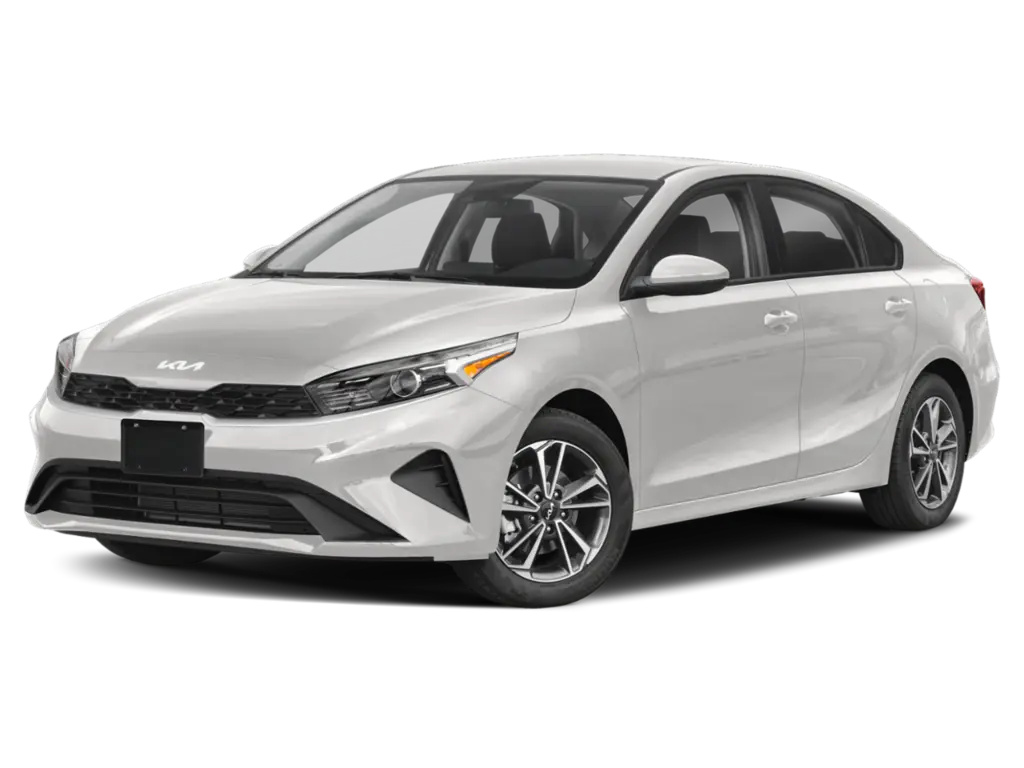
- Kia Forte63
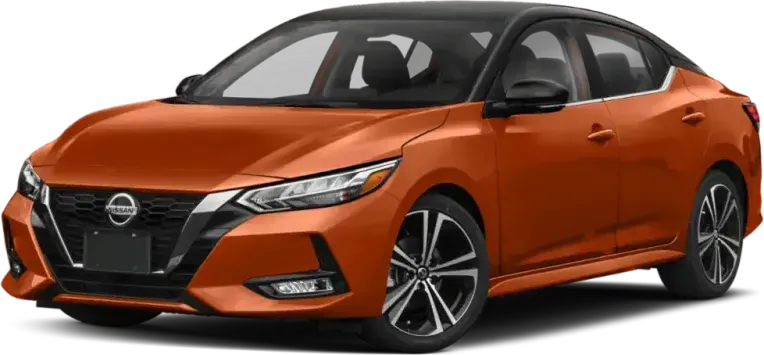
- Nissan Sentra193
- Hyundai Elantra212
- 2020 Toyota Corolla290
- Honda Civic405