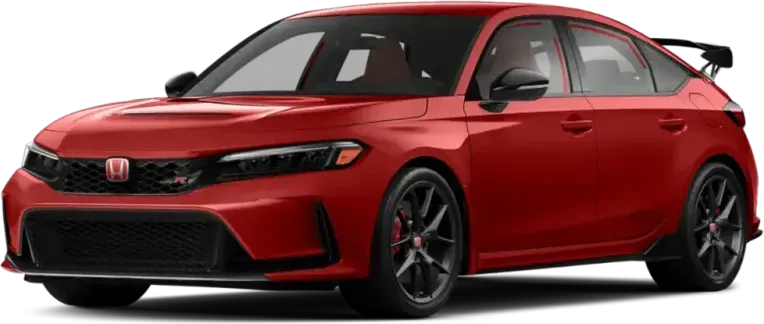
2018 Honda Civic: What to check before buying
Owners have filed 605 complaints with NHTSA about this car, most about the steering, fuel system, and electrical. The 9 checks below target those problems, in the order you would do them at the car.
 2018
- Owner complaints
- 605
- Recalls
- 5
- Crashes reported
- 26
- 21 injuries
Your inspection sheet
Tick items off on your phone at the car, or print it. Ticks stay on this device.
0/9 checked
2018 Honda Civic: inspection sheet
Paperwork and questions
Before you go, or before you touch the car0/2
Cold start, engine bay, and underside
Ask the seller not to warm the car up first0/3
Test drive
At least 20 minutes, with some highway0/4
These checks are specific to this model year. For tires, body panels, fluids, and the other basics every used car needs, use the general inspection guide.
Which Civic is it?
EPA figures for each version of the 2018 Honda Civic. Use them to confirm you are looking at the version that was advertised, and as a yardstick on the test drive.
| Version | Drive | EPA rating |
|---|---|---|
| 1.5L 4-cyl | FWD | 36 mpg |
| 2.0L 4-cyl | FWD | 34 mpg |
- The 2018 Honda Civic was sold in two versions. Confirm which one this is from the window sticker, the engine cover, or the VIN report before you compare prices.
- Reset the trip computer at the start of the drive. A Civic that averages well under the EPA 34 mpg combined on a mixed route may have an engine or tire problem.
Check the odometer against these mileages
Owners report these failures starting around the mileages below. A car inside one of these ranges deserves a closer look at that part, or records showing it was already fixed.
A/C stops cooling
7,000–73,000 miles
Sticky, notchy steering
30,000–89,000 miles
Misfires and fuel injector failure
50,000–80,000 miles
Why these checks: what owners reported
NHTSA complaints for the 2018 Honda Civic, grouped by the part owners named. Open a row to read what goes wrong.
Steering2538 crashes
Sticking near center is the main failure. The wheel catches, then breaks free and jerks the car, so drivers overcorrect to stay in the lane. Reports describe notchy or heavy effort, a clicking noise, and a wheel that will not return to center. It is often worse at highway speed or once the car warms up. Onset falls between about 30,000 and 89,000 miles. Dealers blame the steering rack, with quotes as high as $6500, and a steering box recall leaves out many VINs. Of 253 complaints, 8 involve crashes, some after power steering suddenly failed or locked.
Fuel system1502 crashes
Most of these reports concern fuel system recall 23V858000, which owners cannot get done because dealers have no parts. Many say the wait has gone past a reasonable time, and one car failed a state inspection because the recall was still open. While they wait, some cars stall, start hard, or hesitate. The 2 crash reports describe a stall followed by loss of power steering and brake response, ending in an impact with air bag deployment.
Stalling, power loss on hills, and hesitation tie back to the fuel pump module recall, and most complaints are about getting that repair done. Owners describe waits from 6 months to more than a year. Recall letters say parts are ready while dealers say they are not, and one dealer refused the repair because no check engine light was on. Outside the recall, fuel injectors fail around 60,000 miles on the 1.5L turbo, and the fuel door actuator can buzz nonstop.
Electrical431 crash
A failing body control module drains the battery, sets off the alarm, locks owners out, or keeps the engine running after shutdown. Some cars need the module replaced twice. The collision braking system can brake hard with nothing ahead, and lane keep and cruise control can cut out with false warnings. Air conditioning failures show up here too, in one case at 50000 and again at 75000 miles. One fire started inside the driver door of a parked car, and one owner suffered severe burns from a seat heater.
Engine30No crashes
Gasoline gets into the engine oil. The oil reads overfull and smells of fuel, and some owners also smell gas in the cabin. These reports come from nearly new cars, some under 5,000 miles. Other owners describe misfires, rough idle, and sudden power loss traced to failed fuel injectors or a leaking head gasket. One dealer quoted $13,000 for a replacement engine. Another found a fractured short block after the car stalled and smoked at 36,000 miles.
Airbags196 crashes
Deployment fails in both directions. In several crashes, including rear impacts and a front driver-side hit, the bags do not deploy or only the passenger bag fires. In other cases a driver or passenger bag deploys with no impact at all, during a turn, over a speed bump, or at a few mph. These deployments crack the windshield and injure hands and lips. Some owners also see a warning light that comes and goes. The 19 complaints include 6 crashes and 13 injuries.
Body and structure141 crash
Paint peels, chips, and bubbles, most often on the hood, mirrors, and door handles, and some hoods begin to corrode. Owners of black and Sonic Gray Pearl cars say Honda denies coverage because their VIN or color is excluded. Glass also breaks with no impact: a sunroof shattered on the highway and a rear window broke on a parked car. Other reports cover a loose front bumper or skid plate and cracked window weather strips around 50,000 miles.
Transmission121 crash
On manual cars, the transmission grinds or will not fully engage second and third gear, feels notchy, and resists going into reverse, sometimes from new. Other reports describe misfires that cause violent jerking and lost throttle response, and repeated no-starts from a drained battery. One engine overheated suddenly at 68,000 miles and drew a $9500 repair quote. One parked car rolled away in park and hit a tree, and one engine caught fire on the highway.
Seats71 crash
Heated seats can get hot enough to burn, and one passenger reports blisters after about 15 minutes of use. Other reports describe a driver seat bracket that bent forward in a crash and a height adjuster that grinds and skips positions. A passenger seat can also set off the seat belt chime on left turns. One owner blames the head restraint and seat shape for back pain, and in another report remote start does not turn on the heated seats.
In owners' own words
Excerpts from complaints Civic owners filed with NHTSA, as written. Listen for the same symptoms on your test drive.
Car steering wheel became “sticky” and “jerky” and felt like lane keeping assistance was on preventing car from turning properly. Clicking noise and scraping started. Took to dealership and was told new tires required. Aware of multiple service bulletins and March 2023 class action regarding steering. Took to different dealership who is charging $3800 to replace steering rack. Allegedly not covered under warranty or recall. Car has only 45,000 miles on it
Filed with NHTSA, July 2023
The steering wheel sticks and requires abnormal effort to turn the wheel from the neutral (steering straightforward) to either left or right resulting in oversteering situations once the wheel has "broke-free" from the sticking. The sticking is not noticeable until the vehicle has warmed-up, usually ten to fifteen minutes drive time. The 2018 Civic has 74,850 miles and sticking began around 65,000 but has become more prevalent over time.
Filed with NHTSA, October 2024
First it was two hoses that had issues with the AC then the condensor wasnt holding anything in so it kept leaking out and my AC still wasnt working so Honda said the Evaporator went out and said this is what Honda is known for and happens a lot. So my whole AC all these little parts kept going out and it cost me $4000 to replace all of them and to get it fixed. The evaporator is what cost $3000 to replace
Filed with NHTSA, October 2022
The computer board is out and on back order. I have to boost my care EVERYTIME I attempt to drive it. It has been out since January and won't be in until March 8th. They won't give me a loaner car at all. Nothing showed on the dash. The car automatically stays on but won't crank up but that is why the battery is being ran down.
Filed with NHTSA, January 2023
Driving on the highway and my check engine light starting to flash. I experienced loss of power and hesitation during acceleration. I got home and scanned my computer and it returned P0304. I then removed the #4 ignition coil and that's when I noticed rust. Seems like the seal on the ignition coil failed and water has been leaking into the #4 cylinder over time.
Filed with NHTSA, May 2021
How the 2018 compares with other Civic years
Complaints for this year next to the average for the other model years, area by area.
The 2018 ranks second for owner complaints among 9 Civic years, about 2.1 times the average of the others. Newer years have had less time to collect complaints, so compare like with like.
- Steering253161
- Fuel system15018
- Electrical4314
- Engine303
- Airbags197
- Body and structure141
Where the 2018 fits in the Civic's history
Redesigns and mid-cycle updates change what can go wrong.
The 2018 is the third model year of the Civic's tenth generation (2016–2021).
Recalls to confirm (5)
Recall repairs are free at any Honda dealer, but the seller may never have had them done. Check each campaign number against the VIN.
23V858000Fuel systemDec 2023
Honda (American Honda Motor Co.) is recalling certain 2013-2023 Honda Accord, Civic Coupe, Civic Sedan, Civic Hatchback, Civic Type R, CR-V, HR-V, Ridgeline, Odyssey, Acura ILX, MDX, MDX Hybrid, RDX, RLX, TLX, 2019-2022 Honda Insight, Passport, 2020 Honda CR-V Hybrid, 2018-2019 Honda Clarity PHEV, Fit, and 2015-2020 Honda Accord Hybrid, Pilot, Acura NSX vehicles. The fuel pump inside the fuel tank may fail.
Risk: Fuel pump failure can cause an engine stall while driving, increasing the risk of a crash.
Fix: Dealers will replace the fuel pump module, free of charge. Owner letters were mailed September 6, 2024. Owners may contact Honda customer service at 1-888-234-2138. Honda's numbers for this recall are KGC and KGD. This recall is an expansion of NHTSA recall numbers 21V-215 and 20V-314.
20V314000Fuel systemMay 2020
Honda (American Honda Motor Co.) is recalling certain 2018-2019 Acura NSX, 2019 Acura RDX, RLX and RLX Sport Hybrid, 2018-2019 Honda Accord, Civic Hatchback, Civic Type R and HR-V, 2019-2020 Insight and 2019 Fit vehicles. The low-pressure fuel pump inside the fuel tank may fail.
Risk: If the fuel pump fails, the engine can stall while driving, increasing the risk of a crash.
Fix: Honda will notify owners and dealers will replace the fuel pump assembly, free of charge. The recall began July 22, 2020. Owners may contact Honda customer service at 1-888-234-2138.
18V817000EquipmentNov 2018
Honda (American Honda Motor Co.) is recalling certain 2017-2018 Honda Civic Hatchback and Civic Type R vehicles. The owners guide in these vehicles may not have been included or if included, the owner's guide may not have been properly provided required information. As such, these vehicles fail to comply with the requirements of Federal Motor Vehicle Safety Standard (FMVSS) number 225, "Child Restraint Anchorage Systems.".
Risk: If the information is missing or improper, it can increase the risk of injury or a crash.
Fix: Honda will notify owners, and dealers will replace the owners information kit, free of charge. The recall began January 9, 2019. Owners may contact Honda customer service at 1-888-234-2138. Honda's number for this recall is O3A.
18V663000SteeringSep 2018
Honda (American Honda Motor Co.) is recalling certain 2017-2018 Honda Civic and CR-V vehicles. The magnet that controls the torque sensor output signal for the electronic power steering system may not be properly secured, allowing the magnet to become dislodged. During a full lock turn, the dislodged magnet may cause steering assist to be applied in the opposite direction.
Risk: The unintended steering input reduces vehicle maneuverability and increases the risk of a crash.
Fix: Honda will notify owners, and dealers will replace the steering gearbox assembly, free of charge. The recall began November 9, 2018. Owners may contact Honda customer service at 1-888-234-2138. Honda's numbers for this recall are C2N, P2O.
18V421000EquipmentJun 2018
Honda (American Honda Motor Co.) is recalling certain 2018 Honda Civic vehicles. The manufacturing date area of the certification labels may have random characters which can affect the owner's ability to determine if a safety recall includes their vehicle.
Risk: If the owner is not able to verify if their vehicle is involved in safety recall, it can increase the risk of injury or crash.
Fix: Honda will notify owners, and dealers will replace the certification label, free of charge. The recall began August 7, 2018. Owners may contact Honda customer service at 1-888-234-2138. Honda's number for this recall is U23.
Also looking at these instead of a Civic?
Cars shoppers compare with the Honda Civic, with their own 2018 checklists.
2018 owner complaints, side by side
- Volkswagen Golf56
- Kia Forte133
- Toyota Corolla137
- Nissan Sentra181
- Hyundai Elantra309
- 2018 Honda Civic605
- Ford Focus825