2018 Volkswagen Golf: What to check before buying
Owners have filed 56 complaints with NHTSA about this car, most about the transmission, fuel system, and body and structure. The 10 checks below target those problems, in the order you would do them at the car.
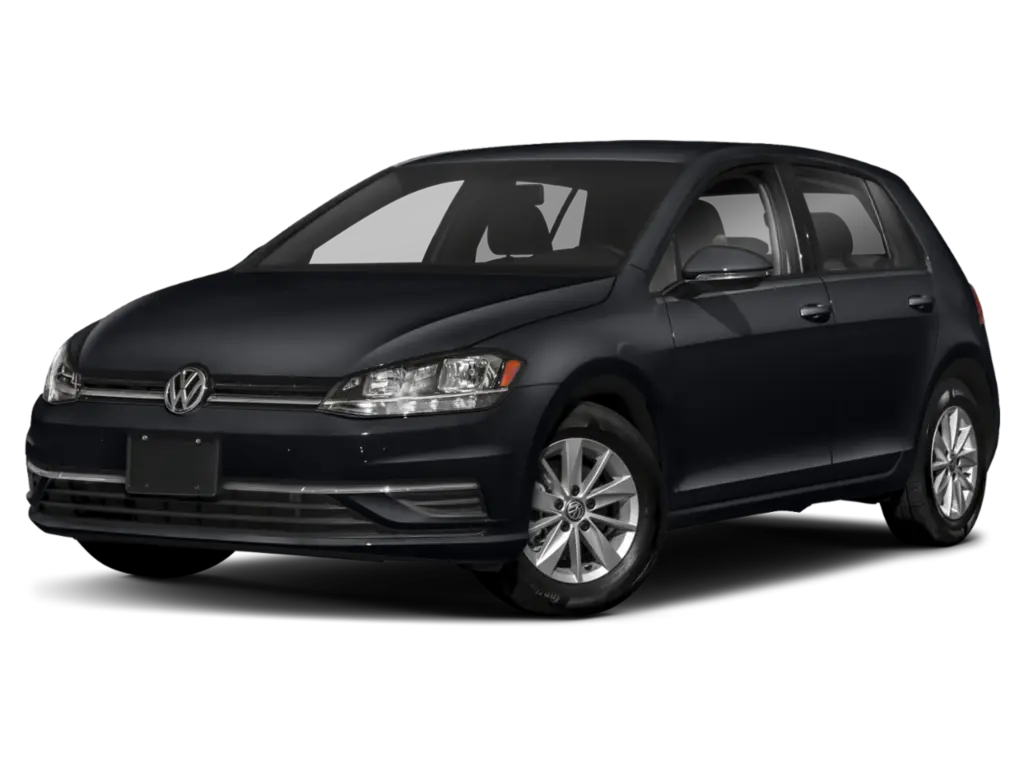 2018
- Owner complaints
- 56
- Recalls
- 10
- 1 urgent
- Crashes reported
- 1
- 6 injuries
One recall on this model year told owners to stop driving until the repair was done.
Do not buy until you have dealer paperwork or a recall lookup showing it was completed for this VIN.
Your inspection sheet
Tick items off on your phone at the car, or print it. Ticks stay on this device.
0/10 checked
2018 Volkswagen Golf: inspection sheet
Paperwork and questions
Before you go, or before you touch the car0/3
Walk-around and cabin
Engine off, key in hand0/2
Cold start, engine bay, and underside
Ask the seller not to warm the car up first0/1
Test drive
At least 20 minutes, with some highway0/4
These checks are specific to this model year. For tires, body panels, fluids, and the other basics every used car needs, use the general inspection guide.
Which Golf is it?
EPA figures for each version of the 2018 Volkswagen Golf. Use them to confirm you are looking at the version that was advertised, and as a yardstick on the test drive.
| Version | Drive | EPA rating |
|---|---|---|
| 1.8L 4-cyl | AWD, FWD | 25–29 mpg |
| 2.0L 4-cyl | AWD | 25 mpg |
- The 2018 Volkswagen Golf was sold in two versions. Confirm which one this is from the window sticker, the engine cover, or the VIN report before you compare prices.
- Reset the trip computer at the start of the drive. A Golf that averages well under the EPA 25 mpg combined on a mixed route may have an engine or tire problem.
Check the odometer against these mileages
Owners report these failures starting around the mileages below. A car inside one of these ranges deserves a closer look at that part, or records showing it was already fixed.
DSG slipping into neutral
35,000–60,000 miles
Coolant leaks
41,000–73,700 miles
Why these checks: what owners reported
NHTSA complaints for the 2018 Volkswagen Golf, grouped by the part owners named. Open a row to read what goes wrong.
Transmission101 crash
The DSG automatic drops into neutral without warning, usually on the 1-2 shift during a gentle pull away from a stop. The engine revs but the car will not accelerate while it crosses or merges into traffic. Owners describe it as sporadic and getting more frequent, and dealers cannot reproduce it. One crash report describes the car moving opposite to the selected gear. Other complaints cover coolant leaks from the thermostat housing, a manual-car clutch master cylinder failing before 37,000 miles, stalling at stops, and sudden engine braking near 25 mph.
Fuel system8No crashes
Fuel leaks and strong gasoline smells lead this group. Fuel gushes from the filler or drips near the right rear wheel, or leaks from the charcoal canister next to the exhaust. Owners describe fire risk, and one dealer had a leaking car parked outside. Some cars will not take fuel at the pump. Others stall or will not restart while the gauge still shows fuel. Some owners say dealers confirmed the leak but had no parts or fix available, leaving cars off the road for a week or more. Separate complaints describe a high-pressure fuel pump failure and a rattling fuel line.
Body and structure5No crashes
Panoramic sunroof glass shatters and crumbles with no road debris involved. The panoramic roof also leaks around its edges, soaking or staining the headliner, A-pillar, and upholstery and fogging the windshield. Peeling chrome on the manual gear shift trim cuts fingers, and that trim caused the one injury in this group. A separate complaint describes the U-shaped bracket on the passenger door jamb, which the door latch attaches to, working loose so the door would not fully close.
Engine3No crashes
Coolant leaks come back after warranty repairs, and one car was leaking again at 41,000 miles after the new-car warranty ran out. Turbocharger wastegate failure causes lag and poor acceleration, and owners report paying thousands out of pocket to repair it. After a hot restart, the engine can stumble on the first try to accelerate, such as when pulling into traffic from a parking lot. Dealers could not duplicate the stumble, and it sets no diagnostic codes.
Automatic emergency braking3No crashes
Automatic emergency braking applies full brakes with no real obstacle ahead. Reported triggers include an ice patch and a metal plate in an intersection. These stops happen at slow and moderate speeds, and one owner reports the same failure twice, about two years apart. The main risk is a rear-end crash from following traffic, since the driver gets no warning. Dealers find nothing in diagnostics, and one recommended switching the system off if it keeps happening.
Exterior lights3No crashes
Moisture collects inside the headlight housings, fogging and dimming the beams at night. In one case it ended with a failed left front lamp and an AFS warning. Dealers have pointed to a service bulletin that says the lights are designed to collect condensation and that driving lets it evaporate, so these cars go unrepaired. Other complaints describe headlights that fail to come on in Auto at startup and show an error message until the car is turned off and restarted.
Electrical3No crashes
A faulty fuel injector wiring harness turns on the EPC light and puts the car in limp mode. In one case this happened at 105,000 miles, and the repair cost $1,756. The backup camera can fail to appear when shifting into reverse while Android Auto is running, sometimes showing a ParkPilot not available message instead. Another owner reports staining on the headliner, pillars, and trim found right after a dealer water test. These three faults are unrelated.
Brakes2No crashes
Anti-lock brakes fail to engage in a hard stop, and the car fishtails from side to side until the driver eases off the pedal. Separately, Front Assist adds sudden heavy braking when the car ahead stops short, even when the driver is already slowing smoothly at a safe distance. That double braking causes skids and raises the risk of being rear-ended. The only override is pressing hard on the gas, which a driver cannot do mid-stop.
In owners' own words
Excerpts from complaints Golf owners filed with NHTSA, as written. Listen for the same symptoms on your test drive.
The vehicle went forward in Reverse and backward in Drive, multiple times in one day, observed by driver and passenger. Another vehicle was struck; no one was injured (fortunately). Dealer said they could not recreate the problem and nothing was wrong.
Filed with NHTSA, August 2021
Received a low coolant warning and then checked the coolant level. Coolant was low and was topped off. One week later the issue recurred as the coolant level and dropped below minimum levels again. Thermostat housing had a slow leak which was discovered by the dealer. This seems to be a flaw in the design of the thermostat housing as multiple owners are reporting the same issue with the same flaw in the thermostat housing.
Filed with NHTSA, October 2022
Fuel leaking from charcoal canister next to exhaust can lead to fire. Fuel leaking on to ground by passenger side rear wheel. Strong smell of gasoline outside and inside car. Caused dizziness while driving can harm children. No warning or any lights other then strong odour of gasoline from inside/outside of vehicle Similar to safety recall 20Y6 Parts requested for repair by dealer -EVAP can system -Fuel Tank
Filed with NHTSA, July 2022
The U-shaped on the passenger door jamb the the door latch attaches to came loose preventing the door from closing completely. Ganley VW tightened up the fasteners without writing up a service order so it would be reported to VW. They did not use a torgue wrench. I asked them to use thread locker to help prevent this from recurring. They refused and stated VW does not permit them to use thread locker. It took 8 days to get an appointment to repair this.
Filed with NHTSA, November 2021
How the 2018 compares with other Golf years
Complaints for this year next to the average for the other model years, area by area.
The 2018 ranks third for owner complaints among 7 Golf years, close to the average of the others. Newer years have had less time to collect complaints, so compare like with like.
- Transmission109
- Fuel system81
- Body and structure51
- Engine38
- Automatic emergency braking33
- Exterior lights30
Where the 2018 fits in the Golf's history
Redesigns and mid-cycle updates change what can go wrong.
The 2018 is the fourth model year of the Golf's seventh generation (2015–2021).
It is also the first year of a mid-cycle update.
What changed for 2018
- Enhanced technology and updated styling.
Recalls to confirm (10)
Recall repairs are free at any Volkswagen dealer, but the seller may never have had them done. Check each campaign number against the VIN.
18V369000BrakesDo not driveJun 2018
Volkswagen Group of America, Inc. (Volkswagen) is recalling certain 2018 Volkswagen Atlas, Passat, Beetle, Beetle Convertible, Golf, Golf SportWagen and GTI and Audi Q5 and SQ5 vehicles. The brake caliper pistons on these vehicles may have insufficient coating, potentially reducing the brake performance.
Risk: A reduction of braking performance can increase the risk of a crash.
Fix: Volkswagen and Audi will notify their owners. Audi dealers will bleed the rear brakes. Volkswagen dealers will bleed the front and rear brake calipers. Note: Owners are advised not to drive their vehicles until the brake system has been checked. The recall began June 29, 2018. Owners may contact Volkswagen customer service at 1-800-893-5298 and Audi customer service at 1-800-253-2834. Volkswagen's numbers for this recall are 47N8, 47N9, and 47N6.
24V110000Fuel systemFeb 2024
Volkswagen Group of America, Inc. (Volkswagen) is recalling certain front-wheel drive 2015-2020 Audi A3 Sedan, 2015-2019 Audi A3 Cabriolet, 2019-2020 Volkswagen Jetta GLI, 2018 Golf Sportwagen GP, 2018-2019 Golf Sportwagen A7, 2015-2017 Golf Sportwagen, 2015-2020 Golf GTI, and 2015-2020 Golf A7 vehicles. Due to a problem with a suction jet pump seal inside the fuel tank, fuel may flow into the evaporative emissions (EVAP) system and possibly leak out of the charcoal canister.
Risk: A fuel leak in the presence of an ignition source increases the risk of a fire.
Fix: Dealers will replace the suction pump, free of charge. Final owner notification letters for Audi owners were mailed on July 25, 2024. Final owner letters for VW owners were mailed on August 13, 2024. Owners may contact Volkswagen customer service at 1-800-893-5298 or Audi customer service at 1-800-253-2834. Volkswagen's numbers for this recall are VW: 20UF/Audi: 20YF. Vehicles that were previously recalled under 16V-647 will need to have the new remedy completed. This recall expands and replaces previous recall number 16V-647.
21V321000OtherMay 2021
Volkswagen Group of America, Inc. (Volkswagen) is recalling certain 2017 Touareg GP, Tiguan, Golf A6, E-Golf GP, CCF, 2016-2017 Passat GP, 2018-2019 Golf R GP, and 2018 Atlas vehicles. These internal-use vehicles were sold without confirmation that they were built to all applicable regulatory requirements and may have been modified prior to sale. As such, these vehicles may fail to comply with the requirements of various Federal Motor Vehicle Safety Standards.
Risk: Vehicles that do not meet all regulatory requirements may have an increased risk of injury, crash, or fire.
Fix: Volkswagen will repurchase the vehicles. Owner notification letters were mailed May 20, 2021. Owners may contact Volkswagen customer service at 1-800-893-5298. Volkswagen's number for this recall is 01F1.
20V561000OtherSep 2020
Volkswagen Group of America, Inc. (Volkswagen) is recalling certain 2018 Volkswagen Golf R and Atlas, 2017 Golf Alltrack and E-Golf and 2016-2018 Passat vehicles. These internal use vehicles were sold without confirmation that they were built to all applicable regulatory requirements and may have been modified prior to sale. As such, these vehicles may fail to comply with the requirements of various Federal Motor Vehicle Safety Standards.
Risk: Vehicles that do not meet all regulatory requirements may have an increased risk of a crash or injury to vehicle occupants.
Fix: Volkswagen will notify owners and will repurchase the vehicles. The recall began October 6, 2020. Owners may contact Volkswagen customer service at 1-800-893-5298. Volkswagen's number for this recall is 01E9.
20V372000EquipmentJun 2020
Volkswagen Group of America, Inc. (Volkswagen) is recalling two 2018 Golf GTI vehicles. The VIN printed on the Federal Certification label may not match the actual VIN on the vehicle. As such, these vehicles fail to comply with the requirements of 49 CFR Part 567, "Certification.".
Risk: If the stamped vehicle identification number (VIN) does not match the VIN on the Vehicle Certification Label, owners may be unable to tell if their vehicle is under an important safety recall, possibly exposing them to an increased risk of a crash, fire or injury.
Fix: Volkswagen will notify owners, and dealers will install a correct certification label, free of charge. This recall began July 9, 2020. Owners may contact Volkswagen customer service at 1-800-893-5298. Volkswagen's number for this recall is 01E7.
19V615000ElectricalAug 2019
Volkswagen Group of America, Inc. (Volkswagen) is recalling certain 2015-2019 GTI, 2015-2016 and 2018-2019 Golf, 2012-2019 Beetle and Beetle Convertible, 2017-2019 Golf SportWagen and 2011-2018 Jetta vehicles equipped with an automatic transmission, manual handbrake and keyless entry. A build-up of silicate on the shift lever micro switch contacts may enable the key to be removed from the ignition when the transmission shift lever is not in "Park.".
Risk: Removing the key while the shift lever is in a position other than "Park" increases the risk of an unintended vehicle rollaway that may result in personal injury or a crash.
Fix: Volkswagen will notify owners, and dealers will install an additional switch and circuit board, free of charge. The recall began November 19, 2019. Owners may contact Volkswagen customer service at 1-800-893-5298. Volkswagen's number for this recall is 37M2.
19V188000SuspensionMar 2019
Volkswagen Group of America, Inc. (Volkswagen) is recalling certain 2017-2019 Golf Sportwagen, 2019 Jetta, 2015-2019 Golf, and 2018-2019 Tiguan vehicles. The rear coil springs may prematurely fracture.
Risk: If a coil spring fractures while driving, it may damage a rear tire causing a loss of vehicle control, increasing the risk of a crash.
Fix: Volkswagen will notify owners, and dealers will replace the rear axle coil springs, free of charge. The recall began April 12, 2019. Owners may contact Volkswagen customer service at 1-800-893-5298. Volkswagen's number for this recall is 42J5.
18V864000Fuel systemDec 2018
Volkswagen Group of America, Inc. (Volkswagen) is recalling certain 2018 Volkswagen Golf R vehicles. The fuel hose quick connector may detach from the fuel supply line in the engine bay, resulting in a fuel leak.
Risk: A fuel leak in the engine compartment can increase the risk of a fire.
Fix: Volkswagen will notify owners, and dealers will secure the fuel line connection, as necessary, free of charge. The recall began January 11, 2019. Owners may contact Volkswagen customer service at 1-800-893-5298. Volkswagen's number for this recall is 20Bi.
18V803000SeatsNov 2018
Volkswagen Group of America, Inc. (Volkswagen) is recalling certain 2018 Volkswagen e-Golf and Golf R vehicles, and Audi A3 Sedan and RS3 vehicles. The rear seat frame head restraint guide sleeves may be incorrectly welded to the seat frame.
Risk: If the guide sleeves are incorrectly welded, in the event of a crash, the rear seat head restraints may have reduced stability, increasing the risk of injury.
Fix: Volkswagen and Audi will notify their owners, and dealers will inspect the guide sleeves for incorrect welds, replacing the rear seat frame, as necessary, free of charge. The recall began December 28, 2018. Owners may contact Volkswagen customer service at 1-800-893-5298 or Audi customer service at 1-800-253-2834. Volkswagen's numbers for this recall are 72H8 (VW) and 72H9(Audi).
18V464000SteeringJul 2018
Volkswagen Group of America, Inc. (Volkswagen) is recalling certain 2015-2018 Volkswagen Golf and Golf Sportwagen vehicles. The build of silicate on the shift lever micro switch contacts may enable the key to be removed from the ignition while the vehicle shift lever is not in "Park." As such, these vehicles fail to comply with the requirements of Federal Motor Vehicle Safety Standard (FMVSS) number 114, "Theft Protection and Rollaway Prevention.".
Risk: Removing the key while the shift lever is in a position other than "Park" increases the risk of an unintended vehicle rollaway that may result in personal injury or a crash.
Fix: Volkswagen will notify owners, and dealers will install an additional switch and circuit board, free of charge. The recall began March 19, 2019. Owners may contact Volkswagen customer service at 1-800-893-5298. Volkswagen's number for this recall is 37L5.
Also looking at these instead of a Golf?
Cars shoppers compare with the Volkswagen Golf, with their own 2018 checklists.
2018 owner complaints, side by side
- Mazda 39
- Subaru WRX40
- 2018 Volkswagen Golf56
- Toyota Corolla137
- Nissan Sentra181
- Hyundai Elantra309
- Honda Civic605