2019 Subaru Ascent: What to check before buying
Owners have filed 431 complaints with NHTSA about this car, most about the electrical, transmission, and wipers and visibility. The 10 checks below target those problems, in the order you would do them at the car.
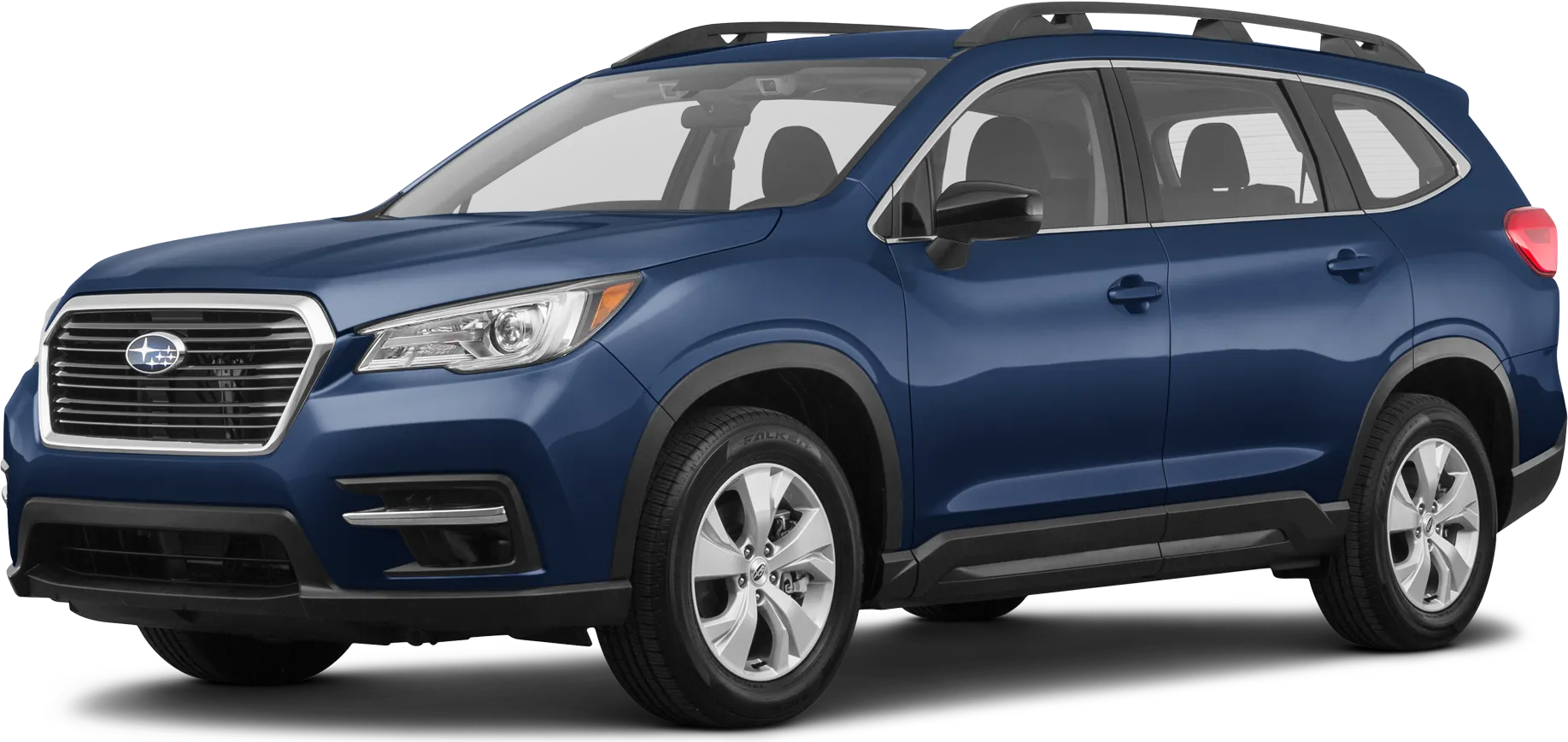 2019
- Owner complaints
- 431
- Recalls
- 8
- 1 urgent
- Crashes reported
- 10
- 8 injuries
One recall on this model year told owners to park outside until the repair was done.
Do not buy until you have dealer paperwork or a recall lookup showing it was completed for this VIN.
Your inspection sheet
Tick items off on your phone at the car, or print it. Ticks stay on this device.
0/10 checked
2019 Subaru Ascent: inspection sheet
Paperwork and questions
Before you go, or before you touch the car0/4
Walk-around and cabin
Engine off, key in hand0/1
Cold start, engine bay, and underside
Ask the seller not to warm the car up first0/3
Test drive
At least 20 minutes, with some highway0/2
These checks are specific to this model year. For tires, body panels, fluids, and the other basics every used car needs, use the general inspection guide.
Which Ascent is it?
EPA figures for each version of the 2019 Subaru Ascent. Use them to confirm you are looking at the version that was advertised, and as a yardstick on the test drive.
| Version | Drive | EPA rating |
|---|---|---|
| 2.4L 4-cyl | AWD | 23 mpg |
- Reset the trip computer at the start of the drive. A Ascent that averages well under the EPA 23 mpg combined on a mixed route may have an engine or tire problem.
Check the odometer against these mileages
Owners report these failures starting around the mileages below. A car inside one of these ranges deserves a closer look at that part, or records showing it was already fixed.
CVT squeal, shudder, slipping
6,000–25,000 miles
Windshield cracking without impact
25,000–54,000 miles
Why these checks: what owners reported
NHTSA complaints for the 2019 Subaru Ascent, grouped by the part owners named. Open a row to read what goes wrong.
Electrical150No crashes
Batteries go flat while the car sits, leaving it unable to start, lock, or open the tailgate. Many reports come well before 20,000 miles, some within the first few thousand. Several drains follow time with the power liftgate open. Dealers often find nothing and swap the battery, yet the drain returns. Some drivers see every dash warning light come on at once, with EyeSight and cruise control shutting off. Four reports involve fire, including engine-bay fires while the car idled or was remote started, one after a morning of battery trouble.
Transmission792 crashes
The CVT squeals, shudders, slips, and hesitates, often beginning between 6,000 and 25,000 miles. Drivers describe RPM flares, hard shifts, jerking at low speed, and sudden loss of drive on the highway with transmission and check-engine warnings and driver aids switched off. Several transmissions are replaced, sometimes more than once, and symptoms can return soon after. Many reports describe repeat dealer visits, reprogramming, and long waits for parts or updates. Two crash reports describe the car lurching forward unexpectedly, once while stopped with a foot on the brake.
Wipers and visibility77No crashes
Windshields crack with little or no impact, sometimes overnight while parked and sometimes with a loud crack while driving. Small rock chips spread across the glass within minutes or days, turning a simple repair into a full replacement that owners put at close to $1,000. Many owners replace the windshield more than once, and replacement glass cracks again. Another pattern is a haze of glaring specks or gold speckles across the glass when facing the sun or oncoming headlights, which dealers do not resolve.
Windshields crack without any impact, often found on a parked car or heard as a pop or bang while driving. Cracks keep growing with each drive, and repaired chips crack again at the repair point. Reported mileages range widely, with many between 25,000 and 54,000 miles. Some owners see the same crack return in the same spot after replacement. A sunroof and a driver's door window also crack without impact. One complaint describes doors that are hard to open because of large gaps.
Engine20No crashes
Heavy smoke pours from the exhaust at startup, sometimes for several minutes with a strong chemical odor, and dealers often cannot reproduce it. Some owners smell fuel at the dipstick and find the oil level above the full mark. Other reports describe a recurring oil pan leak, a cracked exhaust Y-pipe weld that is loud when cold and lets fumes into the cabin, and stuttering or stalling when slowing. A few drivers lose power on the highway with check-engine and EyeSight warnings, and one engine knocks and overheats while towing up a grade.
Brakes161 crash
Brakes vibrate and pulse, especially at highway speed or downhill, with symptoms often starting between 6,000 and 14,000 miles. Rotors are machined or replaced, and the shaking frequently returns along with squealing and longer stopping distances. A separate pattern is false automatic braking, where the collision system stops hard for fog, parked cars, or cars in adjacent lanes. One crash report describes a stiff pedal that would not stop the car while backing up. Another driver says a charging cable caught the parking brake lever at 70 mph and locked the rear wheels.
Body and structure81 crash
The hood vibrates and lifts an inch or two at highway speed in strong crosswinds, though one owner later said the latch held and the hood only flexed. One crash report describes the front end catching fire minutes after a deer strike, destroying the vehicle. Other reports cover exhaust-type fumes in the cabin while idling, rear doors that will not open from inside with the parking brake set, a hard strut impact that shook the dash, and windshields that crack easily from small chips.
Airbags73 crashes
Airbags fail to deploy in serious crashes, including a head-on impact at 35 mph, a hard rear-end collision, and a deer strike followed by a fire. These reports list 7 injuries in total. The front passenger seat sensor intermittently fails to detect an adult passenger, leaving the passenger airbag off about half the time, and recalibration does not fix it. One report describes a side airbag deploying in a parked car after the door closed, temporarily affecting a passenger's hearing.
Automatic emergency braking32 crashes
EyeSight fails to warn or brake before low-speed collisions with poles in parking lots, with one at 14 mph and 5,400 miles and another at night in snow. Neither driver received an alert that the system was unavailable. A third report describes violent jerking at 45 mph, the vehicle accelerating when the brake was pressed, and brakes and steering that seized. Two of the three reports involve crashes.
In owners' own words
Excerpts from complaints Ascent owners filed with NHTSA, as written. Listen for the same symptoms on your test drive.
2019 Subaru Ascent was taken to mechanic due to jolting between 1000RPM and 1500RPM. Car was not throwing any code. Mechanics then did other test and it was determined the transmission is failing. Car only has 70,000 miles on it. Also, when car is started at times, there is a very prominent cloud of smoke that comes from the exhaust.
Filed with NHTSA, November 2023
Yesterday I got in my vehicle first thing in the morning and there was a crack at the bottom of my windshield. I’m not parked anywhere near anything that could’ve caused a crack, so it appears to have just randomly cracked for no reason. This morning as I’m just sitting at the bus stop with my kid the crack got a little bigger.
Filed with NHTSA, October 2023
Huge plumes of smoke on startup. Complained to the service department on multiple occasions and even left the car with the dealer service department. They said they could not duplicate my complaint. They said I should take pictures. Can't take pictures when it happens three or four times a month. I think there is something wrong with the engine am afraid of fire or failure of the engine.
Filed with NHTSA, July 2021
During an inspection at the dealership in December 2023, the tech found the oil pan to be leaking. It was resealed during the same visit. Approximately 8 months later, the same problem was found again at the dealership. It was again resealed. Upon further research, this appears to be a recurring problem on similar vehicles.
Filed with NHTSA, September 2024
How the 2019 compares with other Ascent years
Complaints for this year next to the average for the other model years, area by area.
The 2019 has the most owner complaints of the 6 Ascent years we cover, about 4.8 times the average of the others. Newer years have had less time to collect complaints, so compare like with like.
- Electrical15021
- Transmission7913
- Wipers and visibility7720
- Engine202
- Brakes166
- Body and structure82
Where the 2019 fits in the Ascent's history
Redesigns and mid-cycle updates change what can go wrong.
The 2019 is the first model year of the Ascent's first generation (2019–2023). First years of a redesign often carry teething problems that Subaru fixes in later years, so the checks above matter more than usual.
Subaru updated the Ascent for 2023, so a 2019 does not have those changes.
What changed for 2023 (not on a 2019)
- New front fascia
- New LED headlights with high-beam assist
- New C-shaped taillights
- 11.6-inch touchscreen display
- Improvements to standard features
Should you avoid the first year of a redesign? See the 45-car study.
Recalls to confirm (8)
Recall repairs are free at any Subaru dealer, but the seller may never have had them done. Check each campaign number against the VIN.
22V907000ElectricalPark outsideDec 2022
Subaru of America, Inc. (Subaru) is recalling certain 2019-2022 Ascent vehicles. The ground bolt that secures the ground terminal of the Positive Temperature Coefficient (PTC) heater may have been improperly fastened, which could result in melting of the ground terminal and surrounding components.
Risk: A melting ground terminal increases the risk of a fire.
Fix: Owners are advised to park their vehicle away from structures and to avoid leaving the vehicle unattended while the engine is running. An owner who notices or smells smoke coming from the dash or driver's footwell area should immediately stop operating the vehicle and turn the ignition switch to the "Off" position. Dealers will replace the PTC heater ground bolts and if necessary, replace the ground wire and the connector holder, free of charge. Owner notification letters are expected to be mailed February 6, 2023. Owners may contact Subaru's customer service at 1-844-373-6614. Subaru's number for this recall is WRL-22.
21V955000TransmissionDec 2021
Subaru of America, Inc. (Subaru) is recalling certain 2019-2020 Ascent, 2020 Legacy and Outback vehicles. A programming error in the Transmission Control Unit (TCU) may allow the clutch to engage before the drive chain is completely clamped.
Risk: An improperly secured drive chain may slip and break, causing a loss of drive power and increasing the risk of a crash.
Fix: Dealers will reprogram the TCU, inspect TCU data for chain slip, and visually inspect the chain guide. If evidence of chain slippage or damage is found, the transmission will be replaced. Repairs will be performed free of charge. Owner notification letters were mailed August 19, 2022. This recall includes all vehicles previously recalled under 19V-855. Vehicles previously recalled under 19V-855 will need to have the new remedy performed for this recall once available. Owners may contact Subaru customer service at 1-844-373-6614. Subaru's number for this recall is WRK-21.
21V587000Fuel systemJul 2021
Subaru of America, Inc. (Subaru) is recalling certain 2019-2020 Ascent, 2018 Forester, 2018-2020 Impreza, Legacy, Outback, 2018-2019 BRZ, WRX, and Toyota 86 vehicles. The low-pressure fuel pump inside the fuel tank may fail.
Risk: Fuel pump failure can cause an engine stall while driving, increasing the risk of a crash.
Fix: Dealers will replace the low-pressure fuel pump, free of charge. Owner notification letters were mailed September 24, 2021. Subaru and Toyota owners may call customer service at 1-844-373-6614. Subaru's number for this recall is WRG-21.
20V218000Fuel systemApr 2020
Subaru of America, Inc. (Subaru) is recalling certain 2019 Impreza, Outback, Legacy, and Ascent vehicles. The low pressure fuel pump may become inoperative.
Risk: If the low pressure fuel pump fails, the engine may stall without the ability to restart the vehicle, increasing the risk of a crash.
Fix: Subaru will notify owners, and dealers will replace the low pressure fuel pump, free of charge. The recall began June 4, 2020. Owners may contact Subaru customer service at 1-844-373-6614. Subaru's number for this recall is WRD-20.
19V855000TransmissionDec 2019
Subaru of America, Inc. (Subaru) is recalling certain 2019 Ascent vehicles. The transmission hydraulic sensor may inaccurately measure the hydraulic fluid pressure.
Risk: If the fluid pressure is measured higher than its actual value, the hydraulic pressure will be reduced. If this occurs, the transmission drive chain may not have the proper tension, resulting in a loss of drive power and an increased risk of a crash.
Fix: Subaru will notify owners, and dealers will reprogram the transmission control unit. The hydraulic sensor harness will be replaced on vehicles with certain stored diagnostic trouble codes. In addition, any vehicle confirmed to have experienced low drive chain tension will have the transmission assembly will be replaced. All repairs will be free of charge. The recall began January 31, 2020. Owners may contact Subaru customer service at 1-844-373-6614. Subaru's number for this recall is WUV-07.
19V856000EngineDec 2019
Subaru of America, Inc. (Subaru) is recalling certain 2019 Crosstrek, Forester, and Ascent vehicles. The aluminum Positive Crankcase Ventilation (PCV) valve can separate, allowing the separated components to enter the engine, resulting in a loss of power while driving.
Risk: An unexpected loss of power while driving can increase the risk of a crash.
Fix: Subaru will notify owners, and dealers will inspect and replace the PCV valve, free of charge. If the PCV valve has separated and the components cannot be found, the short block engine will be replaced, free of charge. The recall began January 31, 2020. Owners may contact Subaru customer service at 1-844-373-6614. Subaru's number for this recall is WUW-08.
19V519000TransmissionJul 2019
Subaru of America, Inc. (Subaru) is recalling certain 2019 Ascent vehicles. The center support bolts for the driveshaft may loosen, possibly resulting in the front portion of the driveshaft disconnecting.
Risk: If the front end of the driveshaft separates, it can increase the risk of a crash.
Fix: Subaru will notify owners, and dealers will replace the driveshaft assembly, including the center support brace, free of charge. The recall began July 26, 2019. Owners may contact Subaru customer service at 1-844-373-6614. Subaru's number for this recall is WUI-94.
18V508000Body and structureAug 2018
Subaru of America, Inc. (Subaru) is recalling certain 2019 Subaru Ascent vehicles. These vehicles may be missing spot welds on, or around, the B-Pillar, compromising vehicle strength.
Risk: In the event of a crash, the missing spot welds may compromise the vehicle's strength, increasing the risk of injury.
Fix: Subaru will notify owners, and dealers will inspect the vehicle to check for missing spot welds. If the welds are missing, the vehicle will be replaced, free of charge. The recall began July 31, 2018. Owners may contact Subaru customer service at 1-844-373-6614. Subaru's number for this recall is WTU-80.
Also looking at these instead of a Ascent?
Cars shoppers compare with the Subaru Ascent, with their own 2019 checklists.
2019 owner complaints, side by side
- Mazda CX-952
- Ford Explorer252
- Chevrolet Traverse358
- Toyota Highlander414
- 2019 Subaru Ascent431
- Volkswagen Atlas437
- Honda Pilot794