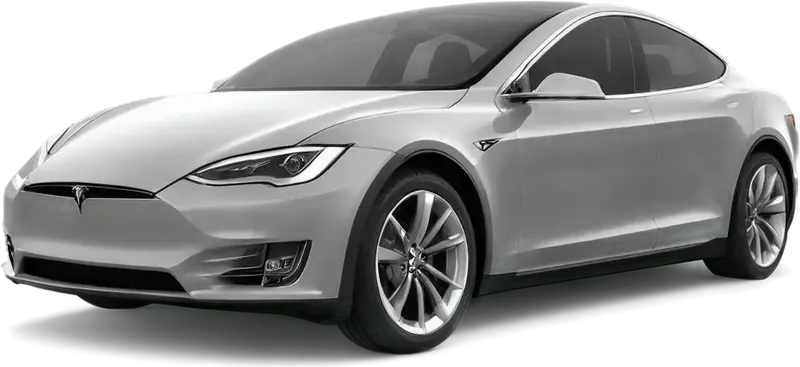
2025 Tesla Model S: What to check before buying
Owners have filed 94 complaints with NHTSA about this car, most about the electrical, automatic emergency braking, and brakes. The 9 checks below target those problems, in the order you would do them at the car.
 2025
- Owner complaints
- 94
- Recalls
- 4
- Crashes reported
- 23
- 10 injuries
Your inspection sheet
Tick items off on your phone at the car, or print it. Ticks stay on this device.
0/9 checked
2025 Tesla Model S: inspection sheet
Paperwork and questions
Before you go, or before you touch the car0/3
Walk-around and cabin
Engine off, key in hand0/2
Cold start, engine bay, and underside
Ask the seller not to warm the car up first0/1
Test drive
At least 20 minutes, with some highway0/3
These checks are specific to this model year. For tires, body panels, fluids, and the other basics every used car needs, use the general inspection guide.
Which Model S is it?
EPA figures for each version of the 2025 Tesla Model S. Use them to confirm you are looking at the version that was advertised, and as a yardstick on the test drive.
| Version | Drive | EPA rating |
|---|---|---|
| Electric | AWD | 410 mi range |
- With a full charge, the range estimate on the dash should land near the EPA figure of 410 miles. A much lower number on a mild day can mean a worn battery; ask for a battery health report.
Check the odometer against these mileages
Owners report these failures starting around the mileages below. A car inside one of these ranges deserves a closer look at that part, or records showing it was already fixed.
AP4 computer failure, cameras out
73–1,000 miles
Why these checks: what owners reported
NHTSA complaints for the 2025 Tesla Model S, grouped by the part owners named. Open a row to read what goes wrong.
Electrical163 crashes
The driver-assist computer, called AP4, fails on nearly new cars and takes down every camera, the backup camera, GPS navigation, cruise control, lane keeping and automatic emergency braking at once. Several cars had under 1,000 miles. Owners describe weeks-long service waits and back-ordered parts. Other reports cover a horn that goes quiet in rain, a touchscreen that goes black until a hard reboot, and a front trunk lid that flies open at highway speed. Two filings involve fire, including smoke from the vents followed by flames in the dash. Most excerpts describe Model Y and Model X cars.
Automatic emergency braking112 crashes
Hard, unexplained braking is the main complaint. Cruise control or Autopilot brakes sharply for vehicles in adjacent lanes, curve signs, or turning cars at a safe distance, raising rear-end risk. A Curvature Assist message appears on straight roads and cuts speed suddenly. Other reports describe Autopilot or Full Self-Driving veering toward adjacent traffic or into oncoming lanes. The AP4 computer failure also shows up here, disabling cameras and collision warnings within the first few hundred miles. Two filings are crash-related, one at 55 mph into roadside posts. Most excerpts describe Model Y and Model X cars.
Brakes102 crashes
Sudden hard braking with nothing ahead is the most common report, and two drivers describe whiplash from it. Automatic emergency braking switches itself back on every drive even after being turned off. Other filings describe the car not stopping despite firm pedal pressure, rolling forward while parked on a snowy driveway, and regenerative braking, traction control and stability control dropping out at random. One-pedal regenerative braking cannot be turned off, which owners call unsafe on ice. Two filings are crash-related. Most excerpts describe Model Y and Model X cars.
Steering74 crashes
Lane-keeping failures under Full Self-Driving or Autopilot account for the most serious reports. The car leaves its lane and hits a divider, guard rail or tree, in one case disengaging about 1 second before impact. Four of seven filings are crash-related, with three injuries. A "Steering Assist reduced" alert leaves the wheel extremely hard to turn, forcing a tow on a car under 20 days old. The turn-signal button on the wheel or yoke works only intermittently, even after yoke replacement. Most excerpts describe Model Y and Model X cars.
Acceleration and cruise control63 crashes
Unintended acceleration at low speed is the main pattern. The car lunges forward or shoots backward when shifted, when the brake is released, or during automatic parking, striking bollards, trees and garage contents. Three of six filings are crash-related, with three injuries. Other complaints say a Full Self-Driving update removed driver-set speed targets and that the system misreads speed limits by as much as 25 mph, causing abrupt speed changes. One report ties an AP4 computer failure to lost cameras and safety features within 700 miles. Most excerpts describe Model Y cars.
Lane keeping53 crashes
Cameras and driver aids drop out when the AP4 computer fails, leaving no backup camera, GPS, collision warning or lane departure warning. One report adds side mirrors stuck dimmed in daylight. Failures arrive within weeks of delivery, then repair dates slip for weeks with no loaner offered. Three filings are crash-related: Full Self-Driving clipping a truck while changing lanes, the system shutting off mid-turn at highway speed, and the car backing into a parked car without any warning. Most excerpts describe Model Y cars.
Airbags43 crashes
Airbags fail to deploy in serious crashes. Three of four filings are crash-related, covering a T-bone collision that totaled the car, a high-speed side impact, and a 30 mph frontal hit into a tree. Two reports add that seat belts did not lock or retract. Another owner reports a front left safety restraint warning and a service wait of at least 10 days. Two filings report injuries. Most excerpts describe Model Y cars.
Wipers and visibility3No crashes
Windshields crack when defrost runs in extreme cold, and owners say Tesla declines to cover the glass. Camera-based automatic wipers miss light rain and swipe a dry windshield, smearing bugs and sap. Turning them off does not stick, because they switch back on whenever Autopilot or Full Self-Driving is engaged. A third filing repeats the AP4 computer failure that disables cameras, driver aids and navigation. No crashes or injuries are reported in this category.
In owners' own words
Excerpts from complaints Model S owners filed with NHTSA, as written. Listen for the same symptoms on your test drive.
Smoke began coming out of the vents while driving. Battery was at 2%. Driver pulled over, exited vehicle and within 2 minutes flames could be seen (on video) coming from the center, dash area of the vehicle. Fire developed rapidly. Lt. Copley Detroit Fire Department, Fire investigation section 313-237-0466
Filed with NHTSA, June 2025
During the autopilot self driving feature the model Y was stopped at a red light waiting to make a left turn. For an unknown reason it proceeded through the red light. Cross traffic had to aggressively break to avoid an incident. Not sure what causes this glitch.
Filed with NHTSA, March 2025
The automatic pilot computer (AP4) failed on my 2025 Tesla Model Y after approximately 400 miles. This controls a lot of the vehicle's auto pilot features but it also controls a lot of its safety features, such as the back-up camera, forward collision warning and blind spot warning. As of 19 December, the Tesla Service Center has had my vehicle for 14 days with no fix for the foreseeable future.
Filed with NHTSA, December 2024
We were Driving East on I-40 at mile marker 245 Friday Nov 29 2024 around 8:50am in the right lane. We were passed by a gray Ford F-150 on the left. We had the "Traffic Aware Cruise Control" enabled. Our Tesla braked hard when the F-150 was directly beside us. The Ford was not in our lane at any point, and never changed lanes. Luckily a car behind us was not following too closely or an accident could have happened.
Filed with NHTSA, November 2024
The vehicle was in supervised full self driving on the turnpike, when all of a sudden it darted out of the lane into th grass hitting a guard rail.
Filed with NHTSA, December 2025
The turning signal button on the steering wheel doesn't respond intermittently. It's a safety hazard to not engage a turning signal when making a turn.
Filed with NHTSA, January 2026
How the 2025 compares with other Model S years
Complaints for this year next to the average for the other model years, area by area.
The 2025 has the fewest owner complaints of the 8 Model S years we cover, well under the average of the others. Newer years have had less time to collect complaints, so compare like with like.
- Electrical1668
- Automatic emergency braking11138
- Brakes1044
- Steering772
- Acceleration and cruise control674
- Lane keeping57
Where the 2025 fits in the Model S's history
Redesigns and mid-cycle updates change what can go wrong.
The 2025 is the 13th model year of the Model S's first generation (2013 on).
It includes the 2021 update.
What changed for 2021
- Significant update including redesigned interior
- Introduction of high-performance Plaid model
Recalls to confirm (4)
Recall repairs are free at any Tesla dealer, but the seller may never have had them done. Check each campaign number against the VIN.
25V172000AirbagsMar 2025
Tesla, Inc. (Tesla) is recalling certain 2021-2024 Model S and 2021-2025 Model X vehicles. An air bag with the incorrect horn pad may have been installed, preventing the horn from sounding.
Risk: An inoperative horn may prevent the driver from alerting other drivers, increasing the risk of a crash.
Fix: Tesla service will inspect and install an air bag with the correct horn pad as necessary, free of charge. Owner notification letters were mailed May 20, 2025. Owners may contact Tesla customer service at 1-877-798-3752. Tesla's number for this recall is SB-25-20-001.
25V002000Backup cameraJan 2025
Tesla, Inc. (Tesla) is recalling certain 2024-2025 Model 3, Model S, 2023-2025 Model X, and Model Y vehicles. The computer circuit board may short, resulting in the loss of the rearview camera image. As such, these vehicles fail to comply with the requirements of Federal Motor Vehicle Safety Standard (FMVSS) number 111, "Rear Visibility.".
Risk: A rearview camera that does not display an image reduces the driver's rear view, increasing the risk of a crash.
Fix: Tesla released an over-the-air (OTA) software update, free of charge. Tesla will also identify any vehicles that experienced a circuit board failure, or stress that may lead to a circuit board failure, and replace the affected computers, free of charge. Owner notification letters were mailed March 7, 2025. Owners may contact Tesla customer service at 1-877-798-3752. Tesla's number for this recall is SB-25-00-001.
24V967000AirbagsDec 2024
Tesla, Inc. (Tesla) is recalling certain 2021-2025 Model S and Model X vehicles. The driver's air bag could tear during deployment. As such, these vehicles fail to comply with the requirements of Federal Motor Vehicle Safety Standard (FMVSS) numbers 208, "Occupant Crash Protection" and 212, "Windshield Mounting.".
Risk: A torn air bag may not adequately protect an occupant in a crash, increasing the risk of injury.
Fix: Tesla service will replace the air bag assembly, free of charge. Owner notification letters were mailed February 21, 2025. Owners may contact Tesla customer service at 1-877-798-3752. Tesla's number for this recall is SB-24-20-001.
24V935000Wheels and tiresDec 2024
Tesla, Inc. (Tesla) is recalling certain 2024 Cybertruck, 2017-2025 Model 3, and 2020-2025 Model Y vehicles. The tire pressure monitoring system (TPMS) warning light may not remain illuminated between drive cycles, failing to warn the driver of low tire pressure. As such, these vehicles fail to comply with the requirements of Federal Motor Vehicle Safety Standard number 138, "Tire Pressure Monitoring Systems.".
Risk: Driving with improperly inflated tires increases the risk of a crash.
Fix: Tesla released an over-the-air (OTA) software update, free of charge. Owner notification letters were mailed February 15, 2025. Owners may contact Tesla customer service at 1-877-798-3752. Tesla's number for this recall is SB-24-00-018.
Also looking at these instead of a Model S?
Cars shoppers compare with the Tesla Model S, with their own 2025 checklists.
2025 owner complaints, side by side
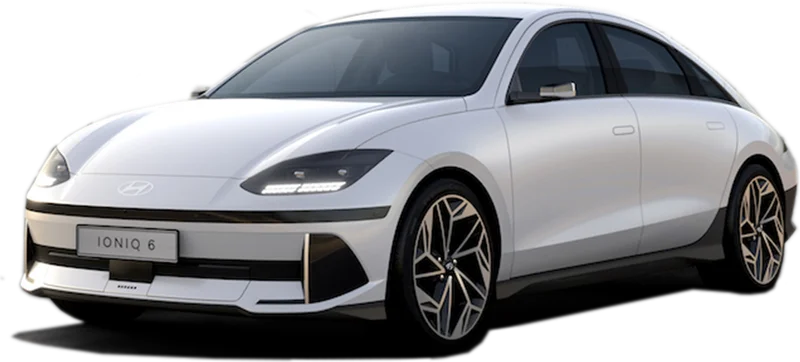
- Hyundai Ioniq 630
- 2025 Tesla Model S94