2019 Tesla Model S: What to check before buying
Owners have filed 120 complaints with NHTSA about this car, most about the suspension, electrical, and steering. The 9 checks below target those problems, in the order you would do them at the car.
 2019
- Owner complaints
- 120
- Recalls
- 8
- Crashes reported
- 14
- 6 injuries
Your inspection sheet
Tick items off on your phone at the car, or print it. Ticks stay on this device.
0/9 checked
2019 Tesla Model S: inspection sheet
Paperwork and questions
Before you go, or before you touch the car0/2
Walk-around and cabin
Engine off, key in hand0/1
Cold start, engine bay, and underside
Ask the seller not to warm the car up first0/1
Test drive
At least 20 minutes, with some highway0/5
These checks are specific to this model year. For tires, body panels, fluids, and the other basics every used car needs, use the general inspection guide.
Which Model S is it?
EPA figures for each version of the 2019 Tesla Model S. Use them to confirm you are looking at the version that was advertised, and as a yardstick on the test drive.
| Version | Drive | EPA rating |
|---|---|---|
| Electric | AWD | 370 mi range |
- With a full charge, the range estimate on the dash should land near the EPA figure of 370 miles. A much lower number on a mild day can mean a worn battery; ask for a battery health report.
Why these checks: what owners reported
NHTSA complaints for the 2019 Tesla Model S, grouped by the part owners named. Open a row to read what goes wrong.
Suspension262 crashes
Wheels tilt into the well or come off entirely when links and control arms break. Several filings describe cars with only 1,500 to 2,200 miles, though many cite salvage auction photos rather than an owner's own car. More common day to day is a shudder under acceleration around 30 to 40 mph, often traced to the front half shafts and returning after repair. Rattles and clicks over small bumps or in turns also come up. The reports include two crashes and one fire. Most excerpts describe the Model X.
Electrical182 crashes
The center and driver screens go dark while driving. When that happens, the speedometer, turn signals, and backup camera stop working, sometimes for several minutes. Other cars won't start, need a new 12-volt battery, or lose power at highway speed after a "vehicle system shutting down" warning. Repeat failures after a repair come up often. Two crashes involve sudden acceleration, one while parking and one from a stop at a red light. A Model S owner reports the horn stopped working after a software update while parts were on order. The door complaints in this group involve the Model X's falcon wing doors.
Steering111 crash
Power steering assist can drop out at highway speed. Drivers see a "steering assist is reduced" warning and need heavy effort to stay in the lane. A Model S Performance had this happen at about 5,000 miles. Other owners hear a loud squeak when turning, and quoted repairs reach $3,000 for that and $5,600 for a steering column. Autopilot swerves out of merging lanes or aborts lane changes. One crash-related filing is really a suspension complaint about a salvaged Model X.
Brakes101 crash
Phantom braking on Autopilot or cruise control dominates this group. The car brakes hard on open highway, sometimes almost to a skid, then beeps and stops with nothing ahead. Drivers have to press the accelerator to cancel it. Some say it happens repeatedly in the same spot, such as before a bridge. A Model S owner saw it at 70 mph, at 59,000 miles, even with Autopilot off. One Model X crash report says the brakes failed to stop the car at 30 mph.
Automatic emergency braking10No crashes
The car brakes hard at highway speed with no obstacle ahead, sometimes dropping from 75 mph to 25 mph in seconds. False forward collision warnings come with it. Owners name large trucks, bridges, and oncoming traffic as triggers, and some say it happens several times every hundred freeway miles. Following traffic has to swerve or brake hard to avoid the car. Dealers often cannot reproduce it. A few filings say the system braked too late for stopped cars.
Acceleration and cruise control83 crashes
Phantom braking under cruise control or Autopilot sheds 40 mph or more with no hazard ahead. One Model S was rear-ended at freeway speed this way, and the occupants were left with whiplash. Owners also report near-miss rear-end collisions. Some cars accelerate on their own instead, in a parking lot, in reverse, or after an "acceleration and top speed reduced" warning. Two Model X crashes came from unintended acceleration at low speed. One owner says Tesla called the braking behavior beta software.
Body and structure62 crashes
Body and trim complaints are a mixed group. Bumpers stay loose even after five or six repair attempts, and a wheel arch liner tore loose from a water splash at 20 mph. Two crashes involve low-speed maneuvers. In one, Summon hit a parked car. In the other, the backup camera view switched off when the climate control was touched. The remaining reports involve Model X falcon wing doors that won't open in heat or that strike people while closing.
Airbags53 crashes
Most of these reports are crashes from sudden acceleration while parking or turning. Airbags deployed in some of them and stayed off in others, including one multi-car collision. One injury report describes facial lacerations, cracked ribs, and eye damage. A separate complaint involves a faulty seat sensor that affects airbag deployment. In that case Tesla quoted a $4100 seat replacement instead of a repair.
In owners' own words
Excerpts from complaints Model S owners filed with NHTSA, as written. Listen for the same symptoms on your test drive.
Experienced rattling while driving. Brought car in and was told this is a known problem. Obtained copy of the bulletin from Tesla saying this was a “fix upon notification” rather than a recall. Then was forced to pay for the repairs. Upon investigation, this has been reported consistently since 2016. This seems fraudulent as it should cross the threshold of a recall. I would like Tesla to cover the costs of my repair as they would do under a recall.
Filed with NHTSA, January 2025
My car at a complete stop at a red light and sudden the car accelerated so fast forward ( unintentioned accelerated ) and rear ended the car in front. Need to take a look into car electrical and software issue
Filed with NHTSA, September 2021
Tesla display and navigation dashboard went dark 3 times while driving on the highway. For 4 minutes I could not see what speed I was going at, I could not give any indication. The risk was that the car could have stopped while in the lane and crashed or caused an accident. This has happened twice before
Filed with NHTSA, August 2023
Constant shudder when driving because of design flaw in Camber & control arms. We tried reaching out to Tesla multiple times but they don't want to cover it under warranty Multiple owners are having same issue
Filed with NHTSA, January 2023
Random phantom braking while on the open freeway with no traffic while in cruise control. it happened multiple times while on a road trip. there was not an obstacle or traffic in front of us. braking was hard almost to a skid
Filed with NHTSA, May 2023
This is my 6th trip with 2019 Tesla S from Chicago to San Francisco / 1st time SO MANY “PHANTOM BRAKING” incidents / FLAT TIRE WARNING error / screen shut off 3 times …..
Filed with NHTSA, February 2022
How the 2019 compares with other Model S years
Complaints for this year next to the average for the other model years, area by area.
The 2019 ranks seventh for owner complaints among 8 Model S years, well under the average of the others. Newer years have had less time to collect complaints, so compare like with like.
- Suspension2634
- Electrical1868
- Steering1172
- Brakes1044
- Automatic emergency braking10138
- Acceleration and cruise control873
Where the 2019 fits in the Model S's history
Redesigns and mid-cycle updates change what can go wrong.
The 2019 is the seventh model year of the Model S's first generation (2013 on).
It includes the 2017 update.
What changed for 2017
- Updated front fascia
- New LED adaptive headlights
- Reintroduction of 60kWh model
- Introduction of all-wheel-drive version (60D)
Recalls to confirm (8)
Recall repairs are free at any Tesla dealer, but the seller may never have had them done. Check each campaign number against the VIN.
24V376000Seat beltsMay 2024
Tesla, Inc. (Tesla) is recalling certain 2012-2024 Model S, 2015-2024 Model X, 2017-2023 Model 3, and 2020-2023 Model Y vehicles. In the event of an unbelted driver, the seat belt warning light and audible chime may not activate as intended. As such, these vehicles fail to comply with the requirements of Federal Motor Vehicle Safety Standard number 208, "Occupant Crash Protection.".
Risk: A seat belt warning system that fails to alert occupants of an unbelted seat belt can increase the risk of injury during a crash.
Fix: Tesla will release an over-the-air (OTA) software update. Owner notification letters were mailed July 26, 2024. Owners may contact Tesla customer service at 1-877-798-3752. Tesla's number for this recall is SB-24-00-008.
24V153000Automatic emergency brakingFeb 2024
Tesla, Inc. (Tesla) is recalling certain 2013, 2018-2021 Model S, 2020-2021 Model X, 2018-2022 Model 3, and 2020-2022 Model Y vehicles. A factory reset muted the Pedestrian Warning System (PWS) sounds. As such, these vehicles fail to comply with the requirements of Federal Motor Vehicle Safety Standard number 141, "Minimum Sound Requirements for Hybrid and Electric Vehicles.".
Risk: Pedestrians may be unaware of an approaching vehicle if the PWS sounds are muted, increasing the risk of a crash.
Fix: Tesla released an over-the-air (OTA) software update, release 2023.44.30.14, free of charge. Owner notification letters were mailed April 27, 2024. Owners may contact Tesla customer service at 1-877-798-3752. Tesla's number for this recall is SB-24-00-006.
23V838000ElectricalDec 2023
Tesla, Inc. (Tesla) is recalling 2012-2023 Model S, 2016-2023 Model X, 2017-2023 Model 3, and 2020-2023 Model Y vehicles equipped with all versions of Autosteer leading up to the version(s) that contains the recall remedy. In certain circumstances when Autosteer is engaged, the prominence and scope of the feature's controls may not be sufficient to prevent driver misuse of the SAE Level 2 advanced driver-assistance feature.
Risk: In certain circumstances when Autosteer is engaged, and the driver does not maintain responsibility for vehicle operation and is unprepared to intervene as necessary or fails to recognize when Autosteer is canceled or not engaged, there may be an increased risk of a crash.
Fix: Tesla will release an over-the-air (OTA) software update, free of charge. Owner notification letters were mailed February 10, 2024. Owners may contact Tesla customer service at 1-877-798-3752. Tesla's number for this recall is SB-23-00-008.
22V818000SteeringNov 2022
Tesla, Inc. (Tesla) is recalling certain 2017-2021 Model S and Model X vehicles. The electronic power assist steering (EPAS) system may experience a loss of power steering assist when driving on rough roads or after hitting a pothole.
Risk: A loss of power steering assist can require greater steering effort, especially at low speeds, increasing the risk of a crash.
Fix: Tesla has released an over-the-air (OTA) software update to recalibrate the EPAS system, free of charge. Owner notification letters were mailed December 31, 2022. Owners may contact Tesla customer service at 1-877-798-3752. Tesla's number for this recall is SB-22-00-014.
22V169000Backup cameraMar 2022
Tesla, Inc. (Tesla) is recalling certain 2018-2019 Model S, Model X, and 2017-2020 Model 3 vehicles equipped with Autopilot Computer 2.5 and operating certain firmware releases. The rearview image may not immediately display when the vehicle begins to reverse. As such, these vehicles fail to comply with the requirements of Federal Motor Vehicle Safety Standard number 111, "Rear Visibility.".
Risk: A delayed rearview camera image reduces the driver's rear view, increasing the risk of a crash.
Fix: Tesla will perform an over-the-air (OTA) software update, free of charge. Owner notification letters were mailed May 17, 2022. Owners may contact Tesla customer service at 1-877-798-3752. Tesla's number for this recall is SB-22-00-004.
22V037000ElectricalJan 2022
Tesla, Inc. (Tesla) is recalling certain 2016-2022 Model S and Model X, 2017-2022 Model 3, and 2020-2022 Model Y vehicles. The "rolling stop" functionality available as part of the Full Self-Driving (Beta) software may allow the vehicle to travel through an all-way stop intersection without first coming to a stop.
Risk: Failing to stop at a stop sign can increase the risk of a crash.
Fix: Tesla will perform an over-the-air (OTA) software update that disables the "rolling stop" functionality, free of charge. Owner notification letters were mailed March 28, 2022. Owners may contact Tesla customer service at 1-877-798-3752. Tesla's number for this recall is SB-22-00-001.
21V00B000Door latches and locksDec 2021
Tesla, Inc. (Tesla) is recalling certain 2014-2021 Model S vehicles. The front trunk latch assembly may be misaligned, preventing the secondary hood latch from engaging. As such, these vehicles fail to comply with the requirements of Federal Motor Vehicle Safety Standard number 113, "Hood Latch System.".
Risk: If the primary latch is inadvertently released and the secondary latch is not engaged, the hood could open unexpectedly, obstructing the driver's view and increasing the risk of a crash.
Fix: Tesla Service will inspect and reposition the latch assembly as necessary, free of charge. Owner notification letters were mailed February 18, 2022. Owners may contact Tesla customer service at 1-877-798-3752. Tesla's number for this recall is SB-21-11-003.
21V846000Automatic emergency brakingOct 2021
Tesla, Inc. (Tesla) is recalling certain 2017-2021 Model S, Model 3, Model X, and 2020-2021 Model Y vehicles operating software version 2021.36.5.2. A communication error may cause false forward-collision warning (FCW) or unexpected activation of the automatic emergency brake (AEB) system.
Risk: Unexpected activation of the AEB system may cause the car to stop suddenly, increasing the risk of a crash.
Fix: Tesla Service has released an over-the-air (OTA) software update, free of charge. The recall began October 25, 2021. Owners may contact Tesla customer service at 1-877-798-3752. Tesla's number for this recall is SB-21-00-004.
Also looking at these instead of a Model S?
Cars shoppers compare with the Tesla Model S, with their own 2019 checklists.
2019 owner complaints, side by side
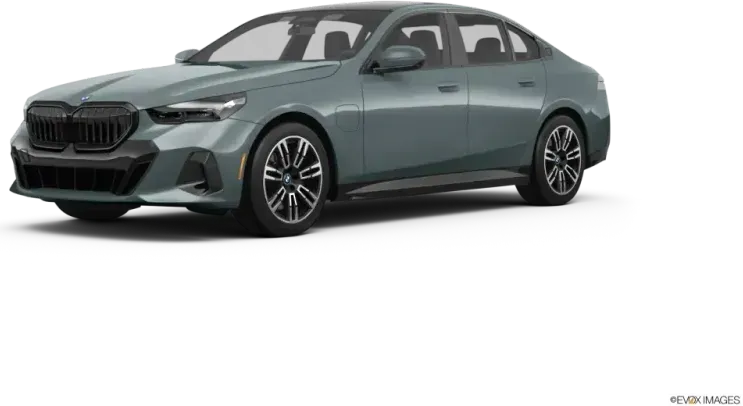
- BMW 5 Series67
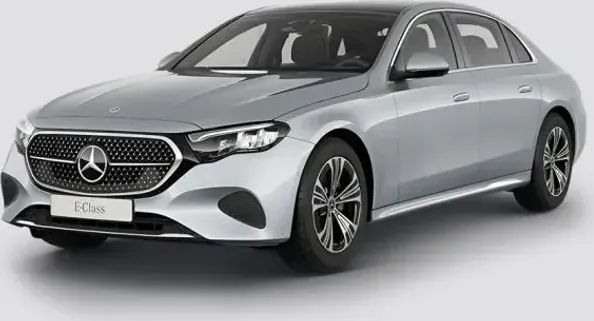
- Mercedes-Benz E-Class100
- 2019 Tesla Model S120