Used Car Checklists

2020 Toyota Prius: What to check before buying

Owners have filed 30 complaints with NHTSA about this car, most about the wipers and visibility, electrical, and transmission. The 9 checks below target those problems, in the order you would do them at the car.

Toyota Prius2020
Owner complaints
30
Recalls
1
Crashes reported
11
6 injuries
Reliability
Good
79/100 on Auto Reliability Index

Run the VIN before you go

A history report shows accidents, title brands, odometer readings, and open recalls for this 2020 Toyota Prius. Ask the seller for the VIN; it is also on the dash at the base of the windshield.

Your inspection sheet

Tick items off on your phone at the car, or print it. Ticks stay on this device.

These checks are specific to this model year. For tires, body panels, fluids, and the other basics every used car needs, use the general inspection guide.

Reported on other Prius years with the same design

These years share the 2020's design and most of its parts, so their problems are the ones to look for on this car too.

2021 Prius

15 owner complaints
  • Electrical 2
  • Automatic emergency braking 2
  • Transmission 2

Worth adding to your 2020 checks

  • Creep into a parking space at walking pace several times and walk away if the car surges or lurches.
  • Test the brakes hard at low speed in an empty lot and confirm they stop the car firmly.
  • Use radar cruise in light traffic and confirm it slows smoothly for stopped cars ahead.
Open the 2021 checklist

2019 Prius

36 owner complaints
  • Wheels and tires 7
  • Brakes 5
  • Airbags 4

Worth adding to your 2020 checks

  • Check the coolant reservoir level and ask for records of exhaust pipe coolant leak repairs.
  • Look over the roof panel for rust bubbles or paint lifting.
  • In an open lot, shift into reverse at low speed and confirm the car moves backward smoothly without surging.
Open the 2019 checklist

2018 Prius

51 owner complaints
  • Airbags 5
  • Wipers and visibility 5
  • Exterior lights 5

Worth adding to your 2020 checks

  • Inspect the windshield and moonroof glass for cracks, chips, or signs of recent replacement.
  • Scan the airbag system for stored codes such as B1656 and confirm the airbag light goes out after startup.
  • Follow traffic at around 25 mph and watch for sudden automatic braking with no obstacle ahead.
Open the 2018 checklist

Which Prius is it?

EPA figures for each version of the 2020 Toyota Prius. Use them to confirm you are looking at the version that was advertised, and as a yardstick on the test drive.

VersionDriveEPA rating
1.5L 4-cylHybridFWD46 mpg
1.8L 4-cylHybridFWD, 4WD50–56 mpg
1.8L 4-cylPlug-in hybridFWD640 mi range
  • The 2020 Toyota Prius was sold in three versions. Confirm which one this is from the window sticker, the engine cover, or the VIN report before you compare prices.
  • On the hybrid, watch for the car moving off on electric power at low speed and for any hybrid system warning on the dash.
  • Reset the trip computer at the start of the drive. A Prius that averages well under the EPA 46 mpg combined on a mixed route may have an engine or tire problem.

Why these checks: what owners reported

NHTSA complaints for the 2020 Toyota Prius, grouped by the part owners named. Open a row to read what goes wrong.

  • Wipers and visibility51 crash

    Frost forms on the inside of the windshield while the car is parked, and clearing it takes 20 minutes or more. One report adds that the wipers turn water and snow into ice. Other complaints describe a long crack spreading from under the camera area after defroster use at about 8000 miles, and outside mirror glass falling off while driving. In that case the dealer replaced the whole mirror. The one crash-related report involves an aftermarket dashboard cover that blocked a sensor and darkened the screen while reversing, ending in a low-speed bump.

  • Electrical41 crash

    Sudden full-throttle acceleration at low speed is the most serious pattern here. Two reports describe the car surging while leaving a parking lot or entering a garage, then hitting a fence or a pole. One crash injured the driver and triggered a check-engine warning about engine, throttle, or transmission control. Separately, screens go dark. The instrument display stops showing speed, fuel, and odometer, and the media touchscreen blanks partly or fully while driving. That cuts off access to heat, air conditioning, and defrost controls.

  • Transmission41 crash

    The car accelerates on its own while creeping into a parking spot. In one case it jumped a curb and hit two vehicles. Another report describes the transmission dropping from drive into neutral on the freeway with no driver input, leaving the car without power until it was shifted back. Rodents chewing through wiring and the air filter set off a check hybrid system warning and rough running, and the dealer bill came to $13066.81. One complaint covers transmission and suspension repairs after a tow.

  • Wheels and tires4No crashes

    Sidewalls blow out or balloon with little warning. This happens at highway speed on smooth pavement and at low speed right after a full stop. Failures come early: one at 3400 miles, another at 24k, where the dealer found bulging on all four tires. One report names the original-equipment Toyo NanoEnergy A41 in 195/65R15 size. Another involves replacement Goodyear Assurance MaxLife tires. None of these complaints reports a crash, but a blowout at highway speed carries a real risk of losing control.

  • Brakes32 crashes

    The brake pedal fails to stop the car. Two of the three complaints end in crashes, with two people injured. In one, the brakes did not respond on the highway in a car with 700 miles, and the car was totaled. In another, the car sped up instead of stopping while parking in a garage. A third report, at about 67,000 miles, describes a vibrating pedal and an on-ice feel at 40 mph with no warning light. Both crash reports describe brake failure and sudden acceleration happening together.

  • Acceleration and cruise control33 crashes

    Sudden acceleration at parking-lot speeds, around 5 mph, is the only pattern, and all three complaints end in crashes. Drivers describe the car surging while turning or pulling into a space, with the brakes failing to slow it, wheels squealing, and no warning lights. Cars jumped curbs, went into bushes, sideswiped a parked car, and hit a wall. In every report that mentions a dealer, the car was not diagnosed or repaired. Reported mileages are 15,670 and about 54,300.

  • Airbags22 crashes

    No air bag deploys in either reported crash. In one, the car surges forward while parking at 14,000 miles and hits a building, severely damaging the front end. In the other, a driver who ran a red light strikes the car. The owner reports that the anti-collision sensors and the air bag both failed to respond, and two people were injured.

In owners' own words

Excerpts from complaints Prius owners filed with NHTSA, as written. Listen for the same symptoms on your test drive.

Transmission
I was driving yesterday on Freeway in the 2nd lane ,all of a sudden car went from drive to neutral,I didn't touch transmission gear lever and I put gas And it says it is on neutral N,I was in dangerous situation, the other cars were flying by,I put on hazard lights Slowly changed lanes because it was not on D drive mode,pulled it over to Shoulder applied brakes and shift to D Then proceeded back to freeway, I was very scare in this whole ordeal

Filed with NHTSA, August 2022

Wheels and tires
Ballooning on side wall of tire. When brought to dealer, they indicated that three other tires had same problem but not as obvious. Car had only 24k miles, with half these on these tires (rest on snow tires). Dealer reported that this was a serious danger.

Filed with NHTSA, June 2022

How the 2020 compares with other Prius years

Complaints for this year next to the average for the other model years, area by area.

The 2020 ranks third for owner complaints among 8 Prius years, close to the average of the others. Newer years have had less time to collect complaints, so compare like with like.

2020 Average of other years
  • Wipers and visibility51
  • Electrical43
  • Transmission41
  • Wheels and tires42
  • Brakes32
  • Acceleration and cruise control31

Where the 2020 fits in the Prius's history

Redesigns and mid-cycle updates change what can go wrong.

The 2020 is the fifth model year of the Prius's fourth generation (2016–2021).

It includes the 2018 update.

What changed for 2018

  • Redesigned headlights and tail lights
  • Introduced all-wheel drive model

Recalls to confirm (1)

Recall repairs are free at any Toyota dealer, but the seller may never have had them done. Check each campaign number against the VIN.

  1. 19V544000Stability controlJul 2019

    Toyota Motor Engineering & Manufacturing (Toyota) is recalling certain 2019 Lexus LS500, LC500, ES300h, UX250h, LS500h, Toyota Prius, RAV4 HV, 2019-2020 Toyota Prius Prime, and 2020 Corolla HV vehicles. The brake booster pump may fail causing a deactivation of the Vehicle Stability Control system and a loss of braking assist. As such, these vehicles fail to comply with the requirements of Federal Motor Vehicle Safety Standard (FMVSS) number 126, "Electronic Stability Control Systems.".

    Risk: Deactivation of the vehicle stability control system or a loss of braking assist increases the risk of a crash.

    Fix: Toyota will notify owners, and dealers will inspect and, if necessary, replace the brake booster pump, free of charge. The recall began September 20, 2019. Toyota owners may contact Toyota customer service at 1-888-270-9371 and Lexus owners may contact Lexus customer service at 1-800-255-3987. Toyota's numbers for this recall are K1L/K0L. Lexus' numbers for this recall are K2F/KLF.
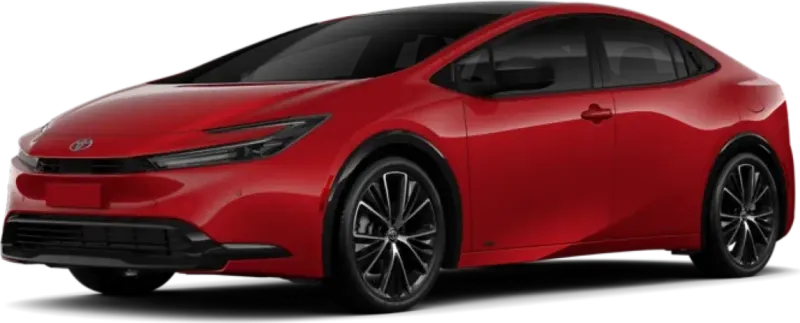
Also looking at these instead of a Prius?

Cars shoppers compare with the Toyota Prius, with their own 2020 checklists.