Used Car Checklists

2019 Toyota Prius: What to check before buying

Owners have filed 36 complaints with NHTSA about this car, most about the wheels and tires, brakes, and airbags. The 9 checks below target those problems, in the order you would do them at the car.

Toyota Prius2019
Owner complaints
36
Recalls
4
Crashes reported
7
2 injuries
Reliability
Good
77/100 on Auto Reliability Index

Run the VIN before you go

A history report shows accidents, title brands, odometer readings, and open recalls for this 2019 Toyota Prius. Ask the seller for the VIN; it is also on the dash at the base of the windshield.

Your inspection sheet

Tick items off on your phone at the car, or print it. Ticks stay on this device.

These checks are specific to this model year. For tires, body panels, fluids, and the other basics every used car needs, use the general inspection guide.

Reported on other Prius years with the same design

These years share the 2019's design and most of its parts, so their problems are the ones to look for on this car too.

2020 Prius

30 owner complaints
  • Wipers and visibility 5
  • Electrical 4
  • Transmission 4

Worth adding to your 2019 checks

  • Ease into several parking spaces at walking speed and confirm the car never surges and the brakes hold.
  • Make firm stops from moderate speed and feel for pedal vibration or a sliding sensation.
  • Inspect every tire sidewall for bulges or ballooning, and note the tire brand.
Open the 2020 checklist

2018 Prius

51 owner complaints
  • Airbags 5
  • Wipers and visibility 5
  • Exterior lights 5

Worth adding to your 2019 checks

  • Inspect the windshield and moonroof glass for cracks, chips, or signs of recent replacement.
  • Scan the airbag system for stored codes such as B1656 and confirm the airbag light goes out after startup.
  • Follow traffic at around 25 mph and watch for sudden automatic braking with no obstacle ahead.
Open the 2018 checklist

2021 Prius

15 owner complaints
  • Electrical 2
  • Automatic emergency braking 2
  • Transmission 2

Worth adding to your 2019 checks

  • Creep into a parking space at walking pace several times and walk away if the car surges or lurches.
  • Test the brakes hard at low speed in an empty lot and confirm they stop the car firmly.
  • Use radar cruise in light traffic and confirm it slows smoothly for stopped cars ahead.
Open the 2021 checklist

Which Prius is it?

EPA figures for each version of the 2019 Toyota Prius. Use them to confirm you are looking at the version that was advertised, and as a yardstick on the test drive.

VersionDriveEPA rating
1.5L 4-cylHybridFWD46 mpg
1.8L 4-cylHybridFWD, 4WD50–56 mpg
1.8L 4-cylPlug-in hybridFWD640 mi range
  • The 2019 Toyota Prius was sold in three versions. Confirm which one this is from the window sticker, the engine cover, or the VIN report before you compare prices.
  • On the hybrid, watch for the car moving off on electric power at low speed and for any hybrid system warning on the dash.
  • Reset the trip computer at the start of the drive. A Prius that averages well under the EPA 46 mpg combined on a mixed route may have an engine or tire problem.

Why these checks: what owners reported

NHTSA complaints for the 2019 Toyota Prius, grouped by the part owners named. Open a row to read what goes wrong.

  • Wheels and tires7No crashes

    Tires lose air, blow out, or develop snapped belt cords that cause a wobble. Several owners say no tire pressure warning came on first. One blowout at 70 mph caused a loss of control. Failures show up at low mileage, and one set had cords snapped on all four tires at 44K miles. Prius Prime owners point out that the car has no spare tire, only a puncture repair kit. That kit cannot fix a tire that is badly damaged.

    Tread separates from the sidewalls at 70 mph with no tire pressure alert, and a front-end shimmy can get bad enough to shake the cabin. Belts also fail early. One set showed exposed steel belting and snapped cords on all four tires at 44K miles. Another blowout came at 27,540 miles on the factory original Toyo NanoEnergy tires. Dunlop Enasave is the other brand named in these reports. One driver stopped safely on a grass median after a blowout.

  • Brakes5No crashes

    Brake rotors groove, overheat, and corrode early. Drivers hear squealing and grinding and feel the brake pedal pulse. One Prius Prime went back for rotor problems twice in 6 weeks at 20,000 miles. Corroded rotors were not covered under warranty. More serious reports describe losing power brake assist at 55 mph along with braking-power-low and anti-lock warnings, which took a new brake booster and master cylinder to fix. Another describes false braking and steering interference that started after a brake service.

  • Airbags44 crashes

    Airbags fail to deploy in collisions, including crashes that totaled the car and hits to the passenger side. All 4 reports involve crashes, and 2 report injuries. Two of the complaints also say the brakes did not respond when the driver pressed the pedal. In one the car slid into a stopped vehicle, and in the other it accelerated unexpectedly after being rear-ended. Any Prius with a crash history deserves a close look at the airbag system.

  • Electrical42 crashes

    At parking-lot speeds, the car surges forward or backward on its own and the brakes do not stop it. Two such reports ended in crashes, and in one the dealer found nothing wrong. A rain-related fault turns on a parking assist sensor warning that keeps beeping even after the sensors are cleaned. It stops once the rain does. Separately, a Prius Prime's doors locked on their own while it was charging, at 1,080 miles.

  • Acceleration and cruise control31 crash

    The car accelerates while the driver brakes into a parking space. That report involves a crash, and the manufacturer's inspection found no problem. Another complaint describes the car dropping from 55 mph to a stop within seconds on a freeway exit, with the accelerator unresponsive for a few seconds afterward. A third describes the whole instrument panel going blank on a new car at 61 miles, and the technician could not find the cause.

  • Transmission2No crashes

    The exhaust heat-exchanger coolant pipe leaks. Losing coolant can cause sudden overheating and reduced power or a shutdown while driving. A dealer called one car unsafe to drive until the pipe was replaced, quoted $2,249, and said the part was on back order with no ETA. Another complaint describes the pre-collision system becoming unavailable and a loud cranking noise from the engine about a month after purchase. The dealer found the PCS sensor missing from that car.

In owners' own words

Excerpts from complaints Prius owners filed with NHTSA, as written. Listen for the same symptoms on your test drive.

Electrical
Whenever it rains the warning message clean parking assist sensor comes on while you are driving. Even after you clean the sensors the warning continues to beep contiously. You can press the back button but it will not stop. Also proximity sensor comes on with this incident. After the rain stops the problem stops.

Filed with NHTSA, June 2022

How the 2019 compares with other Prius years

Complaints for this year next to the average for the other model years, area by area.

The 2019 ranks second for owner complaints among 8 Prius years, about 1.4 times the average of the others. Newer years have had less time to collect complaints, so compare like with like.

2019 Average of other years
  • Wheels and tires72
  • Brakes51
  • Airbags42
  • Electrical43
  • Acceleration and cruise control31
  • Transmission21

Where the 2019 fits in the Prius's history

Redesigns and mid-cycle updates change what can go wrong.

The 2019 is the fourth model year of the Prius's fourth generation (2016–2021).

It includes the 2018 update.

What changed for 2018

  • Redesigned headlights and tail lights
  • Introduced all-wheel drive model

Recalls to confirm (4)

Recall repairs are free at any Toyota dealer, but the seller may never have had them done. Check each campaign number against the VIN.

  1. 19V876000ElectricalDec 2019

    Toyota Motor Engineering & Manufacturing (Toyota) is recalling certain 2019 Prius vehicles. An electrical short circuit in the combination meter could occur, causing the speedometer, the odometer, and the fuel gauge to go blank. As such, these vehicles fail to comply with the requirements of Federal Motor Vehicle Safety Standard (FMVSS) number 101, "Controls and Displays.".

    Risk: A blank main display will not show important information like vehicle speed or fuel level. Driving with an inoperative display can increase the risk of a crash.

    Fix: Toyota will notify owners, and dealers will inspect the flash memory chip (ROM) production date, and if necessary, replace it along with the combination meter circuit board, free of charge. The recall began February 7, 2020. Owners may contact Toyota customer service at 1-888-270-9371. Toyota's numbers for this recall are 19TA21 and 19TB21.

  2. 19V544000Stability controlJul 2019

    Toyota Motor Engineering & Manufacturing (Toyota) is recalling certain 2019 Lexus LS500, LC500, ES300h, UX250h, LS500h, Toyota Prius, RAV4 HV, 2019-2020 Toyota Prius Prime, and 2020 Corolla HV vehicles. The brake booster pump may fail causing a deactivation of the Vehicle Stability Control system and a loss of braking assist. As such, these vehicles fail to comply with the requirements of Federal Motor Vehicle Safety Standard (FMVSS) number 126, "Electronic Stability Control Systems.".

    Risk: Deactivation of the vehicle stability control system or a loss of braking assist increases the risk of a crash.

    Fix: Toyota will notify owners, and dealers will inspect and, if necessary, replace the brake booster pump, free of charge. The recall began September 20, 2019. Toyota owners may contact Toyota customer service at 1-888-270-9371 and Lexus owners may contact Lexus customer service at 1-800-255-3987. Toyota's numbers for this recall are K1L/K0L. Lexus' numbers for this recall are K2F/KLF.

  3. 19V491000Fuel systemJun 2019

    Toyota Motor Engineering & Manufacturing (Toyota) is recalling certain 2018-2019 Prius C vehicles. The DC-DC converter may fail resulting in the auxiliary battery no longer receiving power from the converter, which may cause a loss of drive.

    Risk: A loss of drive increases the risk of crash.

    Fix: Toyota will notify owners, and dealers will replace the DC-DC converter with a new one, as necessary, free of charge. The recall began August 23, 2019. Owners may contact Toyota customer service at 1-888-270-9371. Toyota's number for this recall is K0K.

  4. 19V244000EquipmentMar 2019

    Gulf States Toyota (GST) is recalling certain 2019 C-HR, 4Runner, Avalon, Avalon Hybrid, Camry, Camry Hybrid, Highlander, Land Cruiser, Prius, RAV4, Sequoia, Tacoma, Sienna, Tundra and Yaris vehicles. The text on the load capacity label may become illegible. As such, these vehicles fail to comply with the requirements of Federal Motor Vehicle Safety Standard (FMVSS) number 110, "Tire Selection and Rims.".

    Risk: If the driver cannot read the label, they may unknowingly overload the vehicle, increasing the risk of a crash.

    Fix: GST will notify owners, and dealers will provide corrected load carrying capacity modification labels, free of charge. The recall began May 24, 2019. Owners may contact GST customer service at 1-800-444-1074. GST's number for this recall is 19R1.
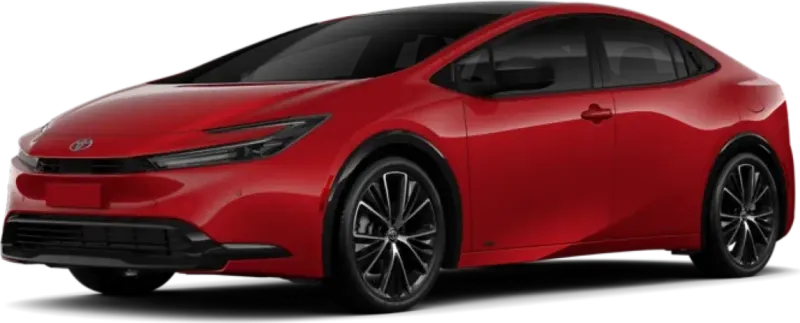
Also looking at these instead of a Prius?

Cars shoppers compare with the Toyota Prius, with their own 2019 checklists.