Used Car Checklists

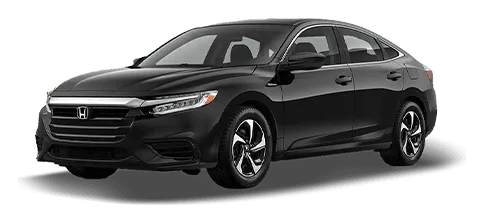
Used 2020 Honda Insight: What to look for before buying

Owners have filed 31 complaints with NHTSA about this car, most about the automatic emergency braking, electrical, and body and structure. The 9 checks below target those problems, in the order you would do them at the car.

NHTSA data through October 2026Updated Maintained by Arnas Kazlaus

Honda Insight2020
Owner complaints
31
Recalls
6
Crashes reported
3
2 injuries
Reliability
Good
71/100 on Auto Reliability Index

Run the VIN before you go

A history report shows accidents, title brands, odometer readings, and open recalls for this 2020 Honda Insight. Ask the seller for the VIN; it is also on the dash at the base of the windshield.

Your inspection sheet

Tick items off on your phone at the car, or print it. Ticks stay on this device.

These checks are specific to this model year. For tires, body panels, fluids, and the other basics every used car needs, use the general inspection guide.

Reported on other Insight years with the same design

These years share the 2020's design and most of its parts, so their problems are the ones to look for on this car too.

2021 Insight

25 owner complaints
  • Automatic emergency braking 7
  • Electrical 3
  • Airbags 2

Worth adding to your 2020 checks

  • Drive on an empty, straight road and watch for automatic braking or collision warnings with nothing ahead.
  • Use adaptive cruise on a highway and note whether the car brakes hard when the vehicle ahead exits.
  • Watch the dash at startup and on the drive for a brake system problem message that appears and clears.
Open the 2021 checklist

2019 Insight

101 owner complaints
  • Fuel system 24
  • Electrical 12
  • Automatic emergency braking 11

Worth adding to your 2020 checks

  • Drive at highway speed with adaptive cruise on and watch for hard braking with nothing ahead.
  • Run the A/C on a warm day and confirm cold air with no white particles from the vents.
  • Ask for records of any A/C condenser or evaporator repairs and note whether they were repeat failures.
Open the 2019 checklist

2022 Insight

33 owner complaints
  • Automatic emergency braking 9
  • Electrical 8
  • Brakes 4

Worth adding to your 2020 checks

  • Drive on an open highway at 45 to 65 mph and watch for braking or "Brake" warnings with nothing ahead.
  • Ask the seller whether the car has ever braked on its own, and check service records for collision mitigation complaints.
  • Use the touchscreen for several minutes and watch for phantom selections, freezes, or a missing backup camera image.
Open the 2022 checklist

Which Insight is it?

EPA figures for each version of the 2020 Honda Insight. Use them to confirm you are looking at the version that was advertised, and as a yardstick on the test drive.

VersionDriveEPA rating
1.5L 4-cylFWD52 mpg
  • On the hybrid, watch for the car moving off on electric power at low speed and for any hybrid system warning on the dash.
  • Reset the trip computer at the start of the drive. A Insight that averages well under the EPA 52 mpg combined on a mixed route may have an engine or tire problem.

Why these checks: what owners reported

NHTSA complaints for the 2020 Honda Insight, grouped by the part owners named. Open a row to read what goes wrong.

  • Automatic emergency braking7No crashes

    Phantom braking is the core complaint. The car brakes hard with nothing in its lane, flashing BRAKE and sometimes beeping. Some events shave off about 10 mph. Others bring the car to a complete stop, including on a railroad crossing. Reports come from city streets at 25 to 35 mph and highways near 65 mph, in daylight and at midnight. Triggers owners suspect include shadows, signs, bridges, and curves with a truck or car in the next lane. Owners say they can't reproduce it. The main danger is a rear-end collision from following traffic.

  • Electrical6No crashes

    Sudden power loss at highway speed is the most serious pattern. The car slows even with the gas pressed, then shows red power system and 12-volt charging warnings telling the driver not to drive. One car logged 52 fault codes across nearly every module and crawled to the shoulder. Other reports describe a battery that keeps draining and strands the car in the cold, warning lights at startup that disable braking and driver aids, and false braking around 33,000 miles. One dealer found a failed battery and brake pedal simulator but left the car unrepaired.

  • Body and structure3No crashes

    Wind noise and a vibrating hood are the common body complaints. Drivers hear rushing air from the driver-side front, sometimes within a day of purchase, and dealers have fixed it at least temporarily. In other cases the whole hood shakes while driving or in wind. One hood was replaced and the shaking came back, raising worry about latch damage. Separately, the engine splash plate has come loose at interstate speed and dragged on the pavement, throwing debris and creating fire concern.

  • Acceleration and cruise control2No crashes

    Adaptive cruise control brakes hard without a real threat. Reported triggers include a car ahead exiting onto a ramp and a curve with a car in the adjacent lane, with speed dropping from 75 to 45 mph. One service department called this normal and advised not using cruise control. A separate report describes the opposite: tapping the set button at drive-thru speed made the car jump to 25 mph without warning, at about 2,800 miles.

  • Steering2No crashes

    Two different steering faults appear. One is an intermittent notchy, sticky feel while driving straight, with uneven resistance that suddenly releases. It showed up around 148,000 miles, after 20 to 40 minutes of driving in warmer weather. The other is more serious: damage to a power steering linkage cable and oxygen sensor knocked every driver aid and the power steering offline, three times so far. Each event happened while parked, but a failure while driving would mean loss of steering control.

  • Brakes2No crashes

    Automatic braking engages on clear roads with nothing ahead. Owners report the car alerting BRAKE and slowing from 70 mph to a near stop on an open highway, hard enough to jerk occupants against their seat belts. Another event happened while entering a clear intersection. The braking recurs after the first event, and drivers fear a rear-end collision in traffic. These complaints match the phantom braking reported under forward collision avoidance.

In owners' own words

Excerpts from complaints Insight owners filed with NHTSA, as written. Listen for the same symptoms on your test drive.

Automatic emergency braking
I was driving on a two lane road driving over a small paved bridge going about 40mph with a car next to me and a car behind me nothing in front of me when my car did a hard phantom brake. No pre warning, the display did show BRAKE and it did beep. But everything was sudden. Luckily the car behind was able to slam on brakes. The car behind me continued to follow but was at least 4 car lengths away. I assume bc they didn't know why I braked.

Filed with NHTSA, August 2024

Automatic emergency braking
I was driving to Pilates class and everything was normal but as I reached a railroad crossing the car suddenly and for no reason stopped dead on the tracks. Luckily for me there were no vehicles in front or behind me and there were no trains coming. I was terrified and wasn’t sure what to do but I pushed the Drive button and the vehicle went ahead as if nothing happened.

Filed with NHTSA, August 2026

Electrical
Battery keeps draining. On my 3rd battery and believe there’s a defect in the DC/DC converter (earlier recall - K9E). This has caused issues being stranded in the cold.

Filed with NHTSA, January 2026

Body and structure
The whole hood vibrates while driving or when is windy, very noticeable at times. It was replaced once, almost a year ago but now it needs to be replaced again. same problem eventually the latches will be damaged creating a very hazardous situation. This vehicle has not been on an accident

Filed with NHTSA, May 2023

How the 2020 compares with other Insight years

Complaints for this year next to the average for the other model years, area by area.

The 2020 ranks third for owner complaints among 4 Insight years, well under the average of the others. Newer years have had less time to collect complaints, so compare like with like.

2020 Average of other years
  • Automatic emergency braking79
  • Electrical68
  • Body and structure30
  • Acceleration and cruise control20
  • Steering20
  • Brakes25

Where the 2020 fits in the Insight's history

Redesigns and mid-cycle updates change what can go wrong.

The 2020 is the second model year of the Insight's third generation (2019–2022).

Recalls to confirm (6)

Recall repairs are free at any Honda dealer, but the seller may never have had them done. Check each campaign number against the VIN before you buy.

  1. 26V332000AirbagsMay 2026
  2. 23V858000Fuel systemDec 2023
  3. 21V215000Fuel systemMar 2021
  4. 20V798000ElectricalDec 2020
  5. 20V771000ElectricalDec 2020
  6. 20V314000Fuel systemMay 2020

Open a campaign number for NHTSA's full notice: what fails, the risk, and the fix.

Also looking at these instead of a Insight?

Cars shoppers compare with the Honda Insight, with their own 2020 checklists.