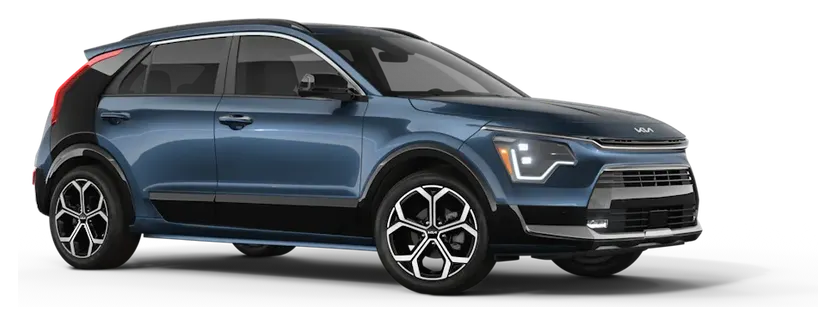
2022 Chevrolet Bolt: What to check before buying
Owners have filed 78 complaints with NHTSA about this car, most about the electrical, steering, and transmission. The 12 checks below target those problems, in the order you would do them at the car.
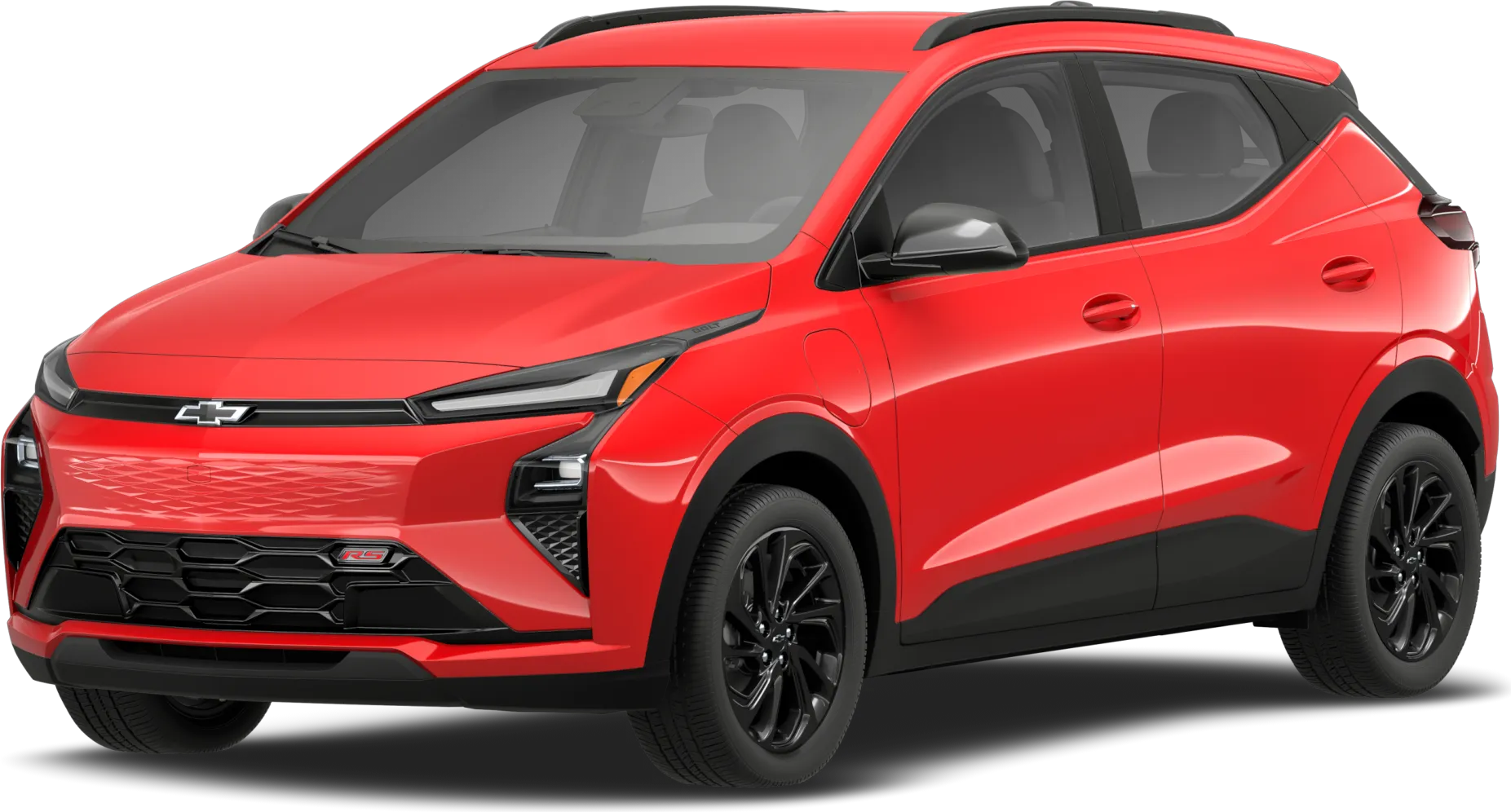 2022
- Owner complaints
- 78
- Recalls
- 7
- 3 urgent
- Crashes reported
- 2
Three recalls on this model year told owners to park outside until the repair was done.
Do not buy until you have dealer paperwork or a recall lookup showing they were completed for this VIN.
Your inspection sheet
Tick items off on your phone at the car, or print it. Ticks stay on this device.
0/12 checked
2022 Chevrolet Bolt: inspection sheet
Paperwork and questions
Before you go, or before you touch the car0/5
Walk-around and cabin
Engine off, key in hand0/2
Cold start, engine bay, and underside
Ask the seller not to warm the car up first0/1
Test drive
At least 20 minutes, with some highway0/4
These checks are specific to this model year. For tires, body panels, fluids, and the other basics every used car needs, use the general inspection guide.
Which Bolt is it?
EPA figures for each version of the 2022 Chevrolet Bolt. Use them to confirm you are looking at the version that was advertised, and as a yardstick on the test drive.
| Version | Drive | EPA rating |
|---|---|---|
| Electric | FWD | 259 mi range |
- With a full charge, the range estimate on the dash should land near the EPA figure of 259 miles. A much lower number on a mild day can mean a worn battery; ask for a battery health report.
Check the odometer against these mileages
Owners report these failures starting around the mileages below. A car inside one of these ranges deserves a closer look at that part, or records showing it was already fixed.
Steering not returning to center
38,000–41,000 miles
Why these checks: what owners reported
NHTSA complaints for the 2022 Chevrolet Bolt, grouped by the part owners named. Open a row to read what goes wrong.
Electrical28No crashes
Propulsion cuts out suddenly while driving, and the battery display can drop to zero. Afterward the car locks itself in park, refuses to shift into any gear, and sometimes won't shut off. Other reports describe hard, unprompted braking from highway speed with a powertrain malfunction warning, plus failed or overheating charging sessions. Many of the complaints are not about a breakdown at all. Owners describe waiting on an open recall repair with no parts available, and a charging cap that made long commutes hard. Dealers often cannot reproduce the faults.
Steering10No crashes
The wheel stops returning to center after a turn, mostly at low speeds, and the driver has to straighten it by hand. Drivers also report stiff steering, binding, popping or clunking over bumps, grinding near 60 mph, and lockups with a reduced steering assist warning. Dealers have diagnosed a failed steering rack, steering gear, or steering column. Several reports cluster between 38,000 and 41,000 miles, with others from under 10,000 to 115,000 miles. Repair quotes run from $3,000 to $7000. The main danger is a car that keeps turning when the driver expects the wheel to straighten.
Transmission9No crashes
A Service Transmission or unable to shift warning appears, and then the car drops into park and won't shift into drive, reverse, or neutral. Drivers end up stranded in intersections or traffic lanes. Some cars also refuse to turn off. At highway speed, propulsion power can drop and the car limits itself to 50 and then 30 mph, nearly causing collisions. Failures show up from new to about 9,000 miles. The problem often returns after repairs to a fuse, control module, or battery cable, and some cars sit at the dealer for weeks.
Acceleration and cruise control51 crash
The car accelerates on its own at low speed, usually while turning a corner or pulling into a parking space. Drivers have to brake hard to avoid hitting nearby cars or pedestrians. One complaint involves a crash into parked vehicles. Dealers usually cannot duplicate the surge, even after repeated visits. In one case the cause turned out to be the cruise control rocker switch being bumped by accident. Another report pairs a propulsion reduced message with limited speed, warm air conditioning, and a charging failure.
Fuel system4No crashes
Battery defects are the theme here. The car's software detects a battery fault, cuts propulsion power, and blocks charging, in one case above 30% with code P0BBD and no air conditioning. The main complaint is the wait for a battery replacement. Cars sit at dealers for 30 to 62 days with no repair date, and owners get little communication. Other owners describe range limits and parking or charging precautions they adopted because of battery fire concerns.
Airbags31 crash
An airbag warning light, often shown as Service Safety Restraint System, turns on and off repeatedly, even on new cars. Dealers either find nothing or tighten a loose wiring connection, and the warning returns. In one case the needed airbag part was months away. One crash report describes a rear-end collision at 68 mph where the airbags did not deploy. Smoke filled the cabin, and the car later sent an airbag service alert.
Automatic emergency braking3No crashes
The car brakes hard with nothing ahead of it, sometimes almost to a stop on the highway. The following cars nearly rear-end it. Most reports tie this phantom braking to adaptive cruise control, and the car gives no warning message first. In the opposite failure, adaptive cruise struggles to detect the car ahead in full sun and accelerates toward the set speed. Both raise collision risk.
Wheels and tires2No crashes
Tire sidewalls fail after pothole hits, and the same position can fail more than once, sometimes with bubbles on other tires. A separate report describes severe vibration at 60 to 70 mph on new replacement tires. The cause was noise-reduction foam that had come loose inside the tire. With only two complaints, this is not a broad pattern.
In owners' own words
Excerpts from complaints Bolt owners filed with NHTSA, as written. Listen for the same symptoms on your test drive.
The battery of my car is at risk of catching fire and i am concerned that my life and others are in danger. The car does not meet my needs anymore as GM has decreased the number of miles it may be driven and thus is not the vehicle I purchased. GM is taking too long to discuss options for me to get rid of this dangerous vehicle and i am concerned for safety of my life and others.
Filed with NHTSA, September 2021
I am hoping to get a full refund on my car. When I bought it, I was never warned of the fire dangers. I park it in a carport and there is no other area where I park it. I worry every night because I can’t park far from other cars. Also, the carplay constantly freezes and the maps show completely different areas
Filed with NHTSA, September 2021
Steering has been become stiff at lower speeds and does not return to center. There is also a knocking noise when making turns. Chevrolet dealer has indicated that the steering rack/gear needs to be replaced. Vehicle is at 115,000 miles, and the problem started happening around 112,000 miles. Although the vehicle does have a lot of miles, I've owned vehicles way past 200,000 miles and have never had to replace a steering rack at a cost of over $3,000.
Filed with NHTSA, October 2025
The steering does not return to center at lower speeds. This appears to be a very common problem affecting these cars after about 40k miles due to faulty part. Repair can cost $3k. Worried that the steering could lock up and cause an accident. My wife didn't even notice until I drove her car and brought it up. Some people could be driving for years without knowing.
Filed with NHTSA, May 2025
Bought vehicle 22 jul 2022 new 5 mi on odometer. System displays: service transmission unable to shift soon. Please google it. It's a common issue that isn't safe. Thank you.
Filed with NHTSA, July 2022
While pulling into a parking spot the car made a loud noise and came to a complete stop. Car was able to pull into the spot. When the car was turned on after parking a warning message came up to service transmission, unable to shift soon. Vehicle was driven to dealer for service and would make thud noises when decelerating at low speed.
Filed with NHTSA, August 2022
Euv service soon light came on followed by a propulsion reduced message. Speed was limited and air conditioning was warm. While parked the euv made a pulsating clicking noise. Euv would not go through charging procedure. Euv gave a change complete message with only 81 miles on the display
Filed with NHTSA, June 2022
On Thursday, August 14th, while pulling into a parking space my car accellerated speed by itself and the engine sounded like it was reving up loud. I had to slam the brakes to get the car to stop. i narrowly missed hitting two other vehicles.
Filed with NHTSA, August 2025
How the 2022 compares with other Bolt years
Complaints for this year next to the average for the other model years, area by area.
The 2022 ranks third for owner complaints among 5 Bolt years, well under the average of the others. Newer years have had less time to collect complaints, so compare like with like.
- Electrical2840
- Steering1024
- Transmission911
- Acceleration and cruise control53
- Fuel system48
- Airbags32
Where the 2022 fits in the Bolt's history
Redesigns and mid-cycle updates change what can go wrong.
The 2022 is the sixth model year of the Bolt's first generation (2017–2023).
It is also the first year of a mid-cycle update.
What changed for 2022
- Front and rear styling revisions
- Revised interior with upgraded seats
- New electronic systems
Recalls to confirm (7)
Recall repairs are free at any Chevrolet dealer, but the seller may never have had them done. Check each campaign number against the VIN.
24V812000ElectricalPark outsideOct 2024
General Motors, LLC (GM) is recalling certain 2020-2022 Chevrolet Bolt EV and 2022 Bolt EUV vehicles previously repaired under Recall 21V-650. The installation of advanced diagnostic software may have failed. As such, the high voltage battery could catch fire when charged to full or nearly full capacity.
Risk: A battery fire increases the risk of injury.
Fix: Owners are advised to take the following interim steps: Set the Target Charge Level feature in their vehicle to limit the charge level to 90%, charge their vehicle more frequently, avoid depleting the battery to 70 miles range remaining, park outside after charging, and do not charge the vehicle indoors overnight. Dealers will reinstall advanced diagnostic software, free of charge. Owner notification letters were mailed December 3, 2024. Owners may contact the Bolt EV Concierge Team at 1-833-382-4389. GM's number for this recall is N242470160.
24V481000ElectricalPark outsideJun 2024
General Motors, LLC (GM) is recalling certain 2020-2022 Chevrolet Bolt EV and 2022 Chevrolet Bolt EUV vehicles that were previously remedied under recall number 21V-650. The advanced diagnostic software may have been incorrectly installed and fail to detect defective battery modules, possibly resulting in a battery fire.
Risk: A battery fire increases the risk of injury.
Fix: Owners are advised to take the following interim steps: Set the Target Charge Level feature in their vehicle to limit the charge level to 90%, charge their vehicle more frequently, avoid depleting the battery to 70 miles range remaining, park outside after charging, and do not charge the vehicle indoors overnight. Dealers will reinstall the advanced diagnostic software, free of charge. Owner notification letters were mailed on August 1, 2024. Owners may contact the Bolt EV Concierge Team at 1-833-382-4389. GM's numbers for this recall are N242443000 and N242443002.
21V650000ElectricalPark outsideAug 2021
General Motors, LLC (GM) is recalling certain 2020-2022 Chevrolet Bolt EV and 2022 Chevrolet Bolt EUV vehicles. The high voltage battery could catch fire when charged to full or nearly full capacity.
Risk: A battery fire increases the risk of injury.
Fix: Owners are advised to take the following interim steps: Set the Target Charge Level feature in their vehicle to limit the charge level to 90%, charge their vehicle more frequently, avoid depleting the battery to 70 miles range remaining, park outside after charging, and do not charge the vehicle indoors overnight. Defective battery modules will be replaced by GM, free of charge. Owner notification letters were mailed on October 1, 2021 and June 23, 2023. Owners may contact the Bolt EV Concierge Team at 1-833-382-4389. This recall is an expansion of NHTSA recall 21V-560. GM's number for this recall is N212345940.
23V845000Body and structureDec 2023
General Motors, LLC (GM) is recalling certain 2017-2023 Chevrolet Bolt EV vehicles. This recall includes certain vehicles previously repaired incorrectly under NHTSA recall number 22V-930. After a crash with seat belt pretensioner deployment, the pretensioner exhaust may ignite carpet fibers near the B-pillar, causing a fire.
Risk: A fire increases the risk of injury.
Fix: Dealers will inspect both front seat belt pretensioners and, if necessary, install metal foil at the carpet near the pretensioner exhaust. Certain vehicles will also need a pretensioner cover installed. Repairs will be performed free of charge. Owner notification letters were mailed January 24, 2024. These vehicles were previously recalled for this same issue under recall number 22V-930 and will need to have the new remedy performed. Owners may contact GM EV Concierge at 1-833-EVCHEVY (1-833-382-4389) (TTY 711 / 1-800-833-2438) or Customer Service at 1-800-222-1020. GM's number for this recall is N232421970.
23V567000AirbagsAug 2023
General Motors, LLC (GM) is recalling certain 2022-2023 Chevrolet Bolt EV vehicles. The instrument panel may be missing the perforation on the underside of the panel cover that allows the passenger-side air bag to deploy properly.
Risk: An air bag that does not deploy properly in a crash increases the risk of injury.
Fix: Dealers will replace the instrument panel, free of charge. Owner notification letters were mailed December 21, 2023. Owners may contact Chevrolet customer service at 1-800-222-1020. GM's number for this recall is N232414710.
22V930000Body and structureDec 2022
General Motors, LLC (GM) is recalling certain 2017-2023 Chevrolet Bolt EV vehicles. After a crash with seat belt pretensioner deployment, the pretensioner exhaust may ignite carpet fibers near the B-pillar, causing a fire.
Risk: A vehicle fire can increase the risk of injury.
Fix: Dealers will install metal foil at the carpet near the pretensioner exhaust, and install a pretensioner cover as necessary, free of charge. Owner notification letters were mailed between January 23, 2023 and April 25, 2023. Owners may contact Chevrolet customer service at 1-800-222-1020. GM's number for this recall is N222383790.
21V517000AirbagsJul 2021
General Motors, LLC. (GM) is recalling certain 2022 Chevrolet Bolt EV and Bolt EUV vehicles. One of the two fasteners that secure the driver's frontal air bag to the steering wheel may be missing or improperly tightened.
Risk: An improperly installed air bag may not deploy properly in a crash, increasing the risk of injury.
Fix: Dealers will inspect and replace as necessary, the driver-side air bag fasteners. If the fasteners cannot be tightened properly, the air bag assembly will be replaced. All repairs will be performed free of charge. Owner notification letters were mailed on July 29, 2021. Owners may contact Chevrolet customer service at 1-800-222-1020. GM's number for this recall is N212340860.
Also looking at these instead of a Bolt?
Cars shoppers compare with the Chevrolet Bolt, with their own 2022 checklists.
2022 owner complaints, side by side
- 2022 Chevrolet Bolt78
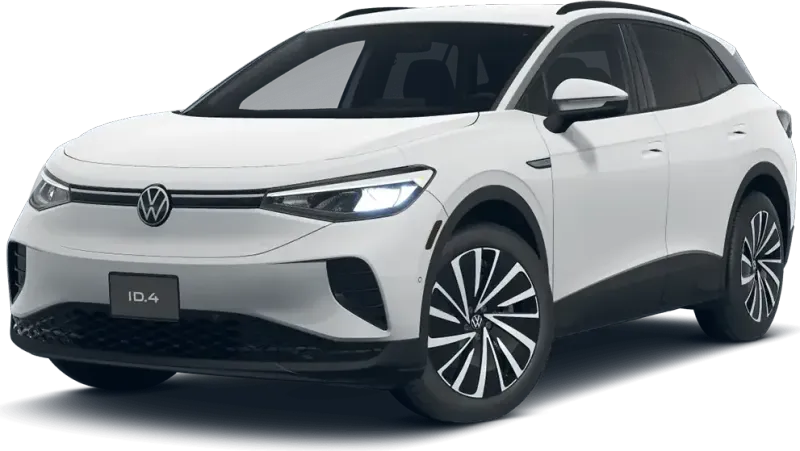
- Volkswagen ID.4126
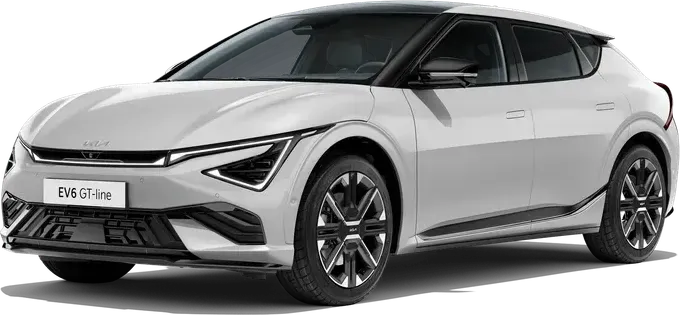
- Kia EV6215
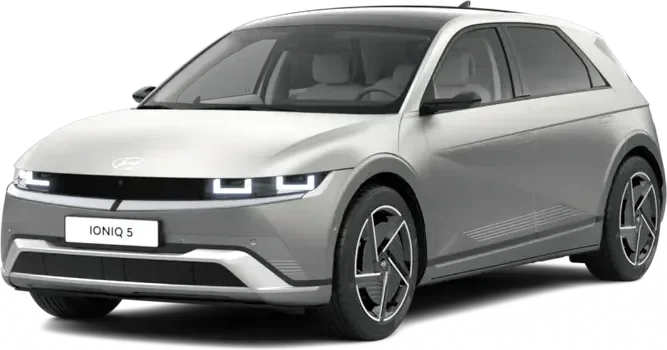
- Hyundai Ioniq 5349
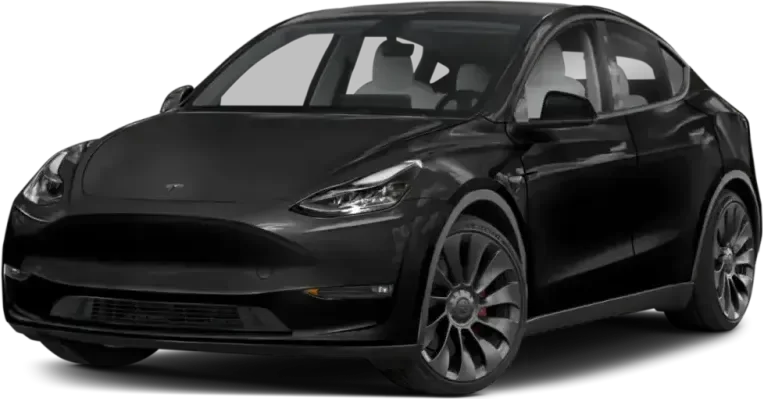
- Tesla Model Y783