2021 Chevrolet Bolt: What to check before buying
Owners have filed 66 complaints with NHTSA about this car, most about the electrical, transmission, and steering. The 11 checks below target those problems, in the order you would do them at the car.
 2021
- Owner complaints
- 66
- Recalls
- 5
- 3 urgent
- Crashes reported
- 4
- 1 injury
Three recalls on this model year told owners to park outside until the repair was done.
Do not buy until you have dealer paperwork or a recall lookup showing they were completed for this VIN.
Your inspection sheet
Tick items off on your phone at the car, or print it. Ticks stay on this device.
0/11 checked
2021 Chevrolet Bolt: inspection sheet
Paperwork and questions
Before you go, or before you touch the car0/7
Walk-around and cabin
Engine off, key in hand0/1
Test drive
At least 20 minutes, with some highway0/3
These checks are specific to this model year. For tires, body panels, fluids, and the other basics every used car needs, use the general inspection guide.
Which Bolt is it?
EPA figures for each version of the 2021 Chevrolet Bolt. Use them to confirm you are looking at the version that was advertised, and as a yardstick on the test drive.
| Version | Drive | EPA rating |
|---|---|---|
| Electric | FWD | 259 mi range |
- With a full charge, the range estimate on the dash should land near the EPA figure of 259 miles. A much lower number on a mild day can mean a worn battery; ask for a battery health report.
Check the odometer against these mileages
Owners report these failures starting around the mileages below. A car inside one of these ranges deserves a closer look at that part, or records showing it was already fixed.
Early sudden loss of propulsion
1,800–2,700 miles
Why these checks: what owners reported
NHTSA complaints for the 2021 Chevrolet Bolt, grouped by the part owners named. Open a row to read what goes wrong.
Electrical29No crashes
Battery fire risk and the limits that come with it dominate these reports. Most owners describe waiting a long time, in some cases almost 2 years, for replacement battery parts. In the meantime they cap charging at 90 percent, park outside and away from buildings, and lose range. Some reports describe actual failures. Cars lose propulsion at speed. One stalled near 2,700 miles with an "Emergency Power Failure" message, and the cause was a failed battery disconnect lever. Other owners see high-voltage warning lights that keep coming back after repeated dealer repairs.
Transmission102 crashes
Sudden loss of drive and unexpected movement are the main patterns. Several cars lose propulsion while accelerating or merging. They then won't restart or won't shift out of neutral, and they need a tow. Some failures follow DC fast-charging sessions. Two crash-related reports describe the car lunging or accelerating on its own while parking, one near 2,700 miles. Other owners report the car shifting itself into park while moving, or the shifter selecting reverse instead of L. Dealers blamed a wiring harness in one case and a blown fuse with a disconnected manual lever in another. That harness repair cost about $3200 in labor.
Steering8No crashes
Binding that keeps the wheel from returning to center is the main complaint, and the effort to turn gets heavier over time. Owners also describe groaning or squeaking when turning, slow response, and occasional clunks from the front end over bumps. Reports range from 3,500 to 38,000 miles. One dealer quoted $2,700 to replace the rack and pinion. A separate report describes the car pulling left or right even after alignments. Another describes sudden loss of power steering along with a cluster of dash warnings and a speedometer reading 0 MPH while driving.
Fuel system7No crashes
The car suddenly shows a "propulsion power is reduced" warning and slows down sharply at highway speed. In one case it dropped to 20 mph on a freeway with plenty of charge left, and the driver had to cross traffic to reach the shoulder. These failures happen very early, from a few miles to about 1800 on the odometer. One was traced to a bad transmission oil cooler pump. The other reports are about waiting for a battery replacement. Owners describe dealers that were not authorized to do the work or turned them away, and reduced range while they waited.
Airbags22 crashes
Airbags fail to deploy in collisions in both reports, and both involve crashes. One was a hard side impact. In the other, the driver suffered facial injuries from hitting the steering wheel, and the owner's app later showed an airbag system warning. With only 2 complaints there is no mileage pattern. Still, airbags that stay off in a real crash are among the most serious failures a car can have.
In owners' own words
Excerpts from complaints Bolt owners filed with NHTSA, as written. Listen for the same symptoms on your test drive.
This vehicle left me on sept 13 in the middle of the freeway bc it lost propulsion. I had plenty of charge and all of a sudden my charge was gone. The car wouldn’t speed up. Had to pull over and wait 4 hours for tow truck.
Filed with NHTSA, October 2022
In nearly exactly the same fashion as Tesla, Chevrolet has reduced my battery range by 15-20% and they don't have any idea when or if they will restore what I've paid for.
Filed with NHTSA, August 2023
While driving on the road, a sound came from under the car, and suddenly the car lost all propulsion power and was gliding on the road. The manufacturer told me the Manual Disconnect Lever was disconnected and Fuse was blown with no explanation on the root cause. After a few calls with the GM customer service, they explained to me "It happens", which to me it is unacceptable. This is a EV and fuse does not just randomly blown.
Filed with NHTSA, June 2023
While accelerating, the vehicle's drive system stopped functioning. The vehicle slowly came to a stop while displaying errors about the propulsion, and was no longer able to move under it's own power. All other systems were still working, however the hazard lights do not stay on when I had to try powering the vehicle off and back on again. The vehicle has been towed to a Chevrolet dealership for diagnosis.
Filed with NHTSA, December 2021
Groan, Squeak or Rubbing Type Noise When Turning Steering Wheel. Vehicle turning sluggish, is a safety hazard. Sounds like premature failure of steering parts on vehicle at 3500 miles. Others are having the same problem on the Internet forums.
Filed with NHTSA, July 2021
Steering gear is bound up due to a documented manufacturing error. Steering is increasingly stiff at speed, and will not return to center without significant driver input. This is a widespread issue that has been documented and causes a major safety concern to Chevy Bolt owners and should be addressed and repaired by the manufacturer.
Filed with NHTSA, August 2025
Miles that can drive are very limited. Been waited for replaced fuel cells. I have called a local dealership but was told my vin isn’t up yet for battery replacement. How to get on the list and need all battery’s working so I can drive the distances I need to.
Filed with NHTSA, September 2022
propulsion power is reduced on my new 2021 Chev Bolt. The battery recall problem has not been addressed yet now I just lost my on propulsion power is reduce problem. My car is in the shop and can not be driven.
Filed with NHTSA, June 2022
How the 2021 compares with other Bolt years
Complaints for this year next to the average for the other model years, area by area.
The 2021 has the fewest owner complaints of the 5 Bolt years we cover, well under the average of the others. Newer years have had less time to collect complaints, so compare like with like.
- Electrical2940
- Transmission1011
- Steering824
- Fuel system77
- Airbags22
Where the 2021 fits in the Bolt's history
Redesigns and mid-cycle updates change what can go wrong.
The 2021 is the fifth model year of the Bolt's first generation (2017–2023).
Chevrolet updated the Bolt for 2022, so a 2021 does not have those changes.
What changed for 2022 (not on a 2021)
- Front and rear styling revisions
- Revised interior with upgraded seats
- New electronic systems
Recalls to confirm (5)
Recall repairs are free at any Chevrolet dealer, but the seller may never have had them done. Check each campaign number against the VIN.
24V812000ElectricalPark outsideOct 2024
General Motors, LLC (GM) is recalling certain 2020-2022 Chevrolet Bolt EV and 2022 Bolt EUV vehicles previously repaired under Recall 21V-650. The installation of advanced diagnostic software may have failed. As such, the high voltage battery could catch fire when charged to full or nearly full capacity.
Risk: A battery fire increases the risk of injury.
Fix: Owners are advised to take the following interim steps: Set the Target Charge Level feature in their vehicle to limit the charge level to 90%, charge their vehicle more frequently, avoid depleting the battery to 70 miles range remaining, park outside after charging, and do not charge the vehicle indoors overnight. Dealers will reinstall advanced diagnostic software, free of charge. Owner notification letters were mailed December 3, 2024. Owners may contact the Bolt EV Concierge Team at 1-833-382-4389. GM's number for this recall is N242470160.
24V481000ElectricalPark outsideJun 2024
General Motors, LLC (GM) is recalling certain 2020-2022 Chevrolet Bolt EV and 2022 Chevrolet Bolt EUV vehicles that were previously remedied under recall number 21V-650. The advanced diagnostic software may have been incorrectly installed and fail to detect defective battery modules, possibly resulting in a battery fire.
Risk: A battery fire increases the risk of injury.
Fix: Owners are advised to take the following interim steps: Set the Target Charge Level feature in their vehicle to limit the charge level to 90%, charge their vehicle more frequently, avoid depleting the battery to 70 miles range remaining, park outside after charging, and do not charge the vehicle indoors overnight. Dealers will reinstall the advanced diagnostic software, free of charge. Owner notification letters were mailed on August 1, 2024. Owners may contact the Bolt EV Concierge Team at 1-833-382-4389. GM's numbers for this recall are N242443000 and N242443002.
21V650000ElectricalPark outsideAug 2021
General Motors, LLC (GM) is recalling certain 2020-2022 Chevrolet Bolt EV and 2022 Chevrolet Bolt EUV vehicles. The high voltage battery could catch fire when charged to full or nearly full capacity.
Risk: A battery fire increases the risk of injury.
Fix: Owners are advised to take the following interim steps: Set the Target Charge Level feature in their vehicle to limit the charge level to 90%, charge their vehicle more frequently, avoid depleting the battery to 70 miles range remaining, park outside after charging, and do not charge the vehicle indoors overnight. Defective battery modules will be replaced by GM, free of charge. Owner notification letters were mailed on October 1, 2021 and June 23, 2023. Owners may contact the Bolt EV Concierge Team at 1-833-382-4389. This recall is an expansion of NHTSA recall 21V-560. GM's number for this recall is N212345940.
23V845000Body and structureDec 2023
General Motors, LLC (GM) is recalling certain 2017-2023 Chevrolet Bolt EV vehicles. This recall includes certain vehicles previously repaired incorrectly under NHTSA recall number 22V-930. After a crash with seat belt pretensioner deployment, the pretensioner exhaust may ignite carpet fibers near the B-pillar, causing a fire.
Risk: A fire increases the risk of injury.
Fix: Dealers will inspect both front seat belt pretensioners and, if necessary, install metal foil at the carpet near the pretensioner exhaust. Certain vehicles will also need a pretensioner cover installed. Repairs will be performed free of charge. Owner notification letters were mailed January 24, 2024. These vehicles were previously recalled for this same issue under recall number 22V-930 and will need to have the new remedy performed. Owners may contact GM EV Concierge at 1-833-EVCHEVY (1-833-382-4389) (TTY 711 / 1-800-833-2438) or Customer Service at 1-800-222-1020. GM's number for this recall is N232421970.
22V930000Body and structureDec 2022
General Motors, LLC (GM) is recalling certain 2017-2023 Chevrolet Bolt EV vehicles. After a crash with seat belt pretensioner deployment, the pretensioner exhaust may ignite carpet fibers near the B-pillar, causing a fire.
Risk: A vehicle fire can increase the risk of injury.
Fix: Dealers will install metal foil at the carpet near the pretensioner exhaust, and install a pretensioner cover as necessary, free of charge. Owner notification letters were mailed between January 23, 2023 and April 25, 2023. Owners may contact Chevrolet customer service at 1-800-222-1020. GM's number for this recall is N222383790.
Also looking at these instead of a Bolt?
Cars shoppers compare with the Chevrolet Bolt, with their own 2021 checklists.
2021 owner complaints, side by side
- 2021 Chevrolet Bolt66
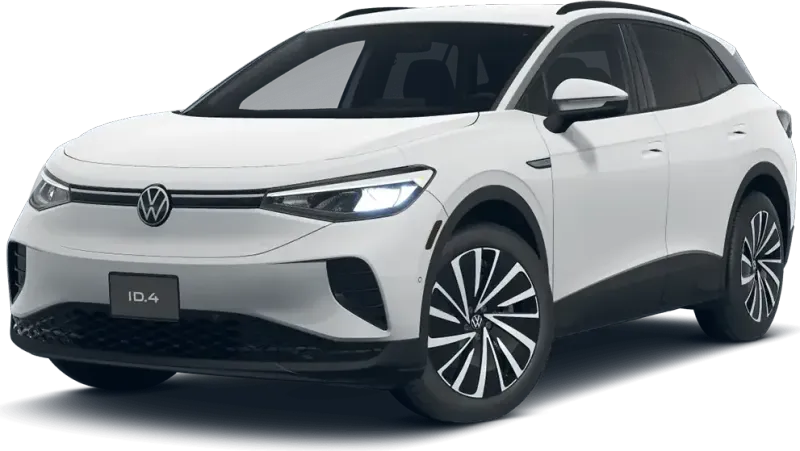
- Volkswagen ID.4304
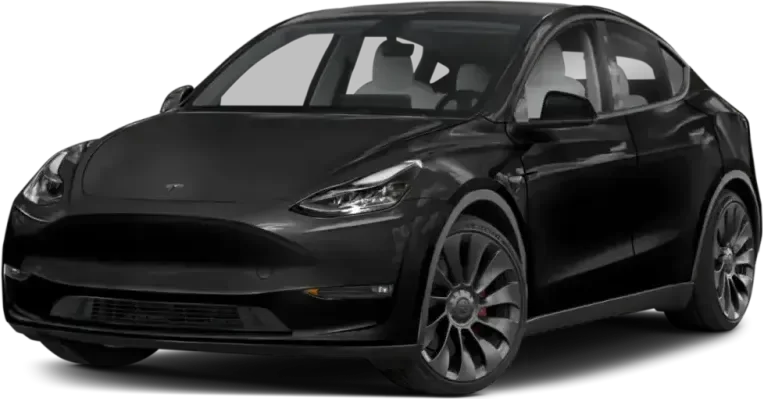
- Tesla Model Y991