Used Car Checklists

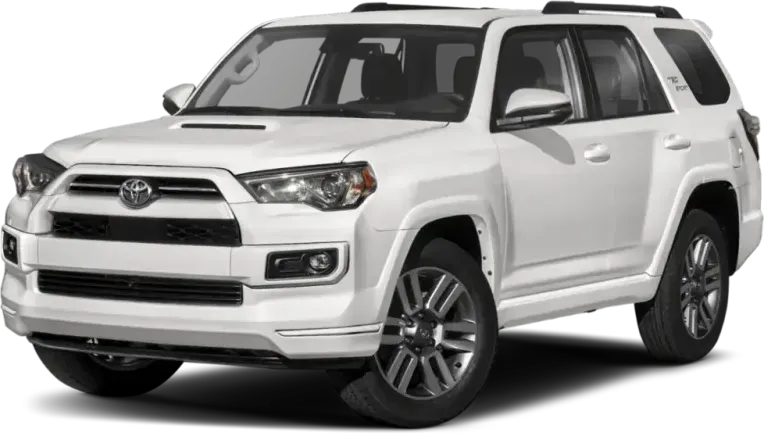
2020 Toyota 4Runner: What to check before buying

Owners have filed 30 complaints with NHTSA about this car, most about the airbags, steering, and brakes. The 9 checks below target those problems, in the order you would do them at the car.

Toyota 4Runner2020
Owner complaints
30
Recalls
1
Crashes reported
4
4 injuries
Reliability
Excellent
82/100 on Auto Reliability Index

Run the VIN before you go

A history report shows accidents, title brands, odometer readings, and open recalls for this 2020 Toyota 4Runner. Ask the seller for the VIN; it is also on the dash at the base of the windshield.

Your inspection sheet

Tick items off on your phone at the car, or print it. Ticks stay on this device.

These checks are specific to this model year. For tires, body panels, fluids, and the other basics every used car needs, use the general inspection guide.

Reported on other 4Runner years with the same design

These years share the 2020's design and most of its parts, so their problems are the ones to look for on this car too.

2021 4Runner

31 owner complaints
  • Steering 11
  • Electrical 3
  • Brakes 3

Worth adding to your 2020 checks

  • Drive at 55 to 70 mph and feel for steering wheel shake, seat vibration, or a pull to the right.
  • Ask for service records showing repeated tire balancing, alignments, or tire replacement for a vibration complaint.
  • Press the brake pedal firmly several times and walk away if it sinks toward the floor.
Open the 2021 checklist

2019 4Runner

61 owner complaints
  • Fuel system 11
  • Steering 8
  • Electrical 8

Worth adding to your 2020 checks

  • Drive at 55 to 70 mph and brake firmly, feeling for steering wheel shake or wobble.
  • Put the vehicle on a lift and check the frame, underbody, springs and shock brackets for rust.
  • Run the VIN through federal recall records and confirm fuel pump recall 20V682000 was completed.
Open the 2019 checklist

2022 4Runner

36 owner complaints
  • Airbags 6
  • Brakes 4
  • Acceleration and cruise control 3

Worth adding to your 2020 checks

  • Turn the steering wheel lock to lock with the radio on and watch for channel changes or an air bag warning light.
  • Confirm the air bag warning lamp goes out after startup and stays off during the drive.
  • Drive at 55 to 70 mph on a smooth highway and feel for steering wheel shake or a pull right.
Open the 2022 checklist

Which 4Runner is it?

EPA figures for each version of the 2020 Toyota 4Runner. Use them to confirm you are looking at the version that was advertised, and as a yardstick on the test drive.

VersionDriveEPA rating
4.0L 6-cylAWD, 4WD, RWD17 mpg
  • Reset the trip computer at the start of the drive. A 4Runner that averages well under the EPA 17 mpg combined on a mixed route may have an engine or tire problem.

Why these checks: what owners reported

NHTSA complaints for the 2020 Toyota 4Runner, grouped by the part owners named. Open a row to read what goes wrong.

  • Airbags54 crashes

    Crashes happen without the air bags deploying. Four of the five complaints involve a crash, and four people were injured. Reported impacts happen at about 35 to 40 mph and include a side-on collision with another car and a slide into a tree, with no warning light before the crash. One report says the forward collision alert also stayed dark. One complaint is not a defect: the front passenger air bag switches off for adults under 100 lbs, which Toyota says is how the system is designed.

  • Steering4No crashes

    A shake comes through the wheel at highway speeds, mostly between the mid-50s and mid-60s mph. It can appear within weeks of purchase and gets worse over time. Rebalancing, road force balancing, alignment checks and swapped wheels or driveshafts do not fix it, and Toyota corporate calls it a characteristic caused by harmonics. Separately, one report describes power steering assist dropping out at 60 mph. Steering then takes more effort, and a mechanic traced a fluid leak to the front timing cover at 88,000 miles.

  • Brakes4No crashes

    The brake pedal sinks to the floor during slow, gentle stops and braking is lost until the pedal is pumped. Drivers notice it most after the car sits overnight or while holding the brake in a drive-through line, when the vehicle starts creeping forward. No warning lights come on, and dealers report finding nothing wrong. Smaller complaints describe loud front brake squeal in cold weather and a hissing sound followed by an electronic noise each time the pedal is pressed.

  • Suspension3No crashes

    Springs and the X-REAS system fail at moderate mileage. On the Limited, X-REAS is reported failing around 45,000 miles, leaving the vehicle unstable and harder to control. A fractured front coil spring turned up during a routine dealer inspection at about 53,000 miles, and the manufacturer paid 50% of the repair. One complaint covers the four-wheel-drive system instead. When shifting from H4F to H4L, the dash indicator stays yellow, so the driver cannot confirm the shift.

How the 2020 compares with other 4Runner years

Complaints for this year next to the average for the other model years, area by area.

The 2020 ranks sixth for owner complaints among 8 4Runner years, close to the average of the others. Newer years have had less time to collect complaints, so compare like with like.

2020 Average of other years
  • Airbags53
  • Steering45
  • Brakes44
  • Suspension32

Where the 2020 fits in the 4Runner's history

Redesigns and mid-cycle updates change what can go wrong.

The 2020 is the 11th model year of the 4Runner's fifth generation (2010–2024).

It includes the 2013 update.

What changed for 2013

  • Revised front and rear designs
  • Updated interior features

Recalls to confirm (1)

Recall repairs are free at any Toyota dealer, but the seller may never have had them done. Check each campaign number against the VIN.

  1. 22V480000EquipmentJul 2022

    Southeast Toyota Distributors, LLC (SET) is recalling certain 2020-2022 4Runner vehicles equipped with 20-inch Black Gunner Wheels. The load carrying capacity modification labels are incorrect. As such, these vehicles fail to comply with the requirements of Federal Motor Vehicle Safety Standard number 110, "Tire Selection and Rims.".

    Risk: An incorrect label may lead to unintentionally overloading the vehicle, increasing the risk of a crash.

    Fix: SET will mail replacement labels to owners, free of charge. Owner notification letters are expected to be mailed September 4, 2022. Owners may contact SET's customer service at 954-429-2000. SET's number for this recall is SET22A.

Also looking at these instead of a 4Runner?

Cars shoppers compare with the Toyota 4Runner, with their own 2020 checklists.