Used 2017 Chevrolet Volt: What to look for before buying
Owners have filed 703 complaints with NHTSA about this car, most about the electrical, transmission, and fuel system. The 8 checks below target those problems, in the order you would do them at the car.
NHTSA data through October 2026Updated Maintained by Arnas Kazlaus
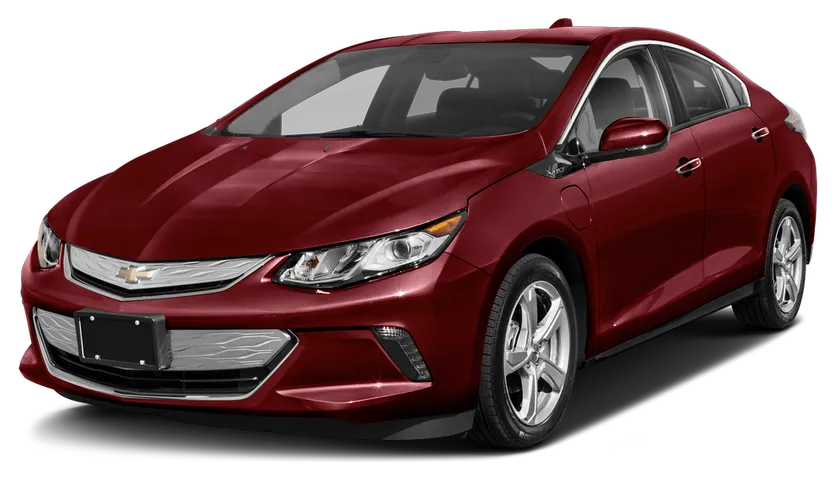 2017
- Owner complaints
- 703
- Recalls
- 0
- Crashes reported
- 8
- 11 injuries
- Reliability
- Mixed
- 57/100 on Auto Reliability Index
Your inspection sheet
Tick items off on your phone at the car, or print it. Ticks stay on this device.
0/8 checked
2017 Chevrolet Volt: inspection sheet
Paperwork and questions
Before you go, or before you touch the car0/1
Walk-around and cabin
Engine off, key in hand0/3
Test drive
At least 20 minutes, with some highway0/4
These checks are specific to this model year. For tires, body panels, fluids, and the other basics every used car needs, use the general inspection guide.
Which Volt is it?
EPA figures for each version of the 2017 Chevrolet Volt. Use them to confirm you are looking at the version that was advertised, and as a yardstick on the test drive.
| Version | Drive | EPA rating |
|---|---|---|
| 1.5L 4-cyl | FWD | 420 mi range |
- On the plug-in hybrid, watch for the car moving off on electric power at low speed and for any hybrid system warning on the dash.
- Reset the trip computer at the start of the drive. A Volt that averages well under the EPA 42 mpg combined on a mixed route may have an engine or tire problem.
Check the odometer against these mileages
Owners report these failures starting around the mileages below. A car inside one of these ranges deserves a closer look at that part, or records showing it was already fixed.
EGR valve failure, reduced propulsion
15,000–60,600 miles
Airbag warning, passenger sensor fault
20,000–41,000 miles
Power steering assist failure
28,000–30,000 miles
False Shift to Park message
31,000–45,000 miles
Battery energy control module failure
32,000–56,500 miles
Why these checks: what owners reported
NHTSA complaints for the 2017 Chevrolet Volt, grouped by the part owners named. Open a row to read what goes wrong.
Electrical2431 crash
Sudden loss of power while driving leads this category. Drivers see "Propulsion Power Reduced" or "Shift to Park" warnings, then the car stalls, sometimes at highway speed. Some cars refuse to shut off, rev the engine in electric mode, or overheat on long trips in gas mode. Seven reports involve fire, including fires under the hood while driving on gas, a melted charging-cord connector, and a burned door panel while parked. Dealers replace the battery energy control module or engine control module, and repairs can keep cars in the shop for weeks.
Transmission124No crashes
A false "Shift to Park" message is the most common complaint. The car is already in Park but will not shut off or lock until the driver cycles the shifter, often many times. It tends to start between about 31,000 and 45,000 miles and gets worse over time. Dealers replace the shift controller and cable. Battery energy control module failures are the other big pattern. Symptoms include no charging, a false zero EV range, reduced power, and stalling. One owner was injured when the car rolled backward while in Park.
Fuel system1102 crashes
Total power loss happens without warning on freeways and surface streets, even with both a charged battery and gas in the tank. Some cars do it within the first 1,000 miles. Many reports also describe "Propulsion Power Reduced" warnings tied to a failed EGR valve that blows a fuse, or to a failed battery energy control module. Owners report long waits for both parts, with no delivery dates. Some cars spill gas at the pump and will not fill. Two reports involve crashes.
Engine93No crashes
EGR valve failure dominates this category. A shorted valve blows a fuse, triggers "Propulsion Power Reduced" or "engine unavailable" warnings, and leaves the car running rough, lurching, or limited to low speeds on battery power. Some cars overheat. Repairs include the EGR valve, EGR cooler, thermostat, and fuse, and back-ordered parts leave owners waiting months. Failures range from about 15,000 to 60,600 miles. Very new cars also stall on the highway when switching from electric to gas, and one dealer replaced the drive motor.
Brakes261 crash
Brakes briefly stop working while slowing down. Owners describe a delay of up to a second, a pedal that goes soft and sinks, or a feeling of sliding on ice before braking resumes. Pedal effort can also change suddenly from one stop to the next. Adaptive cruise control drops out at random, sometimes while coming to a stop. The regenerative braking paddle does not turn on the brake lights. One electric brake booster failure went unrepaired because no parts were available. In one crash, a car rolled backward and pinned the driver against a wall.
Airbags102 crashes
A constant airbag warning light is the main pattern, usually caused by a failed passenger presence or occupant detection sensor. While the fault is active, the front passenger airbag, or in some reports every airbag, will not deploy. It appears between about 20,000 and 41,000 miles. Quoted repairs run from $800 to more than $1,100, with parts out of stock and some dealers refusing warranty coverage. Two crash reports describe sudden acceleration into a garage wall and a side impact with no airbag deployment.
Acceleration and cruise control71 crash
Adaptive cruise control fails to engage or shuts off without warning. In L mode, that makes the car slow sharply in traffic. Cruise also cancels when the brake pedal sags slightly, and dealers often cannot find the fault. One crash report describes the automatic parking assist accelerating hard in reverse and hitting a pole. Other reports repeat the false "Shift to Park" problem, reduced propulsion with a check engine light, and the car failing to switch to gas when the battery runs empty.
Stability control7No crashes
Few of these reports involve stability control itself. Most describe the car asking to be shifted into Park while moving, refusing to shut down, or losing propulsion on the freeway. Some reports pair power loss with "Service StabiliTrak" and "Service Power Steering" warnings and loss of steering assist. Lane keeping stopped centering the car after a dealer reprogramming in one case. One owner paid about $1,260 to replace a failed module that left the center screen and backup camera blank, and the part was back-ordered.
In owners' own words
Excerpts from complaints Volt owners filed with NHTSA, as written. Listen for the same symptoms on your test drive.
The engine light starts blinking and telling me propulsion power reduced, and then I cannot use the cruise control after that turns on, and it starts losing power, driving on I 70 after work all of a sudden it turned on and wet from going 76 miles an hour to 52 on highway I 70 where the speed limit was 75. This problem was a recall problem which was fixed and now is happening again on the same part and having the same problems.
Filed with NHTSA, November 2025
My BECM (battery energy control module) failed. Chevy recalled this for “some” Volts of my year, but not mine. It cost $3k to fix. How can they say my BECM was not defective if it failed? They knew it wasn’t working and recalled it for some, but not all. They need to recall all Volts becm. This feels very shady.
Filed with NHTSA, July 2024
This Chevy Volt experiences transmission's shift-to-park error. This error prevents car from turning off due to not recognizing the shift gear is in the park position. After placing the shift into park and turning the power button off, the car turns back on again and flashes the shift-to-park error message. This apparently is a malfunction of gear shift which has been widely reported on GM-Volt community board on 2nd generation Volts.
Filed with NHTSA, July 2022
The vehicle stopped on its own without obstacles. The vehicle fails to stop under adaptive cruse control and you have to disengage to stop or it will hit the car in front. When stepping on break during adaptive cruse it lurching forward before breaking takes over causing a hazzard. When you shif to park it doesn't register and will kill battery. Adaptive cruse does not keep it centered in clearly marked lanes.
Filed with NHTSA, August 2022
Reduced propulsion power and check engine light. EGR valve failure per mechanic. Part has been on a global back order for 1.5 years. The car will not pass emissions testing and can blow a fuse that will make the car inoperable. The part is also costly at 2400.00 without labor costs. My car has 83,000 miles, is well-maintained and only 7 years old and now I can’t drive it or sell it.
Filed with NHTSA, September 2024
Vehicle propulsion system failed. According to Chevy dealer the Battery Energy Control Module and A/T Control Park Switch and harness failed. Warning lights came on when the failure happened. Failure happened just past the extended 150k mile warranty. But car in only 8 years old.
Filed with NHTSA, October 2025
gas engine emission recirculation valve failed. thermostat failed. fuse blown. Displayed message "propulsion power reduced" and "gas engine unavailable" while driving. It put the driver at risk due to being stranded in the middle of nowhere. Towed to Dealer. They replaced EGR valve, egr cooler, fuse and thermostat. Plug-in hybrid with 90 percent ev only miles. So at 52,000 there is only 5200 miles on the gas engine. Root cause of failure unknown.
Filed with NHTSA, August 2022
EGR Valve stop functioning, which caused Service not available engine check light on. This is a hybrid plugin, when battery is low, it is dangerous is Gas Engine not functioning. This EGR Valve is super expensive, the fix (Parts and Labor) is over $3300. The car milage was only a little over 58800 miles. Without getting this repaired, the emission inspection will not be passed in Virginia.
Filed with NHTSA, June 2025
How the 2017 compares with other Volt years
Complaints for this year next to the average for the other model years, area by area.
The 2017 has the most owner complaints of the 4 Volt years we cover, about 4.8 times the average of the others. Newer years have had less time to collect complaints, so compare like with like.
- Electrical24344
- Transmission12430
- Fuel system11025
- Engine9320
- Brakes264
- Airbags101
Where the 2017 fits in the Volt's history
Redesigns and mid-cycle updates change what can go wrong.
The 2017 is the second model year of the Volt's second generation (2016–2023).
It is also the first year of a mid-cycle update.
What changed for 2017
- Facelift with updated features and improved fuel economy.
Also looking at these instead of a Volt?
Cars shoppers compare with the Chevrolet Volt, with their own 2017 checklists.