Used Car Checklists

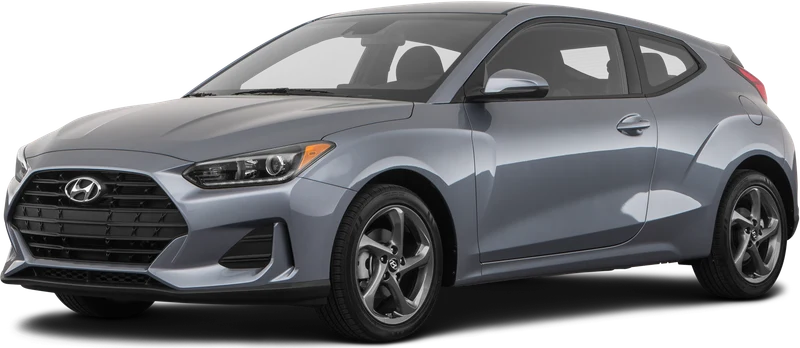
Used 2019 Hyundai Veloster: What to look for before buying

Owners have filed 46 complaints with NHTSA about this car, most about the engine, body and structure, and electrical. The 9 checks below target those problems, in the order you would do them at the car.

NHTSA data through October 2026Updated Maintained by Arnas Kazlaus

Hyundai Veloster2019
Owner complaints
46
Recalls
4
Crashes reported
2
3 injuries
Reliability
Good
68/100 on Auto Reliability Index

Run the VIN before you go

A history report shows accidents, title brands, odometer readings, and open recalls for this 2019 Hyundai Veloster. Ask the seller for the VIN; it is also on the dash at the base of the windshield.

Your inspection sheet

Tick items off on your phone at the car, or print it. Ticks stay on this device.

These checks are specific to this model year. For tires, body panels, fluids, and the other basics every used car needs, use the general inspection guide.

Reported on other Veloster years with the same design

These years share the 2019's design and most of its parts, so their problems are the ones to look for on this car too.

2020 Veloster

29 owner complaints
  • Engine 9
  • Steering 6
  • Body and structure 2

Worth adding to your 2019 checks

  • Run the VIN for open recalls and get dealer records of engine recall work or any engine replacement.
  • Pull the dipstick and ask how often the owner adds oil between changes.
  • Listen for engine knocking while cruising at 40 mph, especially on cars near 90,000 miles.
Open the 2020 checklist

2021 Veloster

29 owner complaints
  • Lane keeping 14
  • Steering 5
  • Engine 3

Worth adding to your 2019 checks

  • Check whether factory tires are fitted; if not, drive on a busy highway and watch both mirrors for false blind spot alerts.
  • Pass and get passed by cars on both sides to confirm the blind spot lights actually trigger for real vehicles.
  • Take a long drive at sustained highway speed and watch for steering warning lights or sudden heavy steering.
Open the 2021 checklist

2022 Veloster

38 owner complaints
  • Steering 17
  • Lane keeping 12
  • Engine 4

Worth adding to your 2019 checks

  • Ask for service records showing steering rack or power steering repairs, and treat repeat repairs as a warning sign.
  • Scan for stored power steering torque sensor and lane keep trouble codes before buying.
  • Turn the wheel lock to lock at parking speed and feel for sudden heaviness or creaking.
Open the 2022 checklist

Which Veloster is it?

EPA figures for each version of the 2019 Hyundai Veloster. Use them to confirm you are looking at the version that was advertised, and as a yardstick on the test drive.

VersionDriveEPA rating
1.6L 4-cylFWD30 mpg
2.0L 4-cylFWD30 mpg
  • The 2019 Hyundai Veloster was sold in two versions. Confirm which one this is from the window sticker, the engine cover, or the VIN report before you compare prices.
  • Reset the trip computer at the start of the drive. A Veloster that averages well under the EPA 30 mpg combined on a mixed route may have an engine or tire problem.

Why these checks: what owners reported

NHTSA complaints for the 2019 Hyundai Veloster, grouped by the part owners named. Open a row to read what goes wrong.

  • Engine20No crashes

    Sudden stalling is the most common report, at highway speeds, in turns, and at idle. Many owners hear knocking first, then lose power and see a flashing check engine light. Several engines seize or lose compression and need replacement. Others burn oil, about a quart every 800 to 1,000 miles. Failures cluster around 57,000 to 60,000 miles. Stalling in traffic creates real crash risk. Some dealers find nothing wrong, and some owners report long service waits or engine replacement claims denied.

    Sudden power loss at highway speed is the main pattern. The engine revs while the car slows to a crawl, or the car drops into limp mode with the check engine light on. Dealers blame different parts on repeat visits, including a loose turbo hose and a coil. Other reports cite overheating and stalling that ended in engine replacement, and fuel and oil leaking into the exhaust. One injury involved high carbon monoxide levels in the cabin, cause undetermined.
  • Body and structure8No crashes

    The driver's door often will not open from the outside in cold weather, usually below freezing or around 35 degrees. The car unlocks and the other doors open, but the outside handle acts locked, so drivers climb in through the passenger side. The problem returns each cold night, and owners report no fix. Two reports describe the rear hatch glass shattering on its own when the driver's door was closed on a parked car with no prior damage.

  • Electrical51 crash

    Reports are scattered across unrelated faults. The most serious is a car that moved in reverse after being shifted into drive, which led to one crash into a pole. Other complaints include a passenger door that will not latch and stays open while driving, a squealing HVAC blower motor on low fan settings, and key fob and locking trouble after a battery change. One owner says a dealer repair failed to clear a check engine light.

  • Steering3No crashes

    Power steering can fail suddenly at speed. Reports describe the wheel pulling hard to one side or locking almost completely, at 45 and 50 mph, which risks losing control in a turn. Some cars flash the EPS warning light, while others show no warning at all. Restarting the car restores steering temporarily. One dealer replaced the steering power pack under warranty. A separate complaint describes a brief noise from the column at every startup.

  • Transmission2No crashes

    Sudden loss of drive is the common thread in these two reports. On one manual car, the clutch disc came apart while driving and damaged the pressure plate and hydraulic parts. Because the clutch and brakes share a fluid reservoir, the brakes also stopped working. In the other case, the engine revved between 5,000 and 7,000 rpm at highway speed while the car lost power and then would not engage drive.

  • Brakes2No crashes

    Brake calipers fail in both reports. In one, calipers leak brake fluid with no warning light on a high-mileage Veloster N, and the dealer ordered the wrong seals. In the other, a grinding noise led a shop to find that 3 of the four brakes were not working and the calipers needed replacing, leaving the car undrivable. Weak or failed brakes create an obvious crash risk.

In owners' own words

Excerpts from complaints Veloster owners filed with NHTSA, as written. Listen for the same symptoms on your test drive.

Engine
This car was recalled for a bad engine and because their computer would not throw off a code they refused to replace the bad engine. It has 60000 miles on it and has been well maintained. The rocker arms have gone bad and there are countless others who have the same issue that Hyundai refuses to address because now computer code was thrown off. They hide behind this to avoid replacing their bad engines.

Filed with NHTSA, June 2025

Engine
My engine is having the same issue as the other Hyundai Engines that have an active recall for it. The piston oil ring recall. My car is consuming 1qt of oil in roughly 800-1000 miles and burning it into the exhaust. I fear this will continue and cause issues and possibly be a fire hazard like the recall states.

Filed with NHTSA, April 2023

ElectricalCrash reported
When you put the car in DRIVE it will go in REVERSE. Happened several times and on the last time caused us to back into a pole and mess up the back bumper. We were trying to go forward but went in reverse. We have video proof but I can't load the video in this document.

Filed with NHTSA, September 2024

How the 2019 compares with other Veloster years

Complaints for this year next to the average for the other model years, area by area.

The 2019 has the most owner complaints of the 4 Veloster years we cover, about 1.4 times the average of the others. Newer years have had less time to collect complaints, so compare like with like.

2019 Average of other years
  • Engine205
  • Body and structure81
  • Electrical51
  • Steering39
  • Transmission21
  • Brakes20

Where the 2019 fits in the Veloster's history

Redesigns and mid-cycle updates change what can go wrong.

The 2019 is the first model year of the Veloster's second generation (2019–2022). First years of a redesign often carry teething problems that Hyundai fixes in later years, so the checks above matter more than usual.

Hyundai updated the Veloster for 2021, so a 2019 does not have those changes.

What changed for 2021 (not on a 2019)

  • New 8-speed wet dual-clutch transmission became available.

Should you avoid the first year of a redesign? See the 45-car study.

Recalls to confirm (4)

Recall repairs are free at any Hyundai dealer, but the seller may never have had them done. Check each campaign number against the VIN before you buy.

  1. 26V728000AirbagsNov 2026
  2. 24V528000Fuel systemJul 2024
  3. 21V301000EngineApr 2021
  4. 19V311000Door latches and locksApr 2019

Open a campaign number for NHTSA's full notice: what fails, the risk, and the fix.

Also looking at these instead of a Veloster?

Cars shoppers compare with the Hyundai Veloster, with their own 2019 checklists.