Used 2015 Honda Fit: What to look for before buying
Owners have filed 272 complaints with NHTSA about this car, most about the electrical, engine, and transmission. The 9 checks below target those problems, in the order you would do them at the car.
NHTSA data through October 2026Updated Maintained by Arnas Kazlaus
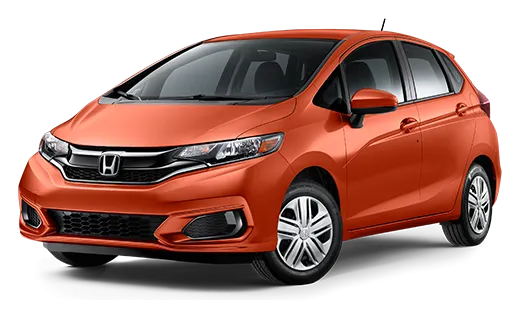 2015
- Owner complaints
- 272
- Recalls
- 4
- Crashes reported
- 10
- 13 injuries
- Reliability
- Good
- 67/100 on Auto Reliability Index
Your inspection sheet
Tick items off on your phone at the car, or print it. Ticks stay on this device.
0/9 checked
2015 Honda Fit: inspection sheet
Paperwork and questions
Before you go, or before you touch the car0/1
Walk-around and cabin
Engine off, key in hand0/2
Cold start, engine bay, and underside
Ask the seller not to warm the car up first0/4
Test drive
At least 20 minutes, with some highway0/2
These checks are specific to this model year. For tires, body panels, fluids, and the other basics every used car needs, use the general inspection guide.
Which Fit is it?
EPA figures for each version of the 2015 Honda Fit. Use them to confirm you are looking at the version that was advertised, and as a yardstick on the test drive.
| Version | Drive | EPA rating |
|---|---|---|
| 1.5L 4-cyl | FWD | 36 mpg |
- Reset the trip computer at the start of the drive. A Fit that averages well under the EPA 36 mpg combined on a mixed route may have an engine or tire problem.
Check the odometer against these mileages
Owners report these failures starting around the mileages below. A car inside one of these ranges deserves a closer look at that part, or records showing it was already fixed.
Sudden CVT transmission failure
70,000–95,000 miles
Why these checks: what owners reported
NHTSA complaints for the 2015 Honda Fit, grouped by the part owners named. Open a row to read what goes wrong.
Electrical107No crashes
Intermittent no-starts dominate. The push button needs several presses or a jump, and dealers often replace the start button or starter, sometimes without curing it. The right-hand gauge display goes blank or garbled, usually on cold mornings, hiding the fuel gauge and odometer until the car warms up. Other reports describe the battery draining after a few days parked, the key fob not being detected, and the engine shutting off at highway speed. Several drivers also hit the start button instead of the nearby hazard button and killed the engine while moving.
Engine31No crashes
Cylinder misfires bring on the check engine light, rough running, and sometimes a cluster of dash warnings with a brief jerk while driving. Dealers often fix this by replacing all four fuel injectors around 48,000 to 50,000 miles, at owner expense once the warranty has run out. Starter failures show up between roughly 56,000 and 65,000 miles. Other reports include a rattle or grind at cold start blamed on the VTC actuator, heavy oil use ending in engine replacement, and stalling at stops in Econ mode.
Transmission30No crashes
The CVT can fail suddenly, usually between 70,000 and 95,000 miles. Drivers lose acceleration on the highway or the car will not move in drive or reverse, sometimes after a short spell of bucking or shuddering below 30 mph. Shops report metal shavings or belt debris in the fluid, and replacement bills run into the thousands. One owner found the filler plug missing. Several other filings are about dealer handling of the drive pulley shaft repair, with owners arguing a software change does not fix the part.
Fuel system24No crashes
Failing direct fuel injectors are the main pattern. The car stumbles, loses power, or misfires, often with the check engine, power steering, traction control, and tire pressure lights coming on together, sometimes at interstate speed. Codes such as P0301 and P0171 are common, and dealers usually replace all four injectors and fuel pipes, mostly between 22,000 and 50,000 miles, with quotes from $1,400 to $2,300. Some owners report stalling at stops or in turns, including one traced to a fuel pressure sensor in the fuel rail.
Airbags149 crashes
Most reports describe front or side air bags failing to deploy in crashes. These include hard rear-end and side impacts and several parking-lot crashes that drivers blame on sudden acceleration, with injuries such as fractured vertebrae and ribs. Three of the filings are identical copies of one rear-end crash. In another report, both side curtains fired with no impact and the car left the road. Other filings cover a dashboard that no longer fits around the passenger air bag after dealer work, and a campaign repair delayed because parts were unavailable.
Body and structure12No crashes
The front splash guard or air deflector falls off and drags on the highway, sometimes again and again, and owners end up zip-tying it or paying for a new one. White paint peels down to bare metal on the roof and door tops, and in one case rust has started near the windshield. Owners say Honda extended paint coverage to 7 years, but some failures come after that ends. Other reports describe rainwater collecting on the floors and under the seats, and a rear window that shattered with nothing touching it.
Brakes51 crash
Most of these reports describe the car accelerating while the driver is braking, usually when turning into a parking space. One of them ended with the car going through a restaurant door. Dealers inspected the brakes and found nothing wrong. Other reports cover a shifter that would not leave park, fixed with a new brake switch; a car that rolled backward with the handbrake set; and a loud clicking from the front right brake that a dealer called normal.
Seat belts5No crashes
Rear seat belt buckles are installed backward, mostly the center and driver-side rear positions, so they do not latch properly. In one car the buckle was empty inside and could not latch at all. Retractors also lock up and keep tightening instead of letting belt out, and in one case the belt had to be cut to free an injured passenger. A child in a booster seat was also cinched at the waist. One owner reports the driver's buckle is very hard to release.
In owners' own words
Excerpts from complaints Fit owners filed with NHTSA, as written. Listen for the same symptoms on your test drive.
my fuel gauge display went out. Pretty much always at least once a trip. Sometimes it starts when I turn the car on, sometimes it's after I've driven 20 miles. The display stays backlit, but all the information (time, fuel gauge, odometer, temp) disappears.
Filed with NHTSA, April 2023
Fuel gauge/trip meter intermittently inoperative (blank or shows gibberish). When the fuel gauge and trip meter are inoperative, it’s not possible to determine the level of fuel in the tank. In this condition, the vehicle could run out of fuel without warning, causing an engine stall condition. If the engine stalls while the vehicle is being operated on a public highway, this condition increases the likelihood of a collision resulting in injury or death.
Filed with NHTSA, April 2024
At start up (often after the car has sat a few hours), the engine rattles loudly for about 2 seconds. Honda Service Bulletin 16-088 acknowledges that this occurs because “The variable valve timing control (VTC) actuator is defective.” However, Honda refuses to fix this engine defect unless the car is under warranty. This defect should be repaired regardless of whether the car is under warranty because the defect could lead to catastrophic engine failure.
Filed with NHTSA, September 2021
Vehicle was stuttering and shaking from idle speed to 25mph. The transmission on the vehicle was failing according to Honda at ~80,000 miles. Metal shavings were found in the fluid. No cause for the issue was indicated by Honda of Hackettstown in NJ. Honda paid for 1700 of a 4300 bill.
Filed with NHTSA, June 2022
Was driving 70MPH down the freeway when the transmission shaft snapped and I was suddenly coasting... will cost $6k to repair and the vehicle only has 88k miles on it.
Filed with NHTSA, September 2021
How the 2015 compares with other Fit years
Complaints for this year next to the average for the other model years, area by area.
The 2015 has the most owner complaints of the 6 Fit years we cover, about 3.0 times the average of the others. Newer years have had less time to collect complaints, so compare like with like.
- Electrical10729
- Engine318
- Transmission301
- Fuel system2421
- Airbags142
- Body and structure125
Where the 2015 fits in the Fit's history
Redesigns and mid-cycle updates change what can go wrong.
The 2015 is the first model year of the Fit's third generation (2015–2020). First years of a redesign often carry teething problems that Honda fixes in later years, so the checks above matter more than usual.
Honda updated the Fit for 2018, so a 2015 does not have those changes.
What changed for 2018 (not on a 2015)
- Revised exterior design
- Introduction of Sport trim
Should you avoid the first year of a redesign? See the 45-car study.
Recalls to confirm (4)
Recall repairs are free at any Honda dealer, but the seller may never have had them done. Check each campaign number against the VIN before you buy.
- 15V697000Body and structureOct 2015
- 15V574000TransmissionSep 2015
- 15V559000ElectricalSep 2015
- 14V563000AirbagsJul 2014
Open a campaign number for NHTSA's full notice: what fails, the risk, and the fix.
Also looking at these instead of a Fit?
Cars shoppers compare with the Honda Fit, with their own 2015 checklists.