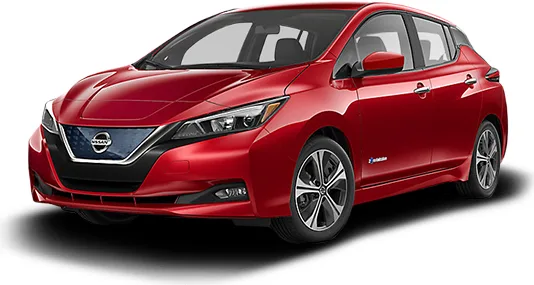
2020 Nissan Leaf: What to check before buying
Owners have filed 159 complaints with NHTSA about this car, most about the electrical, transmission, and fuel system. The 8 checks below target those problems, in the order you would do them at the car.
 2020
- Owner complaints
- 159
- Recalls
- 6
- Crashes reported
- 1
Your inspection sheet
Tick items off on your phone at the car, or print it. Ticks stay on this device.
0/8 checked
2020 Nissan Leaf: inspection sheet
Paperwork and questions
Before you go, or before you touch the car0/3
Walk-around and cabin
Engine off, key in hand0/1
Test drive
At least 20 minutes, with some highway0/4
These checks are specific to this model year. For tires, body panels, fluids, and the other basics every used car needs, use the general inspection guide.
Which Leaf is it?
EPA figures for each version of the 2020 Nissan Leaf. Use them to confirm you are looking at the version that was advertised, and as a yardstick on the test drive.
| Version | Drive | EPA rating |
|---|---|---|
| Electric | FWD | 226 mi range |
- With a full charge, the range estimate on the dash should land near the EPA figure of 226 miles. A much lower number on a mild day can mean a worn battery; ask for a battery health report.
Check the odometer against these mileages
Owners report these failures starting around the mileages below. A car inside one of these ranges deserves a closer look at that part, or records showing it was already fixed.
Traction battery failure
35,000–42,701 miles
Why these checks: what owners reported
NHTSA complaints for the 2020 Nissan Leaf, grouped by the part owners named. Open a row to read what goes wrong.
Electrical113No crashes
Range readings swing sharply, especially at freeway speeds on hills, and some batteries overheat during DC fast charging. One owner reports swollen cells that left the car undrivable. Most complaints, though, are about waiting for a repair. Owners say they were told to avoid fast charging until a recall repair arrives, and dealers report the parts are not available, in some cases for over a year. That limits many cars to local driving. One owner reports cars going into an undrivable mode after the recall visit, and fire risk is a recurring worry.
Transmission12No crashes
Battery capacity drops suddenly and the car falls into reduced-power "turtle mode." Dealers diagnose defective cells and recommend replacing the pack, and owners report no loaner car while they wait. One owner reports the slowdown and a "Service EV System Power Reduced" warning days after the recall visit. Most complaints, however, are about not being able to fast charge while the recall remedy is still unavailable and its promised dates keep slipping. Single reports describe the motor speeding up on its own while rocking the car on ice, and loud clicking when shifting or speeding up.
Fuel system11No crashes
The charge reading plunges while driving, sometimes from mid-range to near zero on the highway, and the car may stop accelerating above 35 mph. Dealers confirm failing batteries, in one case at 35,000 miles. Owners report waits of weeks to months for a replacement pack and no loaner car. One says the fault came back after two dealer repairs. The rest describe a fast-charging recall that has stayed open for a long time with no remedy available, which owners say cuts usable range and carries a fire risk.
Automatic emergency braking2No crashes
Cruise control raises the set speed when the driver presses the button to lower it. It also sometimes jumps by 2 or 3 mph or ignores the button entirely. A separate report suspects automatic emergency braking applied hard without reason, which creates a risk of being rear-ended. No dealer has confirmed either problem. With only 2 complaints, there is not enough here to call it a trend.
Suspension2No crashes
A clunk or thump appears when acceleration changes, on bumpy roads, or at various speeds. One complaint traces the noise to a failed rear motor mount. In another, at 720 miles, a dealer found a faulty driveshaft and CV joint and retorqued the axle nut, though the owner doubted the repair fixed the safety issue. With only 2 complaints, these look like isolated cases rather than a trend.
Wipers and visibility2No crashes
The defroster stops working and the windshield frosts over. One owner reports it quits below about 10 degrees Fahrenheit, and the glass iced over at highway speed, nearly causing a crash. Another says the dealer needs a new part, but the repair has stalled waiting on Nissan corporate. Both describe a serious visibility hazard in winter driving. With only 2 complaints, it is unclear how widespread the problem is.
In owners' own words
Excerpts from complaints Leaf owners filed with NHTSA, as written. Listen for the same symptoms on your test drive.
The car was recalled over a year ago, and a remedy was promised in a few months. The issue has still not been resolved, resulting in the inability to take the car on a trip longer than about 175 miles. This completely compromises the usability of the vehicle!
Filed with NHTSA, September 2025
We have a vehicle with a recall, NHTSA ID: 24V-700, NISSAN ID: R24B2, the dealer is unable to schedule a service appointment and the Nissan Corporate Case Manager no longer responds to communications, of which I have sent many. I currently have no known way of getting this safety recall resolved. I called Nissan Corporate Affairs (6/25) and all they could do was send a message that I called to the case worker Jonnita Amonette.
Filed with NHTSA, June 2026
While attempting to drive on icy pavement and “rocking” the vehicle forward and back, the motor accelerates uncontrolled without pressing the accelerator and would not stop when the brake pedal was pressed and released. It would only stop when the brake pedal was held depressed. I do not have a photo, but I do have a video which cannot be uploaded since it’s not a photo file. I would be happy to provide if requested.
Filed with NHTSA, February 2025
I am unable to travel long distances in my 2020 Nissan Leaf due to the pending recall, which states that rapid charging may cause a fire in the car due to overheating of the primary lithium battery. Fast charging is the only workable charging method for traveling long distances in the Nissan Leaf. This failure to correct the problem has rendered my Nissan Leaf useless and valueless.
Filed with NHTSA, September 2025
Complete battery failure at 35,000 miles. Dealer confirmed. Unable to drive car. At least two months or more before battery can be replaced. Nissan refuses to provide loaner car or rental car. Still making momently payments on a car I can't drive.
Filed with NHTSA, November 2025
There has been a major battery recall which has not been resolved for 18 months, since the recall was issued. I have not beenable to drive this car any substatial distance on the freeway since October 2024. I have asked Nissan for a buyback of this car due to this major problem that still goes unresolved.
Filed with NHTSA, April 2026
How the 2020 compares with other Leaf years
Complaints for this year next to the average for the other model years, area by area.
The 2020 ranks second for owner complaints among 5 Leaf years, about 1.7 times the average of the others. Newer years have had less time to collect complaints, so compare like with like.
- Electrical11352
- Transmission125
- Fuel system115
- Automatic emergency braking21
- Suspension20
- Wipers and visibility24
Where the 2020 fits in the Leaf's history
Redesigns and mid-cycle updates change what can go wrong.
The 2020 is the third model year of the Leaf's second generation (2018–2025).
Nissan updated the Leaf for 2023, so a 2020 does not have those changes.
What changed for 2023 (not on a 2020)
- Slight EPA range reduction to 240km (149 miles) for the 40 kWh version and 341km (212 miles) for the 62 kWh version.
Recalls to confirm (6)
Recall repairs are free at any Nissan dealer, but the seller may never have had them done. Check each campaign number against the VIN.
24V700000ElectricalSep 2024
Nissan North America, Inc. (Nissan) is recalling certain 2019-2020 LEAF vehicles equipped with a Level 3 quick charging port. The lithium-ion battery may overheat during Level 3 charging.
Risk: A quick charging battery that overheats increases the risk of a fire.
Fix: Dealers will update the battery software, free of charge. Owner letters were mailed June 3, 2026. This is a phased recall. Owners may contact Nissan Customer Service at 1-800-867-7669. Nissan's numbers for this recall are R24B2, P4A38, and P5A22.
24V071000Backup cameraFeb 2024
Nissan North America, Inc. (Nissan) is recalling certain 2018-2022 LEAF vehicles. Damage to the camera harness can cause distortion or loss of the rearview camera display image. As such, these vehicles fail to comply with the requirements of Federal Motor Vehicle Safety Standard number 111, "Rear Visibility.".
Risk: A rearview camera that does not properly display an image can reduce the driver's rear view, increasing the risk of a crash.
Fix: Dealers will inspect the rearview camera and harness for damage and replace them as necessary. If no damage is found, the dealer will apply protective tape and reroute the rearview camera harness. Repairs will be performed free of charge. Owner notification letters were mailed August 9, 2024. Owners may contact Nissan customer service at 1-800-867-7669. Nissan's number for this recall is R23D7.
23V494000Acceleration and cruise controlJul 2023
Nissan North America, Inc. (Nissan) is recalling certain 2018-2023 LEAF vehicles. The vehicle may accelerate unintentionally if the driving mode is changed ("D" to "B"; e-Pedal "On"; or "ECO" mode) after disengaging the cruise control.
Risk: Unintentional acceleration can increase the risk of a crash.
Fix: Dealers will reprogram the vehicle control module (VCM), free of charge. Owner notification letters are expected to be mailed August 30, 2023. Owners may contact Nissan's customer service at 1-800-867-7669. Nissan's number for this recall is R23A6.
23V048000EquipmentFeb 2023
Nissan North America, Inc. (Nissan) is recalling certain 2018-2023 LEAF vehicles. The Owner's Manual instructions for defroster operation are incorrect, and may result in reduced defroster performance under specific conditions. As such, these vehicles fail to comply with the requirements of Federal Motor Vehicle Safety Standard number 103, "Windshield Defrosting and Defogging Systems.".
Risk: Reduced defroster performance can limit visibility out of the windshield, increasing the risk of a crash.
Fix: Nissan will mail an addendum with updated instructions on how to operate the defroster, free of charge. Owner notification letters are expected to be mailed April 1, 2023. Owners may contact Nissan's customer service at 1-800-867-7669. Nissan's number for this recall is R22C5.
20V570000Wipers and visibilitySep 2020
Nissan North America, Inc. (Nissan) is recalling certain 2020 Altima, Maxima and Leaf vehicles. The rear window glass may not remain properly secured to the vehicle.
Risk: Rear window glass that separates from the vehicle can increase the risk of a crash.
Fix: Nissan will notify owners, and dealers will replace the back window glass, free of charge. The recall began November 4, 2020. Owners may contact Nissan customer service at 1-800-867-7669. Nissan's number for this recall is PC752.
20V412000Backup cameraJul 2020
Nissan North America, Inc. (Nissan) is recalling certain 2020 LEAF electric vehicles. Under certain circumstances, the images for the back-up camera can disappear while in reverse. As such, these vehicles fail to comply with Federal Motor Vehicle Safety Standard (FMVSS) number 111, "Rear Visibility.".
Risk: The lack of an image in the back-up camera display increases the risk of a crash.
Fix: Nissan will notify owners, and dealers will update the back-up camera software, free of charge. This recall began August 31, 2020. Owners may contact Nissan customer service at 1-800-867-7669.
Also looking at these instead of a Leaf?
Cars shoppers compare with the Nissan Leaf, with their own 2020 checklists.
2020 owner complaints, side by side
- Subaru Legacy121
- 2020 Nissan Leaf159