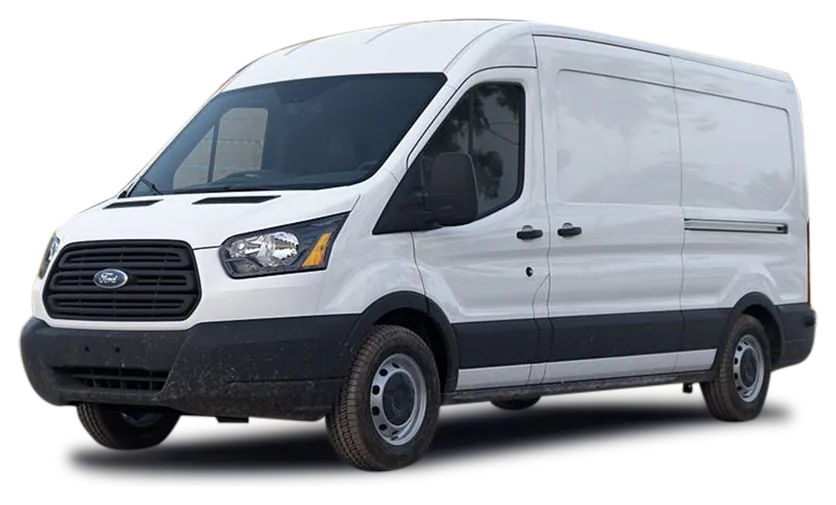
Used 2018 Ford Transit: What to look for before buying
Owners have filed 59 complaints with NHTSA about this car, most about the electrical, transmission, and engine. The 9 checks below target those problems, in the order you would do them at the car.
NHTSA data through October 2026Updated Maintained by Arnas Kazlaus
 2018
- Owner complaints
- 59
- Recalls
- 14
- Crashes reported
- 1
- 12 injuries
- Reliability
- Good
- 67/100 on Auto Reliability Index
Your inspection sheet
Tick items off on your phone at the car, or print it. Ticks stay on this device.
0/9 checked
2018 Ford Transit: inspection sheet
Paperwork and questions
Before you go, or before you touch the car0/2
Walk-around and cabin
Engine off, key in hand0/1
Cold start, engine bay, and underside
Ask the seller not to warm the car up first0/3
Test drive
At least 20 minutes, with some highway0/3
These checks are specific to this model year. For tires, body panels, fluids, and the other basics every used car needs, use the general inspection guide.
Check the odometer against these mileages
Owners report these failures starting around the mileages below. A car inside one of these ranges deserves a closer look at that part, or records showing it was already fixed.
Limp mode and power loss
37,000–60,000 miles
Why these checks: what owners reported
NHTSA complaints for the 2018 Ford Transit, grouped by the part owners named. Open a row to read what goes wrong.
Electrical10No crashes
Rearview camera and center screen failures are the most common reports. The image turns blue or black, shows a "not available" message, or flickers in hot or humid weather. Dealers often cannot reproduce it. Other reports describe battery drain, a chain of battery, brake and transmission warning lights followed by a no-start, and random limp mode that cuts acceleration, one starting after 37,000 miles. Rodent-chewed wiring causing hard starts also appears. One fire started in the engine compartment of a parked van just after its dash warning lights came on. Two complaints involve rolled-back odometers.
Transmission10No crashes
Transmission limp mode is the main complaint. The van suddenly slows, sometimes to 20 mph, often on the highway, and some drivers report near-collisions. Other complaints describe overheating on longer highway trips, hard downshifts when slowing or stopping, shuddering under acceleration, slipping gears and a burning smell. One limp-mode case traced to a failed turbine speed sensor at about 60,000 miles. Some vans needed repeated transmission replacements. Differential failure and loud drivetrain noises show up around 85,000 to 87,000 miles. A failed driveshaft coupling caused violent vibration at highway speed.
Engine8No crashes
Sudden power loss and engine failure lead these reports, sometimes at highway speed with the check engine light on. Causes named include timing chain failure, coolant getting into the engine around 90,000 miles, and on a diesel, a blown piston followed by a turbo failure. Cam phaser trouble causes a loud rattle at startup and can progress to stalling and misfires by 103,000 miles. Turbo failures, a warped exhaust manifold with a broken stud, and an early catalytic converter failure also appear. One report with 7 injuries describes occupants getting headaches and dizziness while driving.
Body and structure8No crashes
Doors cause the most serious structural complaints. A sliding passenger door slides open while driving even when locked, a door-open sensor fails to warn, and front doors flex open at the top in strong crosswinds. Part of the cargo floor gets hot enough to burn skin after the van idles for 10 to 15 minutes. One injury is reported. Water can leak into the engine bay and cabin when the seal between the hood and windshield separates. Hood air vents can clog with snow and block defrosting. Peeling paint and broken fuel door hinges are also reported.
Wheels and tires5No crashes
A wheel can come off while driving. In the most serious report, the wheel studs snapped at 55 mph, the wheel separated, and the van veered into oncoming traffic before the driver regained control. Another complaint describes the wheel hubs breaking on both sides within weeks of each other, and that owner says others have had the same trouble. The remaining complaint concerns papers suggesting the odometer reading had been altered before sale.
Neither complaint describes a tire failing on the road. One owner reports a tire recall notice whose repair parts were not yet available, and says the wait has gone on too long. The other concerns replacement tires bought online that came without a manufacture date code. Neither report points to a problem with the van's own wheels or suspension.
Seat belts2No crashes
The front passenger seat belt height adjuster tab can break off, and Ford would not cover it. On a conversion van, the shoulder harness attaches to the seat instead of the pillar, which may slow passengers getting out in an emergency. Neither the van builder nor the manufacturer acknowledged the problem. These complaints list 2 injuries. The same filings also mention intermittent rain-sensing wipers, poor AM reception, a roof seal coming loose in cold weather, and on-and-off tire pressure sensor faults.
Brakes2No crashes
Rear brakes wear out early. Fleet operators report replacing rear brakes and tires at under 10,000 miles on more than one van. Another complaint describes a squeak while driving that stops when the brake pedal is pressed, with pads and rotors replaced several times. The clips that hold the pads in place fracture within about 20 to 50 miles of a repair. None of these reports describe a crash or a total loss of braking.
Backup camera2No crashes
The backup camera screen turns blue, goes dark, or shows a blurry image while reversing, making it hard to see cars or people behind a large van. The problem comes and goes, and dealers often cannot reproduce it. One owner reports it at about 26,000 miles, and another saw it start years after buying the van new. Owners say they were not offered a repair. Both treat it as a backing hazard, especially for vans that carry passengers.
In owners' own words
Excerpts from complaints Transit owners filed with NHTSA, as written. Listen for the same symptoms on your test drive.
While I am driving, the battery warning light come up first, then the break system warning light come up, then transmission warning coming up. if I keep vehicle moving after while will get back normal. only when I stop the vehicle then vehicle will shut off can not start. Only when I jump start and will running for while.
Filed with NHTSA, June 2022
Odometer Fraud. The contact purchased a 2018 Ford Transit. It was discovered that there was a mileage discrepancy. The vehicle was a dealer sale. At the time of the purchase the mileage was 64,000 and at the time when the fraud was discovered the mileage was 364,00.
Filed with NHTSA, May 2026
1- THE TURBO HAS FAILED TWICE 2- CURRENTLY The torque converter has failed. The mechanic has claimed this is a common problem and recommends a complete transmission replacement. This is available for inspection right now. The problem was suspected by Dealer but independent center diagnosed. The vehicle made a terrible hum as if it was going to explode. We had it cleaned and it made it stop for 10 miles, then it resumed.
Filed with NHTSA, December 2025
The right side passenger door opens when driving. The door will not stay latched even when locked. I close the door, pull on it to ensure it is latched, but when I start driving, the door slides open. This is my family vehicle used to transport our children, and is a very dangerous situation.
Filed with NHTSA, June 2023
How the 2018 compares with other Transit years
Complaints for this year next to the average for the other model years, area by area.
The 2018 ranks third for owner complaints among 9 Transit years, about 1.6 times the average of the others. Newer years have had less time to collect complaints, so compare like with like.
- Electrical106
- Transmission104
- Engine82
- Body and structure82
- Wheels and tires53
- Seat belts21
Where the 2018 fits in the Transit's history
Redesigns and mid-cycle updates change what can go wrong.
The 2018 is the fourth model year of the Transit's fourth generation (2015 on).
Ford updated the Transit for 2020, so a 2018 does not have those changes.
What changed for 2020 (not on a 2018)
- 10-speed automatic transmission
- All-wheel drive option
- Standard driver-assistance features
Recalls to confirm (14)
Recall repairs are free at any Ford dealer, but the seller may never have had them done. Check each campaign number against the VIN before you buy.
- 25V572000Backup cameraApr 2025
- 21V631000BrakesNov 2021
- 19V439000Body and structureNov 2019
- 19V332000SeatsJan 2019
- 18V782000SeatsJun 2018
- 19V103000Transmission
- 19V205000Seats
- 19V229000Seats
- 19V238000Seats
- 19V247000Seats
- 19V252000Seats
- 19V313000Seats
- 19V329000Seats
- 19V333000Seats
Open a campaign number for NHTSA's full notice: what fails, the risk, and the fix.
Also looking at these instead of a Transit?
Cars shoppers compare with the Ford Transit, with their own 2018 checklists.
2018 owner complaints, side by side
- Ford Transit Connect Wagon22
- Ram ProMaster38
- 2018 Ford Transit59